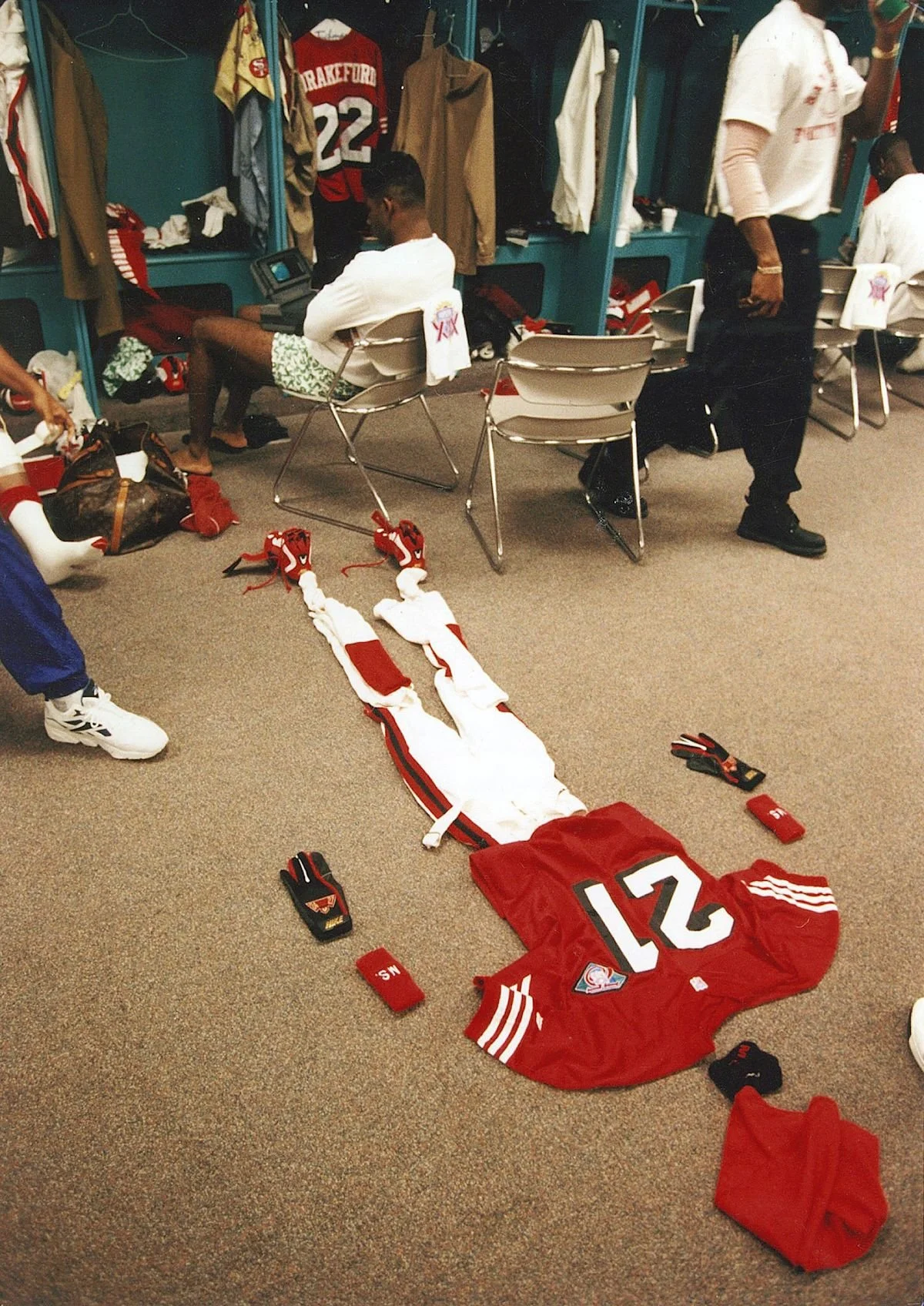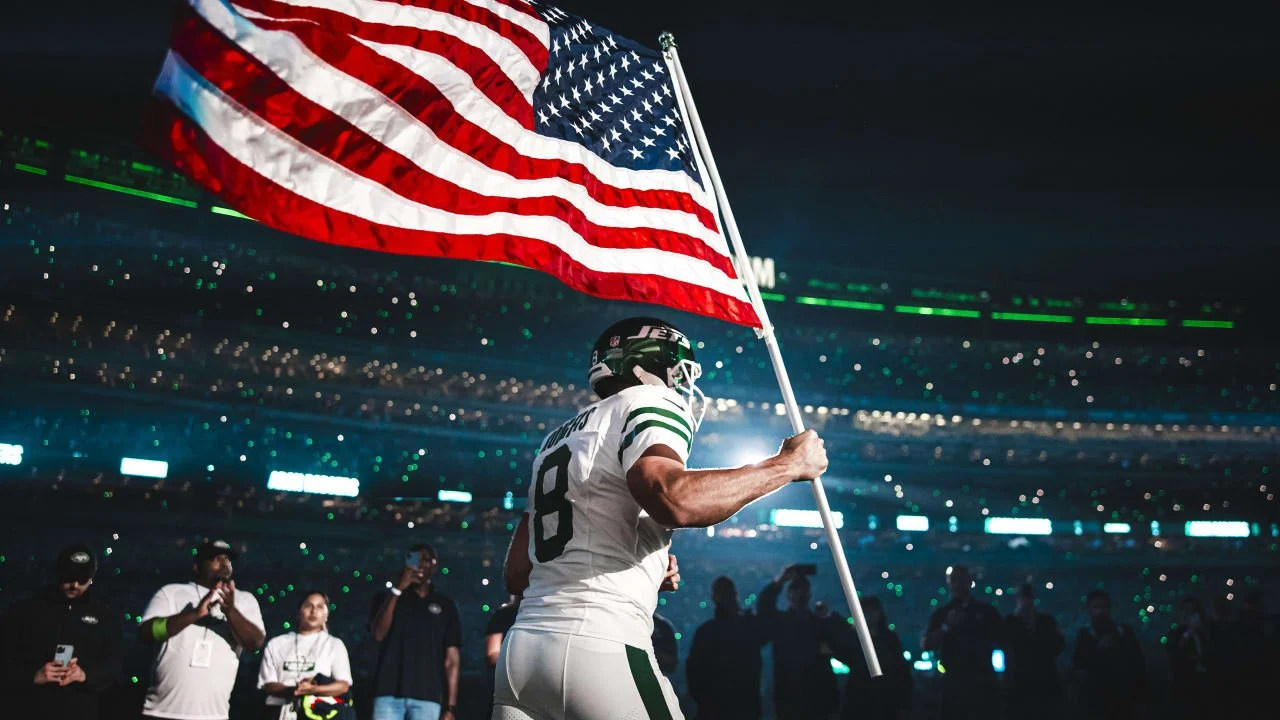
On Sunday, September 20th, 2026, the Kansas City Chiefs played the Indianapolis Colts for Sunday Night Football on NBC. As someone who has long complained about and disavowed the NFL, despite also being an obnoxious Patriots fan, I hypocritically found myself absolutely hooked to the screen. The series of advertisements about artificial intelligence and Amazon didn’t dissuade me, nor did the language about how great the military is or the shots of Taylor Swift jumping up and down. Maybe it was in part because it was a very entertaining game, but I realized that none of that actually mattered in light of a simpler truth: I was addicted to football.
If you say you aren’t addicted to something, I don’t believe you. We’ve all got a few. For example, coffee is my performance enhancing drug, Instagram is my favorite opiate, and waking up without immediately checking my phone is a Herculean effort. And yet the football addiction takes up a uniquely toxic place in my life which I’m desperately seeking to change.
I’m far from the only one suffering, and my addiction is limited to just giving the NFL my attention. Look around on any given Sunday and see how worse-off junkies crowd into opium-den-like “sports bars” and chain-refresh their betting apps, spending and exhausting themselves into an often-depressed oblivion. The high they pursue is pretty universally understood: celebrating a big play with the people anywhere between those you love and those you’ve never met. Sports ubiquitously generates these kinds of rushes around the world, but in America the NFL is perhaps the only remaining over-the-market drug that is both available to everybody and encouraged for all to take (and pay for).
Football is a mirror of America, and the two are tied together in a knot that grows increasingly tight. The parallels are many and they are explanatory of each other. And although each of them contain a staggering amount of unethical practices, they persist by blowing past accountability and hiding the truth through distraction and cover-ups. To make a better America may mean to first look at what makes football successful, and more so what it genuinely is.
In full transparency, this essay is an opinion article. I’m basing my research on vetted information but making my own judgements off of it. I think I’m right but you might think otherwise.
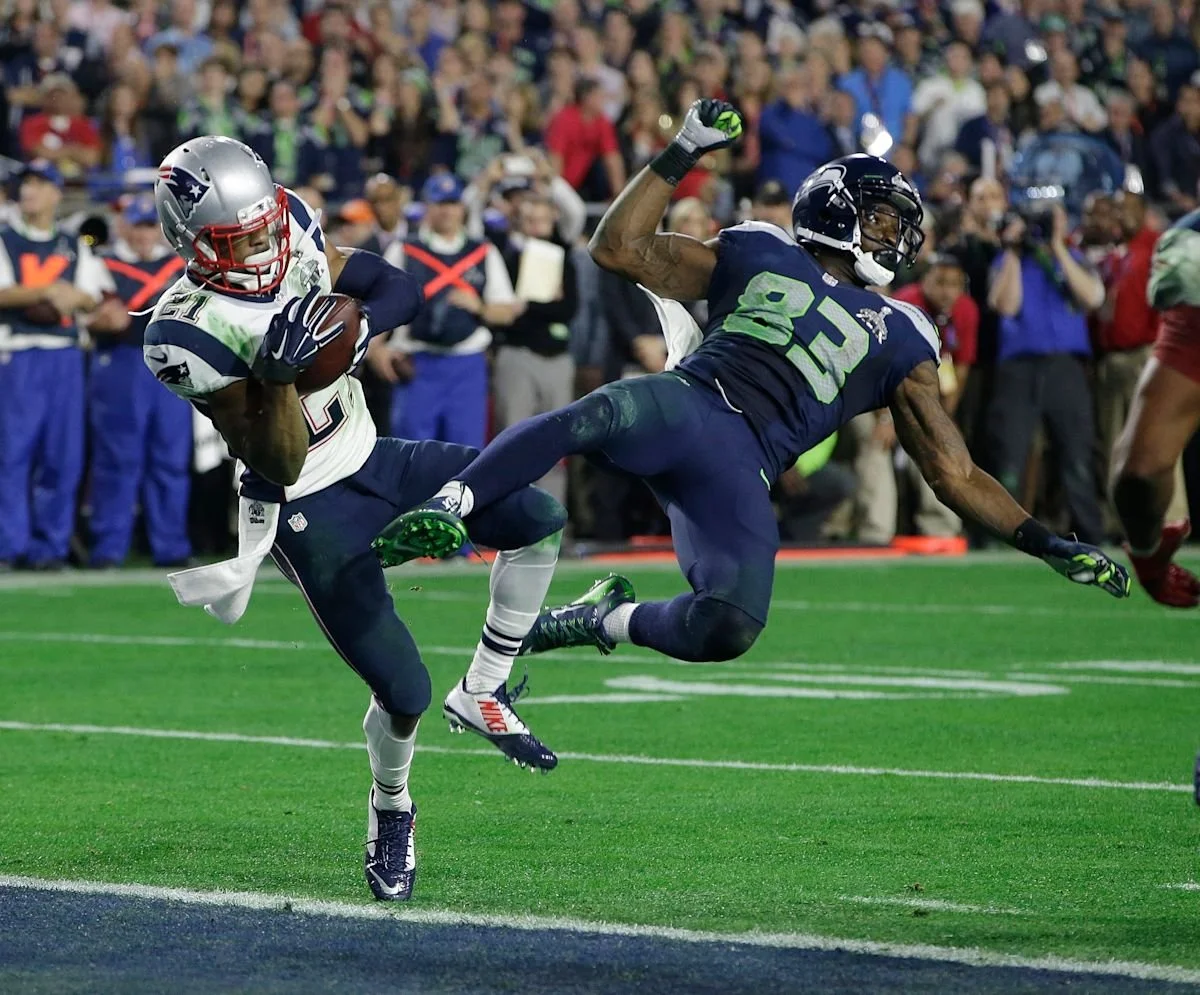
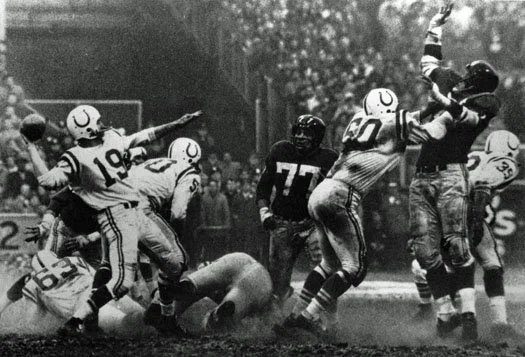
Football is Painful
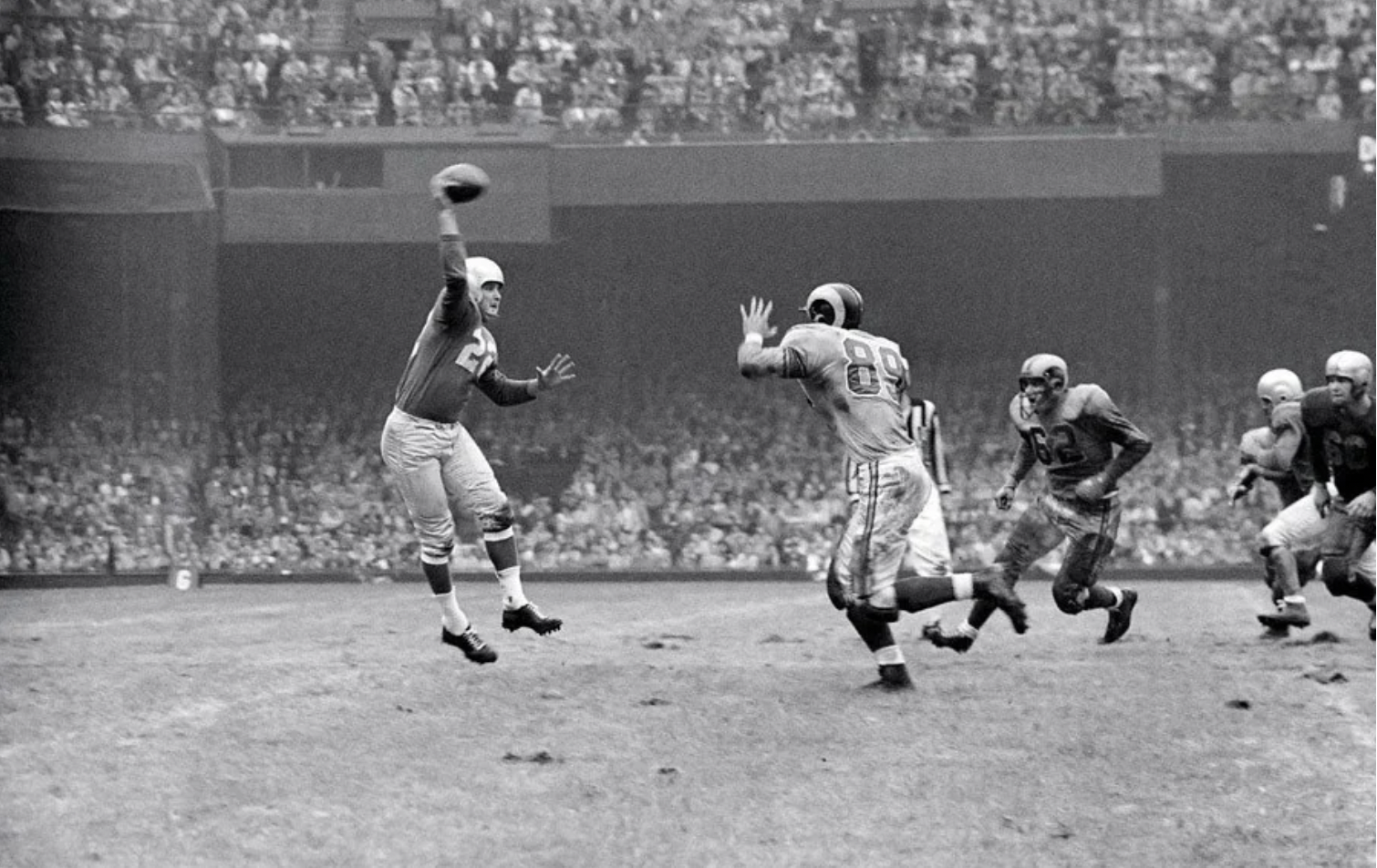
Like with most everything, you can ascribe a lot of shit in football to something Socrates/Plato once said. Here’s one I think about a lot: “Living a life unobserved is not worth living. But living a life observed is painful.” Except, pretty much everything about football is painful. It’s necessarily violent.
But what is violence? Today, a definition of violence could be “an act of physical force that causes or is intended to cause harm”. People have been violent as long as people have been people, but ever since we ascended above the food chain our considerations of when violence is or isn’t appropriate have shifted. That’s not to say people aren’t still violent, or that indirect forms of violence like wage theft and systemic racism and corruption continue in spades, it’s just that physical violence doesn’t exactly bring people together like it used to. Take public executions for example, which you and your buddies would’ve been down to hang out at throughout most of modern history in Europe and its colonized nations. Besides it almost becoming a thing again in 2026 of course.
Football doesn’t fit within those vague ethics because violence is necessary to play the game. Boxing is the best comparison to football in those terms, which similarly personifies racial tensions and male ruthlessness in America. Perhaps the desire to exact violence precedes the sport in both cases, where adding rules to fighting codifies the violence as a standardized game sequestered away from otherwise untamed, raw brutality. Nonetheless, both sports also originate from America post-colonialism.
Perhaps also deriving from a deeper sensibility streamlined with “rules”, the pre-colonial Native American tradition of “lacrosse” had very few yet essential guidelines, where the goal was more akin to stewardship of Land between tribal nations and respect for the divine. Sometimes the “field” was miles long, and sometimes the “goalposts” were two trees of any given distance between each other. European onlookers wrote in horror about the tradition’s physical violence, perhaps whilst thinking about how to displace and murder those peoples once they had the means. Crucially, Native American lacrosse was a spiritually enriching exhibition of skill, cultural identity, and training for a tribe’s warriors - not war.
Conversely, football is war. Full stop. The similarities do not cease, both as a form of war itself and as an apt comparison to it. Here’s former University of California president Benjamin Ide Wheeler, who wrote this about it in 1906 (before WWI’s trench warfare even began):
“Two rigid, rampart-like lines of human flesh have been created, one of defense, the other of offense, and behind the latter is established a catapult to fire through a porthole opened in the offensive rampart a missile composed of four or five human bodies globulated about a carried football with a maximum of initial velocity against the presumably weakest point in the opposing rampart.”
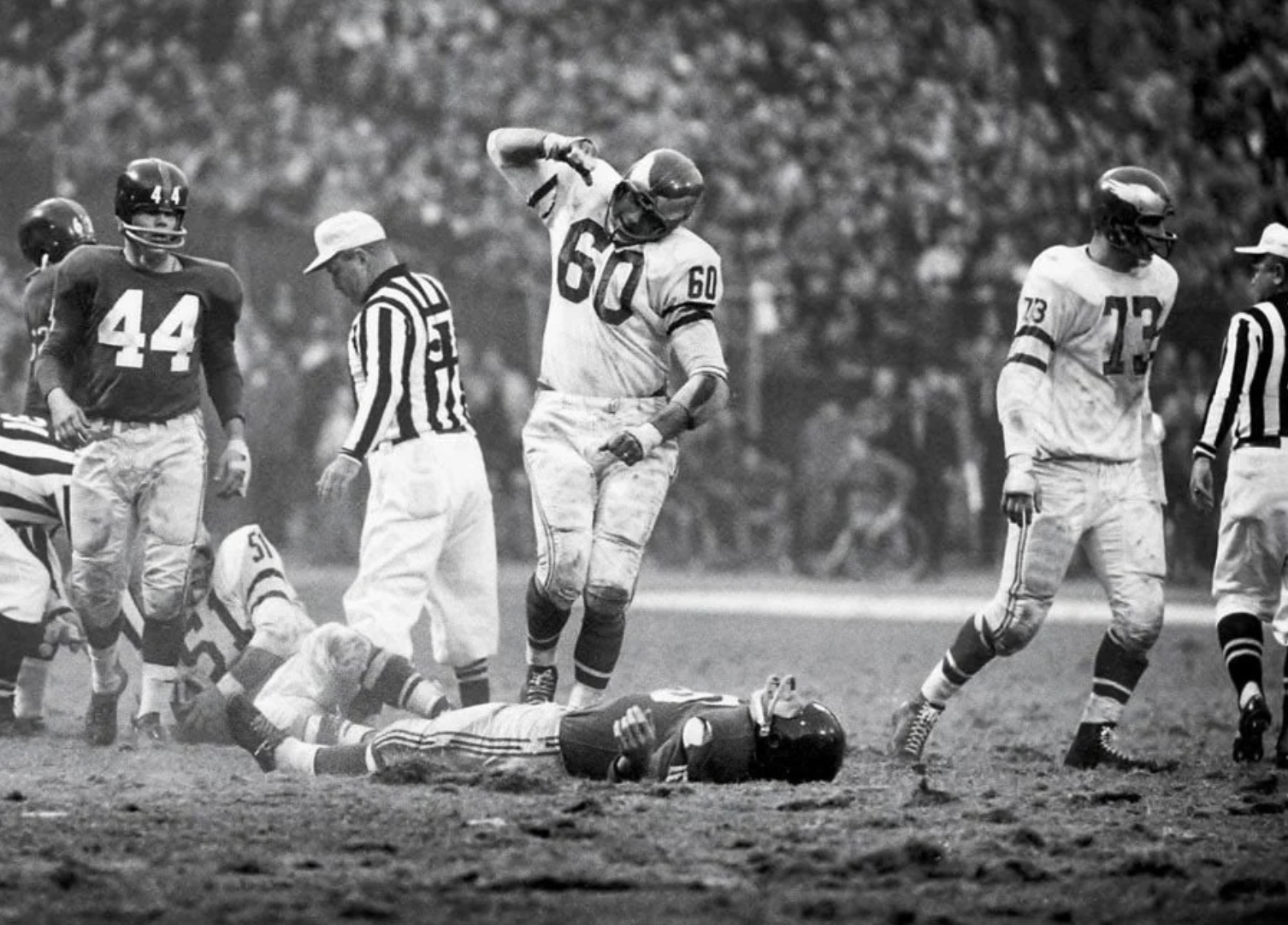
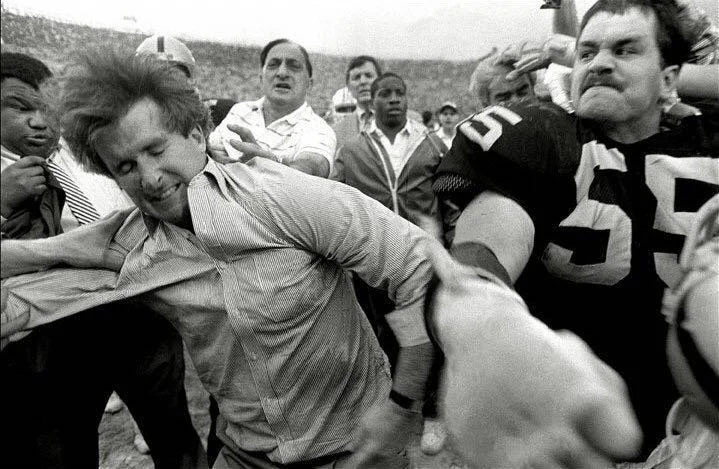
Americans enjoy little association of the material consequences of war with the idea of war, in part because no battles have been fought on this continent since the Civil War; Football instead personifies abstract aspects like victory, achievement, and failure without directly implicating the long-term consequences of its battles. The same can’t be said for the players though, who are weapons and vessels, enacting and suffering from what they’ve conscripted themselves into. During any given game of football, no matter if they come out “healthy”, players generally sustain the force of multiple car crashes. No amount of guaranteed contract money, celebrity, political clout, or elevated lifestyle can change the physical toll that playing football guarantees, which their families will readily describe.
The NFL has positioned themselves as antithetical to the truth that people will get hurt whenever tackle football is played. As long as war is wrought, there will be harm. As obvious as that is in concept, the reality of football always being violent only really enters American consciousness when the violence is too much to ignore. Typically, the routine violence of football is normalized to such an extent that a non-household name being injured during a game just results in the networks cutting to commercials while playing corporate piano music, knowing that empathy for the devastation of the injury gets lost a few commercials later. Only when an especially relevant player gets injured, or when the injury itself is especially severe, does the ugliness of the sport rear its head. The NFL knows that abrupt violence complicates the unobserved, platonic ideal of a viewer’s relationship to the sport, and employs strategic devices to satisfy a viewer’s empathy enough to continue on with the program uninterrupted.
As of November 4, 2026, 26.2% of all active NFL players have sustained an injury. The majority of those are knee injuries (ACL/MCL tears), shoulder injuries (rotator cuff tears/dislocations), and head injuries (concussions), none of which are particularly pleasant. And yet the league is also strongly correlated to an outsized number of life-threatening injuries. Damar Hamlin, Ryan Shazier, Jack Campbell, Jalen Hurts, and Alex Smith amongst others were all desperately close to crossing a threshold not just of their own mortality but the league’s image.
And even despite how tough football is to a person’s physical body, the more tragic and insidious toll is brain damage, specifically Chronic traumatic encephalopathy: CTE. Research about CTE is ongoing and incomplete, but its findings already reinforce the severity and urgency of reevaluating how football is being played right now. Take these findings by Chris Nowinski, co-founder of the Concussion Legacy Foundation, to tell a broader story:
At least 25% of NFL players have CTE.
Multiple studies indicate that the number may be much closer to 90% of players, active and retired.
Should CTE enter the DSM, it would likely be the 3rd most prevalent brain disease in the United States.
Football players die at four times the rate associated with dementia than the general public.
In Chris’s words, a way to interpret this data is that “there is nothing worse you can do for your brain… then tackle football if dementia is the end point you’re thinking about.”
CTE leads to dementia, and you can start suffering from CTE at any age.
CTE seems to be caused by hard hits. And concussions aren’t necessarily hard hits - for every one concussion an NFL player sustains, they have taken on average 340 harder hits to their heads.
Concussions are not indicative indicators of CTE. Instead, the number of hits and the force of those hits is a better predictor.
All of this is extremely inconvenient for the NFL, but virtue signaling towards safety and positivity has largely proved effective for the league in dissuading from the gravity of this issue. Take guardian caps, a cartoonishly large helmet, as an example of the league showing their care for player safety. Except, not only does the data suggest that the caps do not prevent CTE, but the NFL has intentionally confused information about that data. As data has continually been supplied to the league about the dangers of the game, so too have they continually obfuscated the transparency and significance of the data. Insidiously, the NFL’s focus on youth development through initiatives like Play 60 and NFL Por La Cultura indicates that they are intentionally maintaining a facade of care whilst children are getting brain damage. It is preventable.
As concerning as this violence is, the litany of other ethical issues which make up the NFL is exhausting and important to list:
Deshaun Watson and Predators on Payrolls
During his time with the Houston Texans, Deshaun Watson was accused by 27 masseuses of sexual assault. Afterwards, at least four teams pursued his services, with the Browns eventually trading their future for Watson while offering him $230 million dollars guaranteed over five years.
The Deshaun Watson trade exemplifies the league’s prioritization of competitiveness over ethics. Although this practice is standard league-wide, the Kansas City Chiefs are especially obvious about this. Justin Tucker, who performed nearly identical assaults on masseuses as Deshaun Watson, was hired in October 2026 to replace the flailing kicker Harrison Butker, who doesn’t really seem to view women as humans.
The Draft Combine and Racial Bias
Turn on the Draft Combine, an exhibition of players looking to be signed to NFL teams, and listen to the announcers without looking at the screen. Tell me it doesn’t sound like slave-trade auctioneers selling-up physically desirable Black bodies in the 1840s.
Present across all sports media, the Draft Combine accentuates a cognitive and racial bias where Black players are adjudicated for their physical ability where white players are adjudicated for their intellectual ability.
Impersonalization of Appearance
NFL players are barely allowed to customize their on-field appearance, a similar stance as the similarly-great FIFA, in part to ensure that narratives against the league’s desires can be controlled.
Like how guardian caps virtue signal safety, post-George Floyd slogans calling to attention racial tensions are as feckless as they are absurd.
Gambling
Military Propaganda
Also fucking sucks, to put it lightly.
Ownership and Private Equity
Essentially a Christmas Adventurers in plain sight, NFL owners run their teams as one of three things: A legacy family business not unlike a plantation, a new-money magnate seizing cultural capital through dominance, or a private equity business stripping the asset of its value. Let me know if any of these sounds nice.
Commercials
Money talks, and advertisements spend money to talk. With the most consistent and largest viewership of any entity in America, ads on NFL games both speak to and alter American’s perspectives.
Capitalism is a lake where fish are eaten by bigger fish. Taylor Swift and the NFL are massive fish of industry that have eaten many fish in their time, but they quickly figured out that their cooperation would be mutually beneficial: Capitol building on capitol until there is nothing left in the lake to eat.
Trump and “Conservatism”
I’m not a huge fan of the guy. In the words of Norm MacDonald, “the more I learn about that guy the more I don’t care for him.” Trump’s jingoistic populism finds power through football, and with so many people from the owners at the top to the players and staff at the bottom, the NFL gets to enjoy his cult base’s love whilst avoiding officially endorsing him. Nevertheless, his anger at the NFL has resulted in threats to upset that fragile truce.
Oh right yeah so you’re gonna sit there and tell me that NFL cheerleaders aren’t exploitative, outdated, and inappropriate? And that teams hiring players who abuse women doesn’t enhance a misogynistic culture? C’mon bro.
Did I miss anything? I’m sure I did. But just as important as being honest about the violence and exploitation of the NFL is understanding why the game is so beloved and popular.
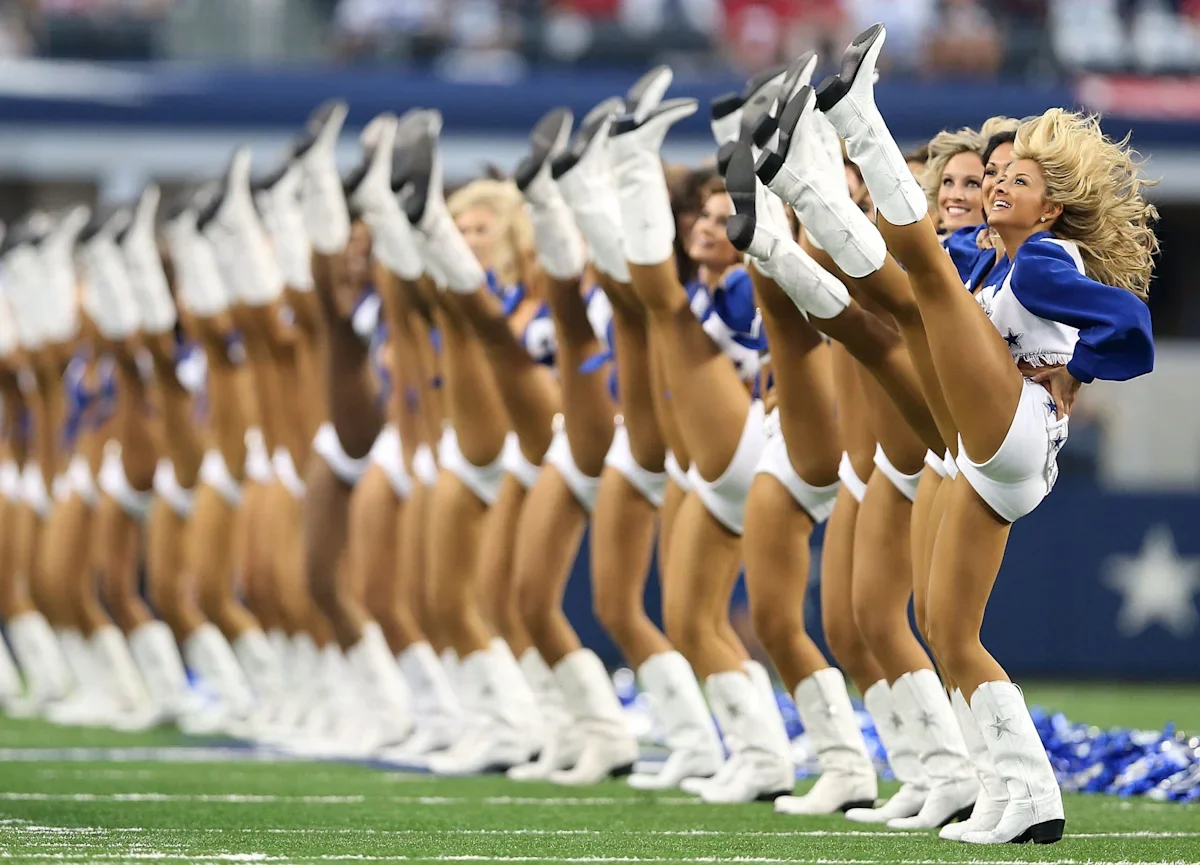
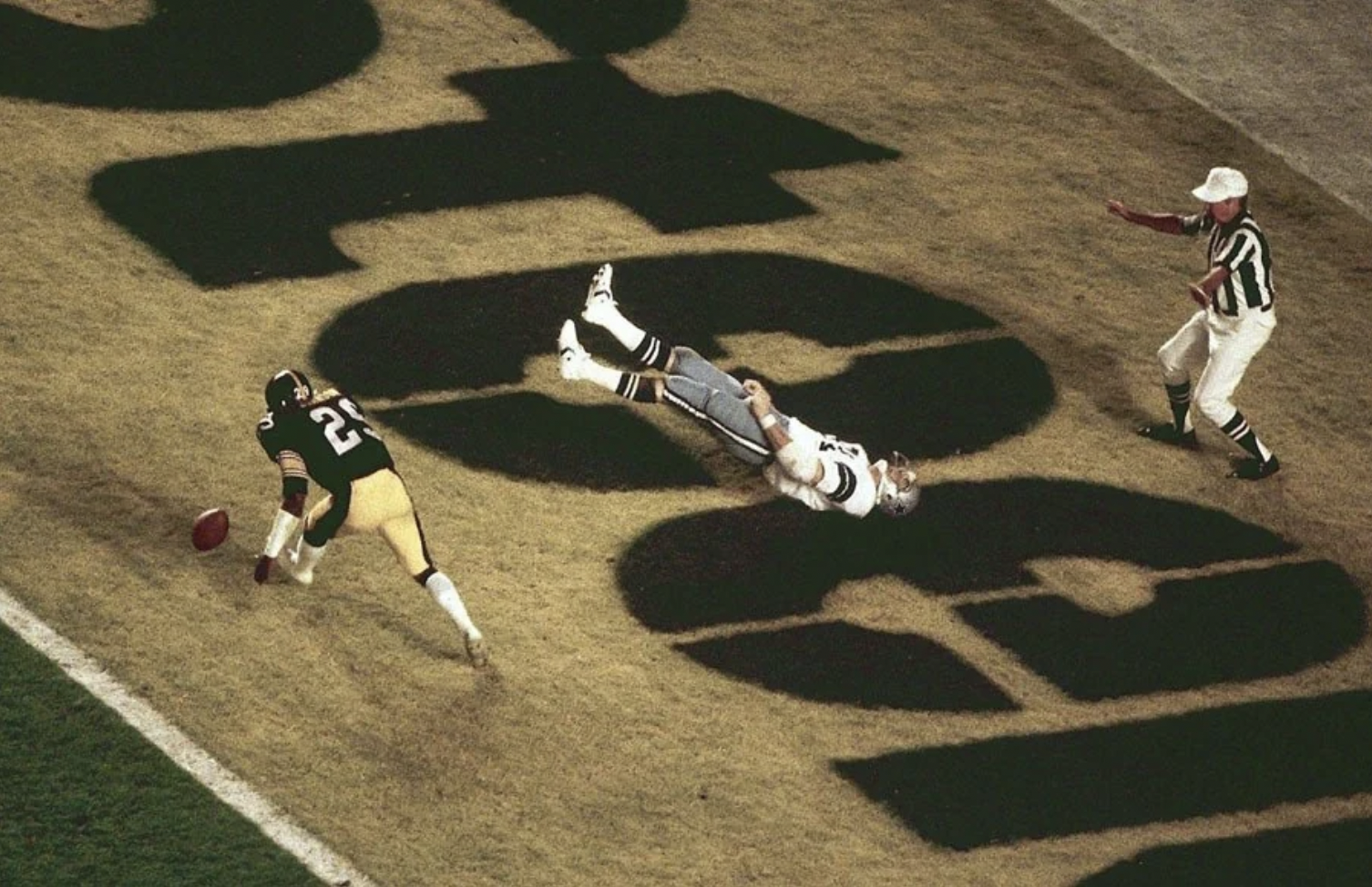
Football is Art
Monoculture, not related to agriculture, can be understood as “a culture dominated by a single element : a prevailing culture marked by homogeneity.” In a world where media companies of all kinds have the ability to promote information that fragments the public’s perceptions, previous monocultures are fading. That is, except for football.
Although the basis of truth has been up for debate for millennia, whether a football team has won a game is effectively objective in modern society. Are there factors like the threats of match-fixing by way of gambling sites which threaten that standard? Absolutely. But what is America going to do, stop watching? And what will force that to occur?
A power of a monoculture is how it becomes a language for connected or otherwise disconnected people to communicate with. Previous American monocultures like politics or music have become refracted enough by social media algorithms and disparate levels of accessibility to lose that effective objectivity across our many echo chambers and disparate realities. Take Ella Langley’s “Choosin’ Texas”, now one of the most successful songs in American history. Maybe you’ve heard it, and maybe you haven’t. And more frighteningly, the consolidation of private and public interest into the white supremacist patriarchal capitalist project of MAGA was more conveniently achieved by lying and misinforming. Perhaps it’s ironically not been working too well recently.
People give power to monocultures through belief of some kind, and sports are often the locus of a nigh-religious fervor of desperation and hope. While writing this essay, I asked most everybody I could what they thought about football. Most everybody I asked either said they didn’t watch it and didn’t like it, just in case you were wondering how crazy gay my friends are. But, when I asked them if there was anything they did like about football, practically every person started telling me a story of how they enjoyed a thrilling moment with others because their regional team won. This intangible energy of sports has connected people for millennia, and likely comes from a few core human traits like our attraction to stories and our entertainment by displays of extraordinary feats. By organizing that power into regional teams, people can be both tribalistic and inclusive, and as with the comparisons of football to war is removed from material realities and consequences.
Where the general public enjoys these beautiful human things, more specific football fans also enjoy the beauty of football’s technical elements. As with anything, attention for something cultivates finer appreciation of its details. Soccer is often referred to as the beautiful game in ode to its accessibility of play (all you need is a ball), mostly simple rules (offsides isn’t THAT hard to understand you guys), and often-uninterrupted flow of play. American football is almost the exact opposite: you kinda need to have a football-shaped object, the rules are situational and complex, and football is only really happening around 10% of the time during a football game. Soccer is warm butter that’s soft and spreads evenly while football is cold and hard and strategically placed for maximal buttery-ness on the bread of its hungry audiences.
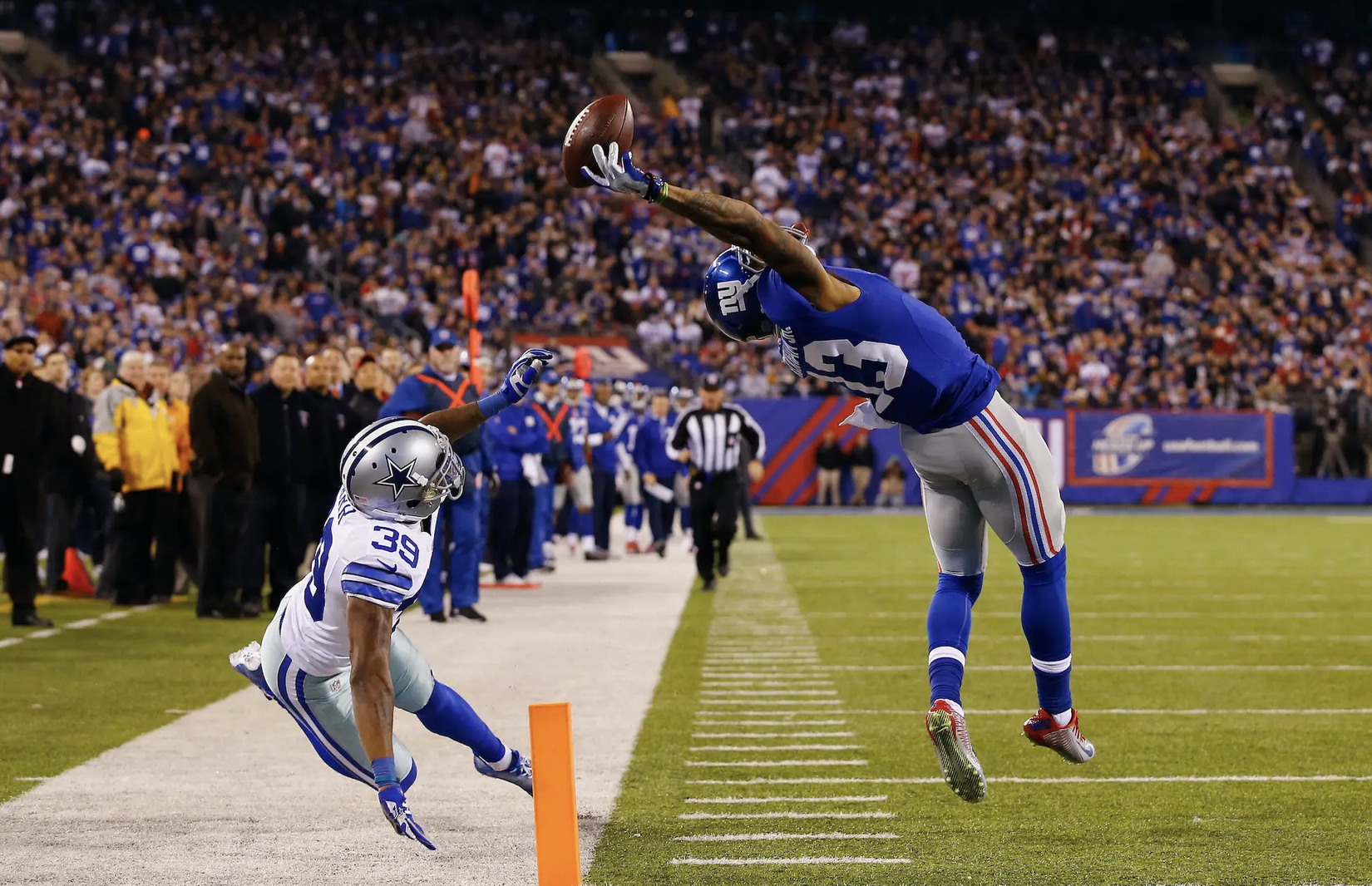
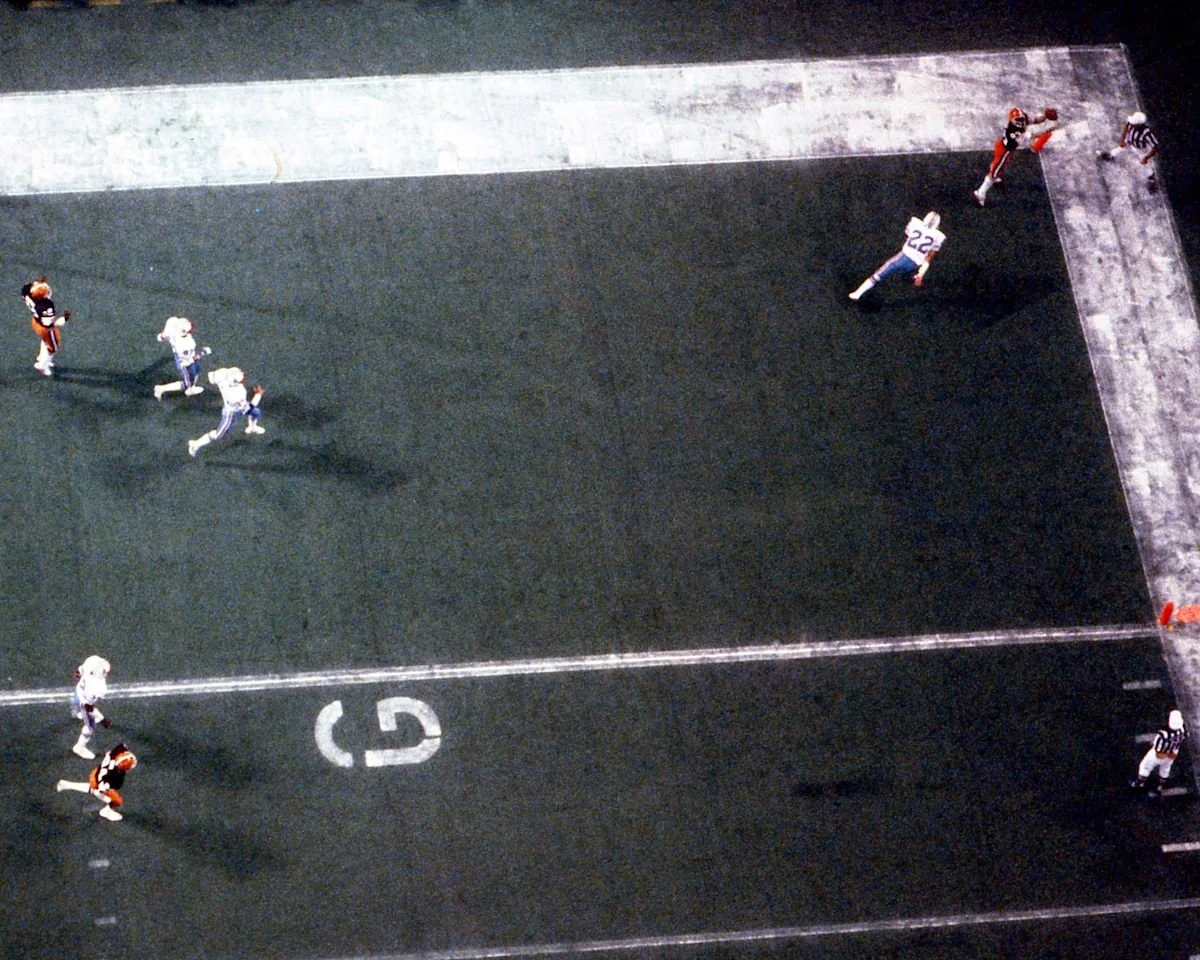
There’s incredible beauty in sports, all of which can loosely be placed on a spectrum of spontaneity and strategy. Both soccer and football for example are composed of teams of players towards the common goal of winning who can achieve that goal in a near-infinite amount of ways. When they score and defend, how they score and defend, involve strategies and systems of thinking is way beyond a layman’s understanding. Football is a better example of that. Where one soccer player can do it all, the depth and intricacy of each position is mind boggling in respect to everything else going on around them. Take the quarterback, who has the responsibility to recognize and execute on patterns before they have time to even think about it. The amount of people involved with such technical excellence and communicative complexity over their entire lives of practice and preparation eventually results in what we watch and often think is banal. Another example are edge guards, whose goal is to protect the quarterback. Tasked with stopping 300-pound destroyers who’ve conditioned their bulk into dancing around you like in a ballet, edge guards utilize countless influences of body positioning and physics whilst getting their hand movements perfect to avoid penalties and missteps. You mostly notice them whenever they get beaten and look like an idiot when the quarterback gets sacked. But consider that pretty much every play that a quarterback isn’t getting sacked represents an edge guard winning against one of the most physically terrifying men in the world. While they’re doing that, every other player is engaging in a similar battle of habitualized pattern recognition, world-beating physical dominance, and innovation.
Speaking of world-beating domination, let’s talk about America.
Football is America
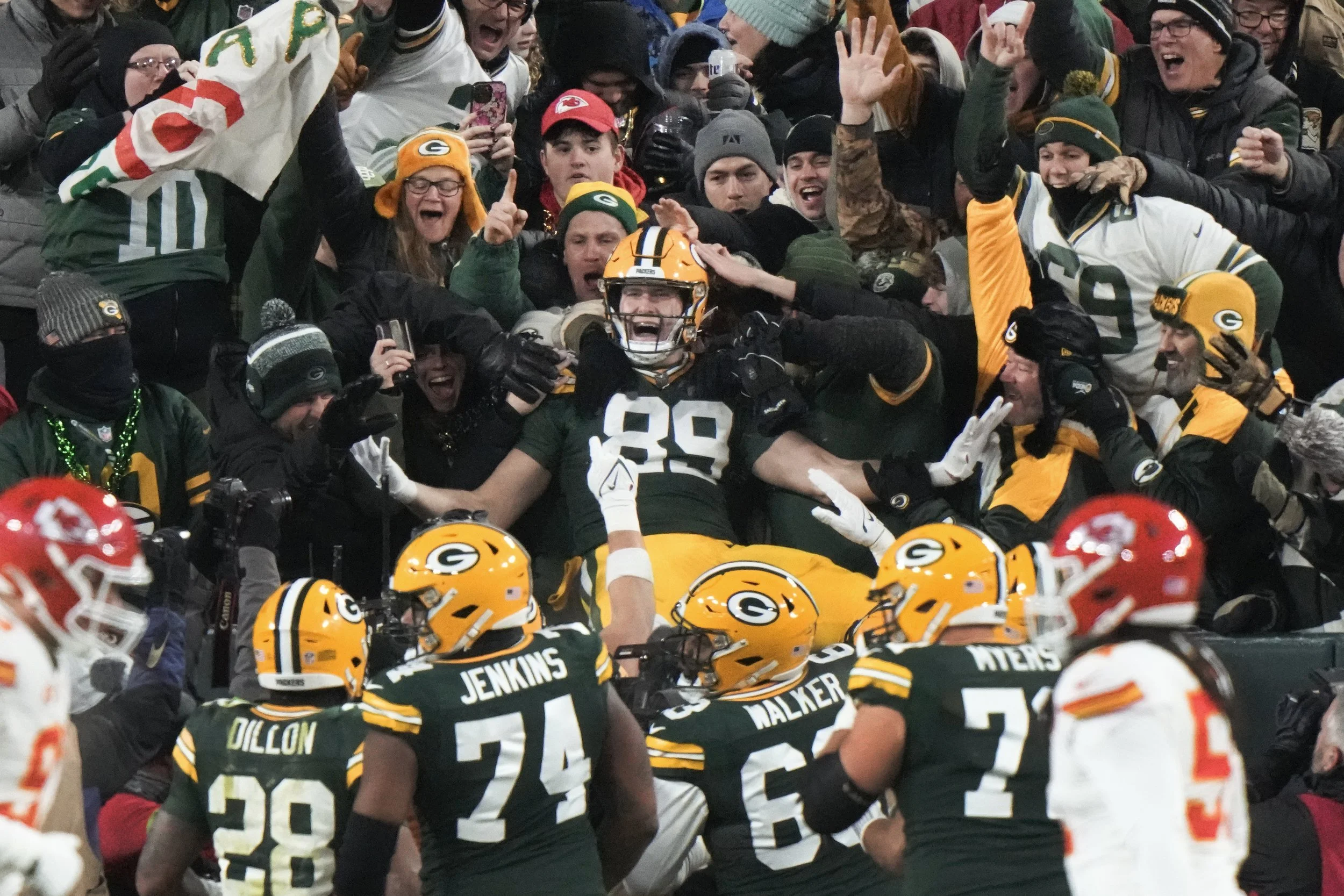
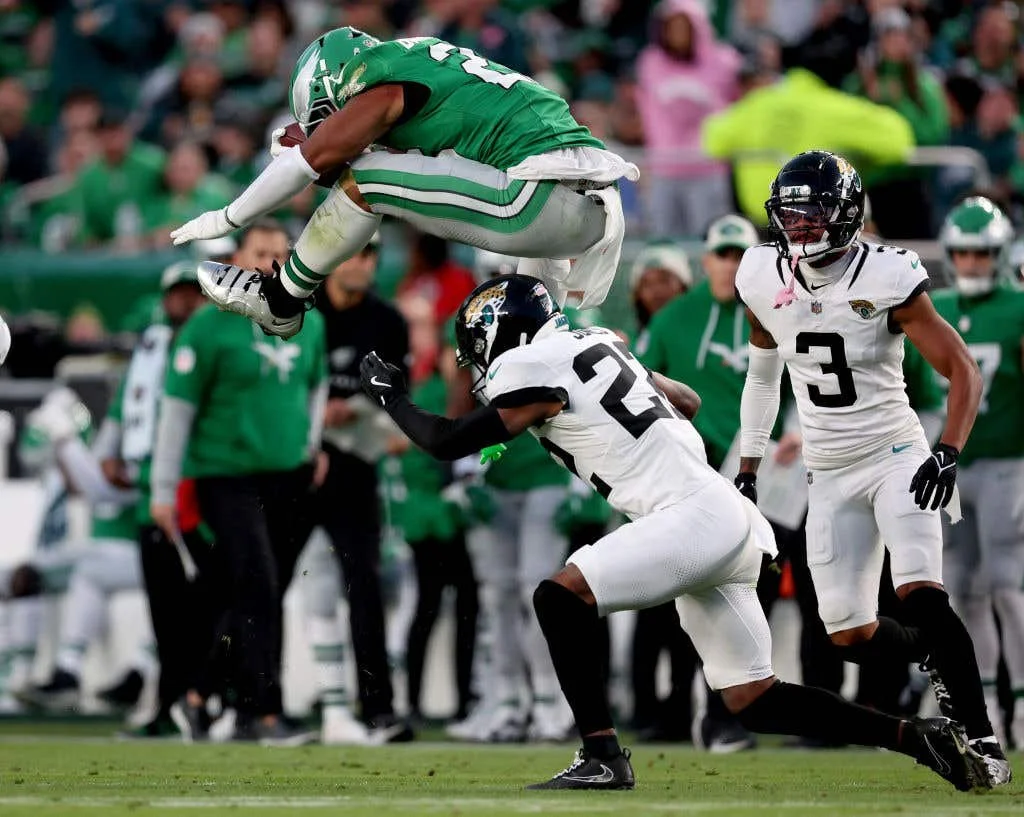
Football is a megacorporation that hides its accountability of causing severe harm behind romantic and romanticized virtues while exploiting those who depend on it while being built off and still profiting from racism. What’s the difference between that statement and America? Just replace the word “football” with “America” and the word “mega-corporation” with “republic” and you’re pretty much there. And while football can be analogous for and representative of America in many ways, football is often a source of American business and culture itself. Perhaps no more famous example currently exists than Colin Kaepernick’s protest and its fallout.
Firstly, I’m unequipped to fully analyze this and it is also inappropriate to not talk about Black men and football and where those two things meet. With my feet in the shallow end of the pool on this topic, it’s still crucial to point out how deep the water gets.
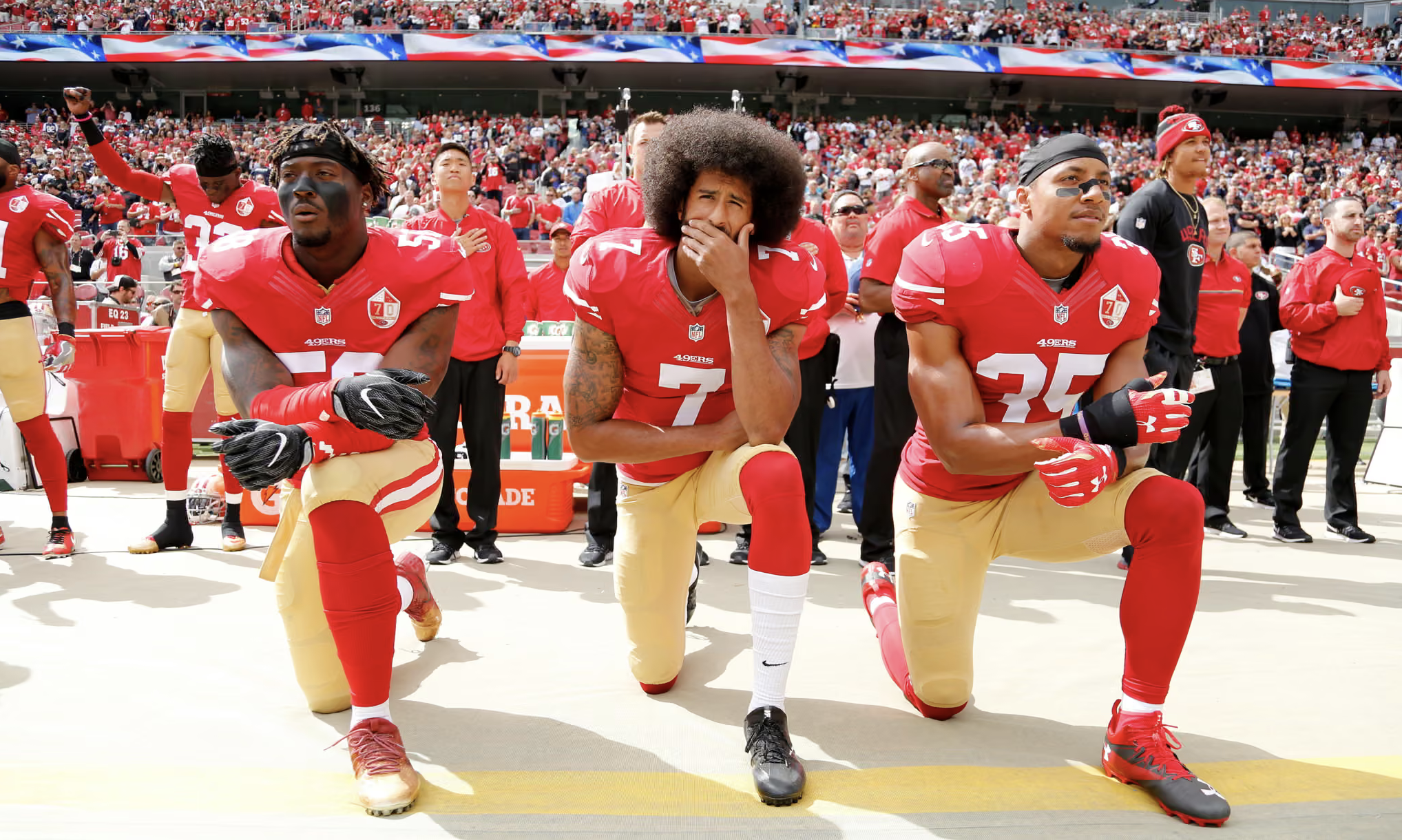
Throughout the 2016 season, Colin Kaepernick kneeled during the national anthem before games as a peaceful protest, stating that “"I am not going to stand up to show pride in a flag for a country that oppresses black people and people of color." Like those who participated in sit-ins during the late 1950s, Kaepernick immediately became a target of all kinds of racist rhetoric and fury, exposing how delicate and sensitive the nerve of racism is in America. Despite playing at worst as an average quarterback, Kaepernick was let go from the team at the end of the season and filed a grievance against the NFL for teams thereafter colluding to not hire him to another team. In 2019, Kaepernick withdrew the grievance after reaching a confidential settlement with the NFL. Perhaps Kaepernick was aware of the double-standard that his actions highlighted; A league that a few years later would vie to hire Deshaun Watson, a similar quarterback in playing style who could not be more different morally, intentionally did not hire Kaepernick. In the power ranking of preference, America and the NFL always prefers profitability - where winning always correlates with profit. And in that calculation, evil is more valuable than justice.
The Rooney Rule, now more clearly than at its inception in 2002, is basically Affirmative Action for the NFL. But like with Affirmative Action in the government, it can only do so much to genuinely alter the fact that so many systems we exist within were created on and support systemic racism. In a study of the Rooney Rule’s effectiveness in removing obstacles for minority roles within the NFL, researchers found the following:
“‘The White coach advantage in promotion to higher levels…is largely due to promotion to positions below head coach.’ In other words, the racial disparity between White and Black head coaches is largely because White coaches are able to climb the organizational ladder to the mid-range coordinator and position-specific positions more effectively than Black coaches.”
Many, like commissioner Roger Goodell, point towards the sporting desire to win holding a certain equality regardless of background. That sentiment doesn’t contain the more overtly racist overtones of “Shut Up and Dribble”, but instead has a more placating effect that through sport race is not a factor - think of Martin Luther King Jr.’s influence as being often summated singularly through one sentence that has the word “dream” in it. Instead, perhaps both the NFL and America can be accurately described as “less a meritocracy and more a racialized organization: one in which Black players and coaches alike are sorted and stacked into certain lower-status, higher-risk positions, and then incur an additional racial penalty on top of that as they attempt to rise among the coaching ranks.”
Racism and class is one of many filters to analyze the similarities between the NFL and America, much of which we’ve already noted previously:
Masculinity: Exhibiting non-feminine power which ultimately promotes patriarchal conventions
Meritocracy: Grassroots players, typically Black players of lower economic class, becoming heroes of the American Dream.
War and Military: Martial and territorial qualities reinforcing the effectiveness and validity of military operations.
Succession: Exposed to positive virtues at a young age, children become socialized to accept and revel in violence.
Celebrity: Heroes of sport and culture become populist figures of political and cultural capital.
All of these explain what is otherwise a difficult culture for non-Americans to make sense of. Whether it’s chicken or egg, nature or nurture, football is explanatory of America and visa versa. And in addition to those filters, I’d posit that the Super Bowl itself is a more representational holiday of America values than Independence Day.
Where hot dogs, fireworks, Bud Light, and the American flag are abound on July 4th, they are more holistically concentrated as the combination of culture and capitol on Super Bowl Sunday. Generally, July 4th is celebrated in appreciation of broad ideals espoused by the founding fathers at the start of the new nation conceived on this continent. Reflection is baked into it, where looking back at the world then generates a comparison to our present realities. What would those men think of America today? In what ways would they be wrong, and in what ways would they be right?
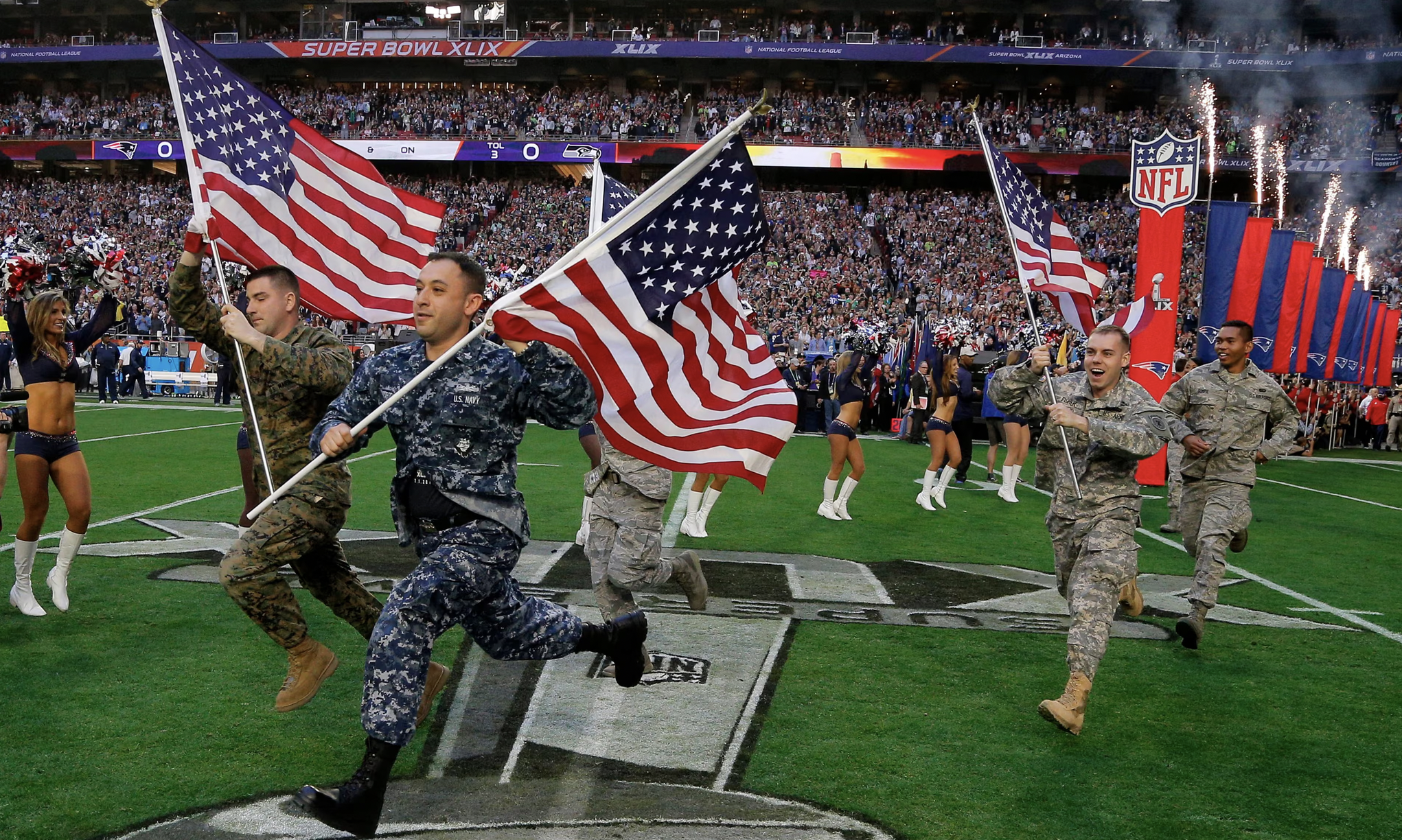
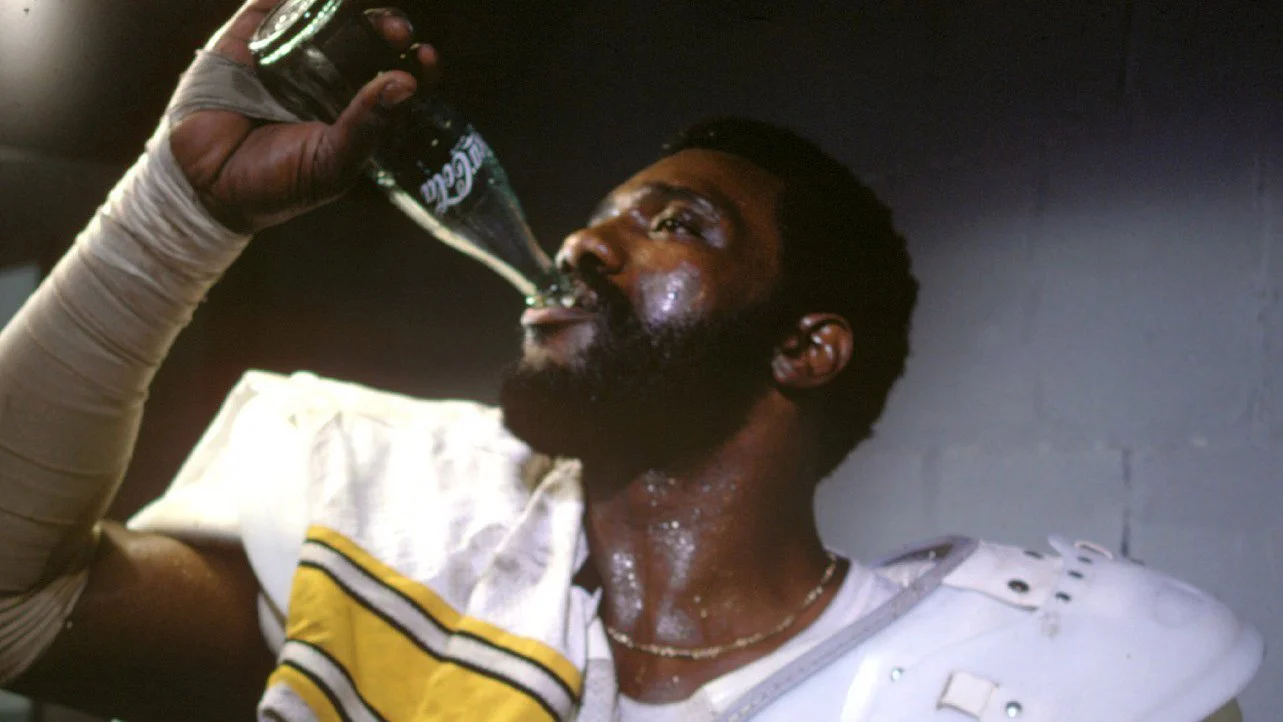
The Super Bowl corporatizes those broad ideals without reflection. It is self-contained to its own history with its own narratives, which only really goes as far back as 1967. Where July 4th is more about honoring American freedom through military might, the Super Bowl more literally shows that might through propaganda displays of service-members abroad and stealth bombers flying above stadiums. Instead of stores selling patriotic merchandise, the Super Bowl maximizes a suffusion of patriotism and capitalism into an event of multi-million dollar advertisements. Independence Day is celebrated in unique ways by many countries across the world, but no other country has the unique practice of a sport becoming an unofficial national holiday. The halftime show is also a celebration of showmanship, not distinctly an American phenomenon although America definitely loves its performances. Even there, the halftime show runs into the same goalposts as what Colin Kaepernick encountered: As the NFL are in control of their own narrative, more honest critique of the league and perhaps America must occur in certain ways.
In Conclusion,
Football has been, and continues to centralize itself within, American culture for the better part of the last century. Decolonization is not a metaphor, and there is certainly no returning to a culture where football is not explanatory - and vice versa - of America. However, where America is an effective enough republic in that politicians can be voted out, the NFL and team owners are totally unaccountable for their actions. To change that system means to change the economy related to the league entirely. So how could that happen?
1. Give the NFL Less Attention
While football has assumed so much power as a monoculture of sport, it isn’t the only sport which can create that. Any sport can actualize the aforementioned positive things associated with football, including but not limited to values of teamwork, local organization, and as a means to further connect with others and the world. Women’s basketball could do the same, as could mixed doubles curling, as could competitive darts, et cetera. Football champions itself and is championed because of the infrastructure it genuinely has and the explicit and implicit importance we ascribe to it. If belief in the NFL’s inevitability wanes, perhaps the evils which support the system may also wane and need to adapt to something new.
2. Actively Boycott the NFL
While giving the NFL less attention would be powerful, so too would loud, active protests. Organized boycotts have always been an effective form of protest because they hit at the heart of what makes so much tick: money. While those who love the game of football will always be there, the many industries associated with the NFL will quickly jump ship or demand changes to continue the necessary model of growth in American society.
But what about addicts like myself? Going cold turkey isn’t the safest means of getting off a drug in light of symptoms of withdrawal which often hurt somebody or cause them to go back to the drug even harder. And so, while the first two options are more effective for the long-term destabilization of the NFL’s power, this third may prove the most immediately effective:
3. Hold the NFL Accountability for Honesty
Going back to Chris Nowinski’s words, an honesty about the harm that the game causes on brains is urgent and important. Especially considering how tackle football affects youth players that aren’t being paid, the ethics of the league restricting information about CTE should be enough to litigate those responsible. When players aren’t being paid to play, they’re not consenting employees: They’re in danger. College football onwards is a different question of whether players want to consent to playing a game that will inevitably give them brain damage. The first few steps in that process is for CTE research to be made widely available and better funded and to thoroughly investigate and prosecute the many who have cast a blind eye while players destroy their brains.
Honesty is the name of the game, where “tackling” CTE’s prognosis and diagnosis may change the incentive to play football entirely. Perhaps the NFL’s fear is that honesty will catalyze a boycott, and that later down the line the prevalence of brain damage in the game will shift attention to other sports where that risk isn’t present. To adapt they may have to change the way football is played to attract the same wide clientele. I think immediately about rugby, a similar game played without pads, that is still violent but less so because without padding the players have greater responsibility to tackle for the safety of their opponents and themselves.
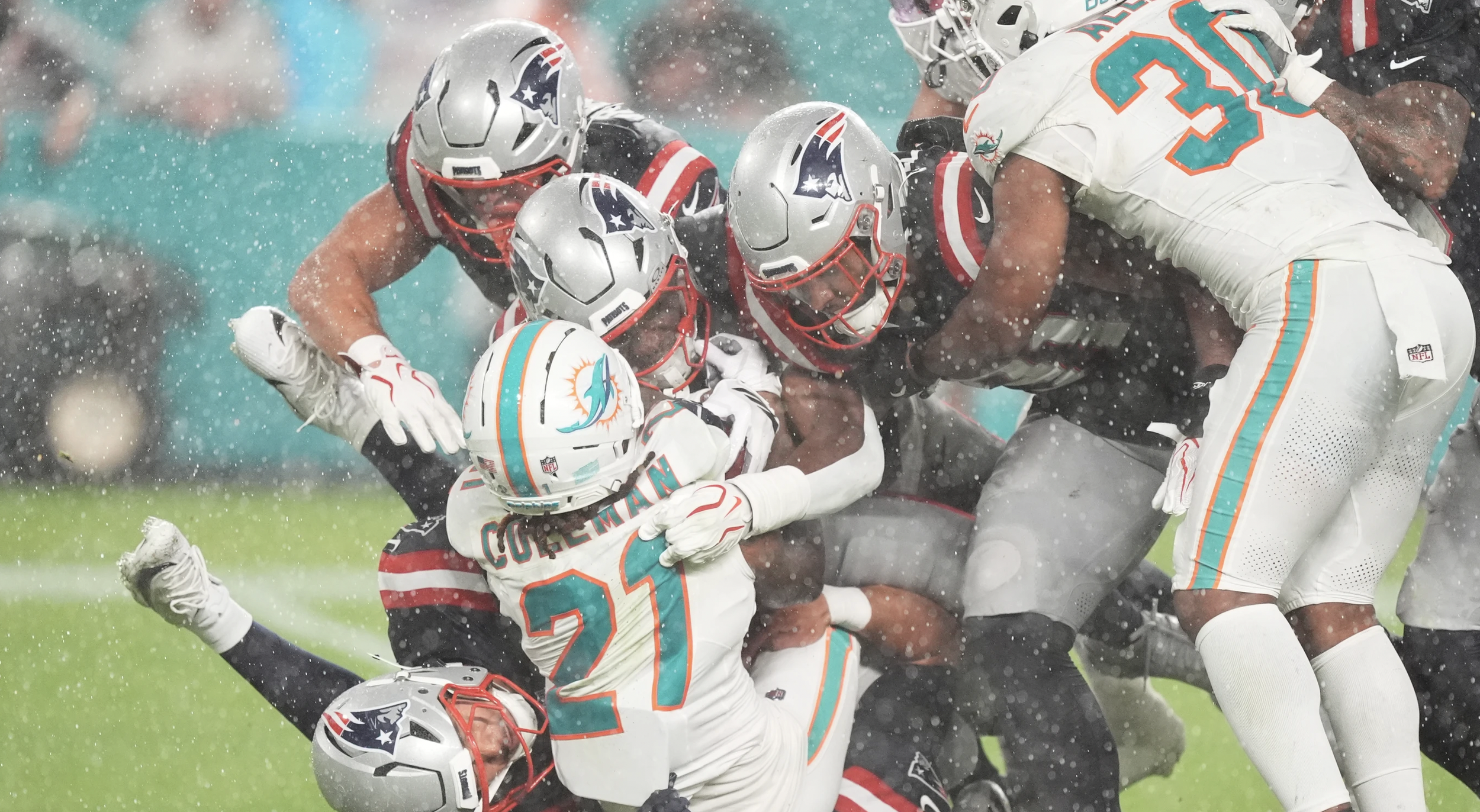
The next game is never played yesterday. The glory, the pain, and the thrill of it all happening has bonded the NFL and America in a ceaseless cycle of anticipation and continuation. In one sense an extravagant, lavish art and in another sense a brutal actualization of violence, to debate the ethics of football is to challenge America’s cultural norms and worldview. “Good” and “bad” have little place in these questions. More appropriately, asking what is “right” and “wrong” about the NFL clarifies how rare it is that such a question is raised in power to the powers that be.
When people participated in the project of America for the 2026 midterms, the potential of change was actualized. Ironically, were people to not participate in the NFL this coming Sunday, everything about it would change. In conclusion, the words of Eric Cantona (about soccer, but it works here too):
“As flies to wanton boys, we are for the gods. They kill us for their sport. Soon the science will not only be able to slow down the aging of the cells – soon the science will fix the cells to the state. And so we will become eternal. Only accidents, crimes, wars will still kill us, but unfortunately crimes and wars will multiply. I love football. Thank you.”