Blah, Blah, Blah - “Digger”, Satire, and Revolution
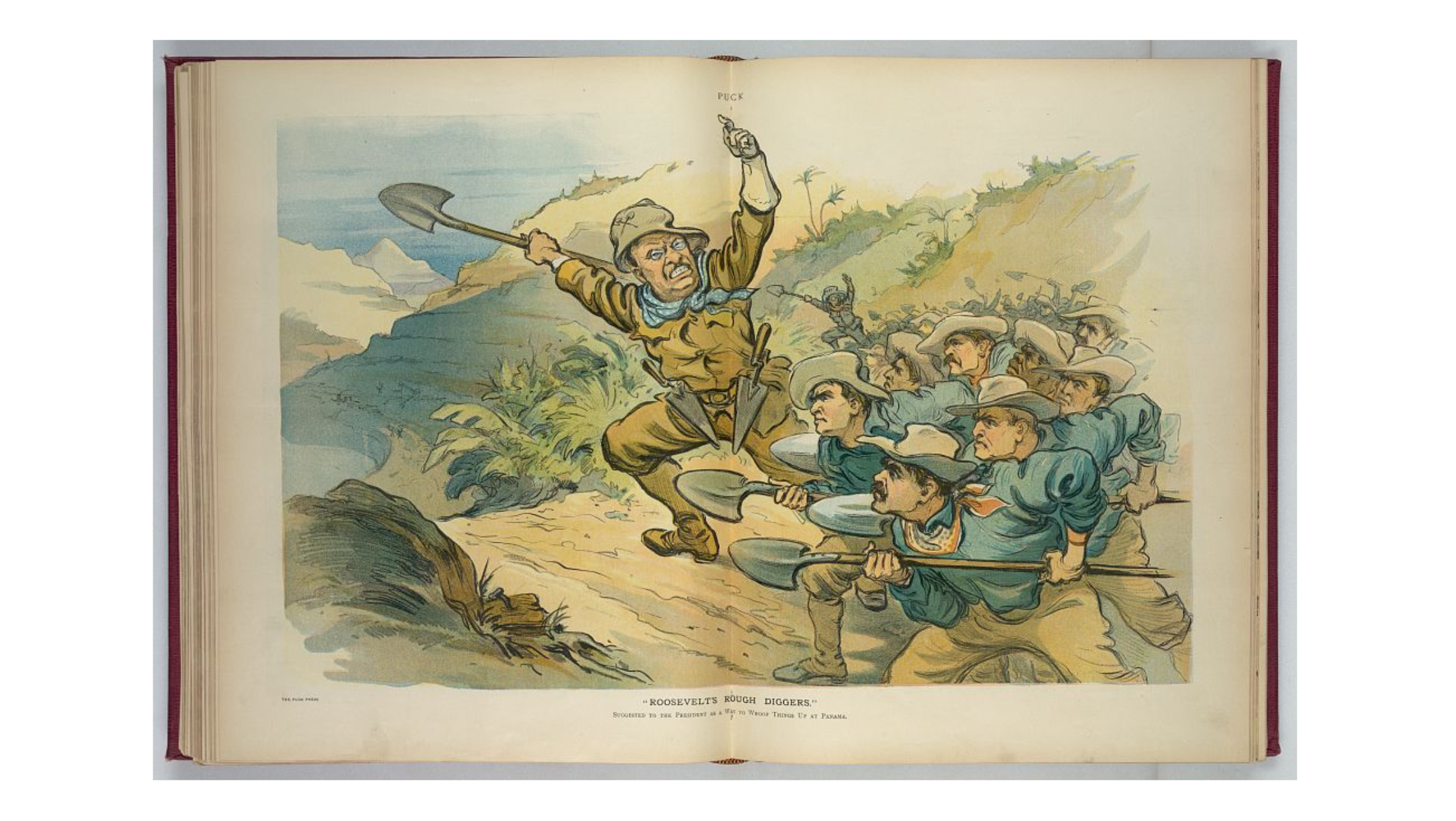
“Roosevelt’s rough diggers” - J. Ottmann Lith. Co., Puck Bldg., 1906 November 14.
In its opening weekend, “Digger” made just about $8 million dollars at the box office. Since its release, audience acclaim for the movie has heightened and strengthened, to no avail of the movie trying to meet its bottom line cost of around $250 million dollars. It’s a terrible financial return and an ironic last product of Warner Brothers as an independent studio.
But who gives a shit? That money was never going to budgeted for a more ethical cause, and the calculable loss for the movie’s production pales in comparison to the incalculable loss of Warner Brothers and Paramount being consumed by the Ellison family. More importantly, the lack of butts in seats and the bizarre critical reception to the movie threatens to obfuscate an urgent message that the movie provokes: satire cannot save the world just because it exists. “Blah, Blah, Blah”, the movie’s original title, both describes the tyrants determining how society operates and how they can turn art into a tool of subversive distraction.
This is a no-spoiler essay. Also, the phenomenon of this movie has great power, and although not necessary to comprehend this essay, I urge you to watch this in a theater to enjoy the feeling of beautiful pictures on big screens.
The Movie Itself
The performances across the board are fantastic, especially Riz Ahmed, but this is the fuckin Tom Cruise show. He’s electric, playing a pastiche of archetypes with delicious charisma. There’s a meta element of Cruise playing this part that’s reminiscent of John Travolta in “Wild Hogs”: They are both odd men acting in parts that plainly address internal conflicts that we wonder whether the actors recognize are their own. Cruise’s eccentric-yet-guarded personality, and the limited range of topics he’ll discuss in interviews, likely added to the impossibility of marketing this movie.
Also, Alejandro Iñárritu is going god mode, except that I wish we got to focus more on the women - Sandra Huller, Sophie Wilde, and Emma D’Arcy’s characters all felt a little underbaked. Otherwise, the screenplay and editing and set design and special effects and what he gets out of these actors is absolutely fucking bonkers. The movie looks and sounds gorgeous.
The sum of the movie’s parts has resulted in poignant themes being addressed, its critical reception, and what it represents for the film industry. Firstly, what is satire?
The Power of Satire, for Good and Evil
Satire has existed for a long time. Generally, whether humorous or not, satire refracts society in a new way to expose a truth otherwise overlooked. It is constructive social criticism of any given subject, be it an individual, a team, a government, or otherwise. As difficult as it is to create a work of art where audiences receive an artist’s intended messages (a nuanced topic in itself), effective satire typically delivers a succinct perspective that resonates across a target audience. But while satire can be a catalyst of change, like how theory can be a form of praxis, practical consequences are only achieved with physical action.
Much of the movie is echoing “Dr. Strangelove”, Stanley Kubrick’s fantastic satire that exposes how the folly of powerful people’s arrogance and ironies therein results in catastrophe. Now, more than 60 years later, “Digger” comes at a time when the caricatures of Kubrick’s film are real and have supreme power: Peter Thiel, Donald Trump, Elon Musk, Sam Altman, Mark Zuckerberg, Jeff Bezos, Sundar Pichai, et fucking cetera. Right wing movements are thriving in nations with unprecedented weapons of mass surveillance, near-total control over information and how it is disseminated, and the destruction of written and practiced law. We have lost and are continually losing the recipes to create a better Earth, instead hurtling towards climate disaster and technocratic totalitarianism. What does it mean that a world which has lived with “Dr. Strangelove” for 60 years is in this dire situation?
A character in “Digger” argues that the goal of satire is to be funny, thus healing an audience suffering from the trauma caused by those they’re making jokes about. How that character retools satire to be healing feels aptly descriptive of the forms in which we laugh at authoritarianism today, a sensation also coined as “clapter”. Truly, when was the last time you watched SNL's cold open sketches or a late-night monologue or a stand-up bit about Trump and felt transformed in your perspective? When’s the last time that a satire peeled the curtain on the terrors we live with, rather than surrendering to an easy laugh and a round of applause? A lot of the humor of “Digger” is in how it replicates those format’s clunkyiness and gotcha-quips.
Iñárritu also seems to be compassionate for audiences trapped in this cycle of feckless satire. The audience's complicity by laughing (or not) within this system isn’t to be blamed - the normalisation of fascism and its siphoning into this media system is the true culprit. The clunkiness of "Digger" is precise.
Hypocrisy and Critique
Critics, artists, and seemingly anybody not working in AI and private equity is struggling amidst our failing economy. Barely anything makes money and everything is too expensive. Film critics often find themselves clinging to ever-larger media corporations like liferafts, which are big enough to outlast the smaller, independent boats in the sea of our social media attention economy bullshit. And in addition to that, the overwhelming power of negativity to generate attention online has become a fabric and lexicon of success for so many. It’s an ironic tragedy then, imbued with hypocrisy, that negative critical response to movies supports the industry of film criticism, no matter how genuine a review may be.
So many reviews about “Digger” seem to forward opinions about the director, which then bleeds into adjudicating the movie on its own merits. Generally, critics of any kind of art seek a trend line through an artist's oeuvre for the sake of comparison to adjudicate development and quality. There's nothing necessarily wrong with that, and it can also take away from perceiving qualities of the work when considered in a vacuum, free from that line of judgement. Take the name Iñárritu away from this and I wonder if the general response would more acutely comment that this is an original big-budget movie that takes immense risks and has its audience engaging in fascinating discussions (more on that later).
Most reviews for “Digger” grasp similar messages that the movie is telling. People just seem split on whether the movie succeeds in conveying its messages:
https://www.indiewire.com/criticism/movies/digger-movie-review-tom-cruise-1235219051/
https://www.theringer.com/2026/10/05/movies/digger-review-tom-cruise-alejandro-inarritu
https://www.rogerebert.com/reviews/digger-tom-cruise-alejandro-gonzalez-inarritu-film-review-2026
Tyrants are obviously hypocrites of the worst kind, and both in this movie and in reality they are regularly exposed as such. And yet they persist. Iñárritu plainly shows, perhaps too plainly for some’s satisfaction, that there is no ethical consumption under capitalism and that we all benefit from uncomfortable truths. How do we come to terms with that? Unfortunately, satire has been a tool to eschew the inconvenience of those hypocrisies by allowing you to feel that you are ethically sound. If I laugh at the joke about Trump, I feel like one of the good guys. And yet Trump persists to destroy the world. Truths like how our higher standard of living comes at the cost of our environment are extremely inconvenient, and yet they are not impossible to resist. Our collective inability to organize around shared principles of rules for a just society has resulted in broadly placating to comfort’s comfort. We are programmed to enjoy sitting in a comfortable room, satisfied watching shadows on the TV while the blinds are down on the windows. What’s actually going on outside is immaterial.
Our Imagination is Finite
Imagination is a finite resource determined by our environment and time. As we grow older, our schemas solidify into fixed definitions of what is and what’s possible. Charm aside, a childlike wonder for the world isn’t great for surviving in the bush - knowing what is predator and what is prey kept our species alive until we were able to transcend the food web. Losing imagination is a simultaneous process of chicken-and-egg: Brains naturally settle on assumed facts, and patterns we recognize of the world validate, grow, and inform our assumptions.
Articles and thoughts have come out for well over a decade bemoaning how superhero movies and mega-IP franchises water down the market for daring original ideas. The film industry’s consolidation of capital into sure-fire sequels and simulacra befits the rich and powerful, who profit from consumption of placant content. Simultaneously, the volume and consistency of that kind of content may be hurting our collective understanding of how a movie can succeed. Does success just mean box office numbers and digital engagement? Can the profundity of themes and ideas generated by a movie be a metric of success? Perhaps “Digger” highlights that a knock-down effect of lacking original movies is our loss of our imagination for what movies can be. “Digger” isn’t successful just because it tries to do something original, but a success of the movie is in how much its big swing has resonated with its audiences.
Within that swing, “Digger” also hits a home-run of highlighting another distraction in America today: “debate” and its values. Once you recognize it, you see it everywhere. Also, it restricts an imagination of an issue as being one way or the other, reason or extremism, high or low. Take older instances of climate scientists and climate change deniers arguing, or newer instances of Turning Point frolicking in their own logical fallacies and evil - Jubilee’s dogshit slop largely fits into this as well. Consequently, take a place like the Brooklyn Museum, a lovely institution whose value statements includes the following:
“We embrace Complexity - We believe art transcends simple messages, revealing layered narratives that encourage deeper exploration. We champion curiosity over certainty, conversations over declarations, and questions over answers.”
Unfortunately, the utility of this constructivist philosophy has been burnt to a crisp by fascists. In any of the aforementioned examples, fascists will always destroy debate because they do not play by the rules of conventional American society. They cheat and lie and steal and kill. Liberal principles, like believing that reason always prevails and that due comeuppance is a matter of fate, are antiquated. Championing curiosity over certainty has become a bread-and-butter ontological argument for conservative Democrats to not actually do anything across the country; They don’t need to take sides and instead act as the town square. But what do you do when one of those sides gets power and defunds the town square? Or what if they burn it all down? In the tragedy of the commons, when one person takes all of the fish from the pond, the rest of the families fucking starve to death.
Movies don't "need" to be anything, much less “need” to be “imaginative”. And perhaps a takeaway of “Digger” is that, besides relatively stretching our imaginations, the movie itself is not enough. Satire can prompt you to see your reality in a new way, but maybe it can’t imagine a better set of circumstances to live by any better than you can away from the screen.
In Conclusion,
When Gil Scott-Heron sang that the revolution will not be televised, he articulated through metaphor how an individual’s radicalization happens internally. To transform into something new and to unlearn systems of oppression, you’ve got to come to realizations in ways that are uniquely personal to you. His phrase is also literal; An oppressor can televise the image of a revolution against them, hear the jeers and protests, and then carry on with their oppression. Indirectly, an oppressor also benefits from imagination being stifled: When you can’t imagine a new way of living, you’re forced to live within that boundary. In a world of unlimited amounts of media, where confirmation bias and attention can be so easily influenced, the question cannot just be what is being represented in media. We must ask as well what media we aren’t.
“Digger” is not a perfect vehicle for these themes, nor is it (clearly) a movie that works for everybody. But ultimately, the movie has become a unique and evolving tool to provoke us to reconsider our complicity and what media’s real power is. Tom Cruise acting his ass off in this makes it that much more enjoyable too.
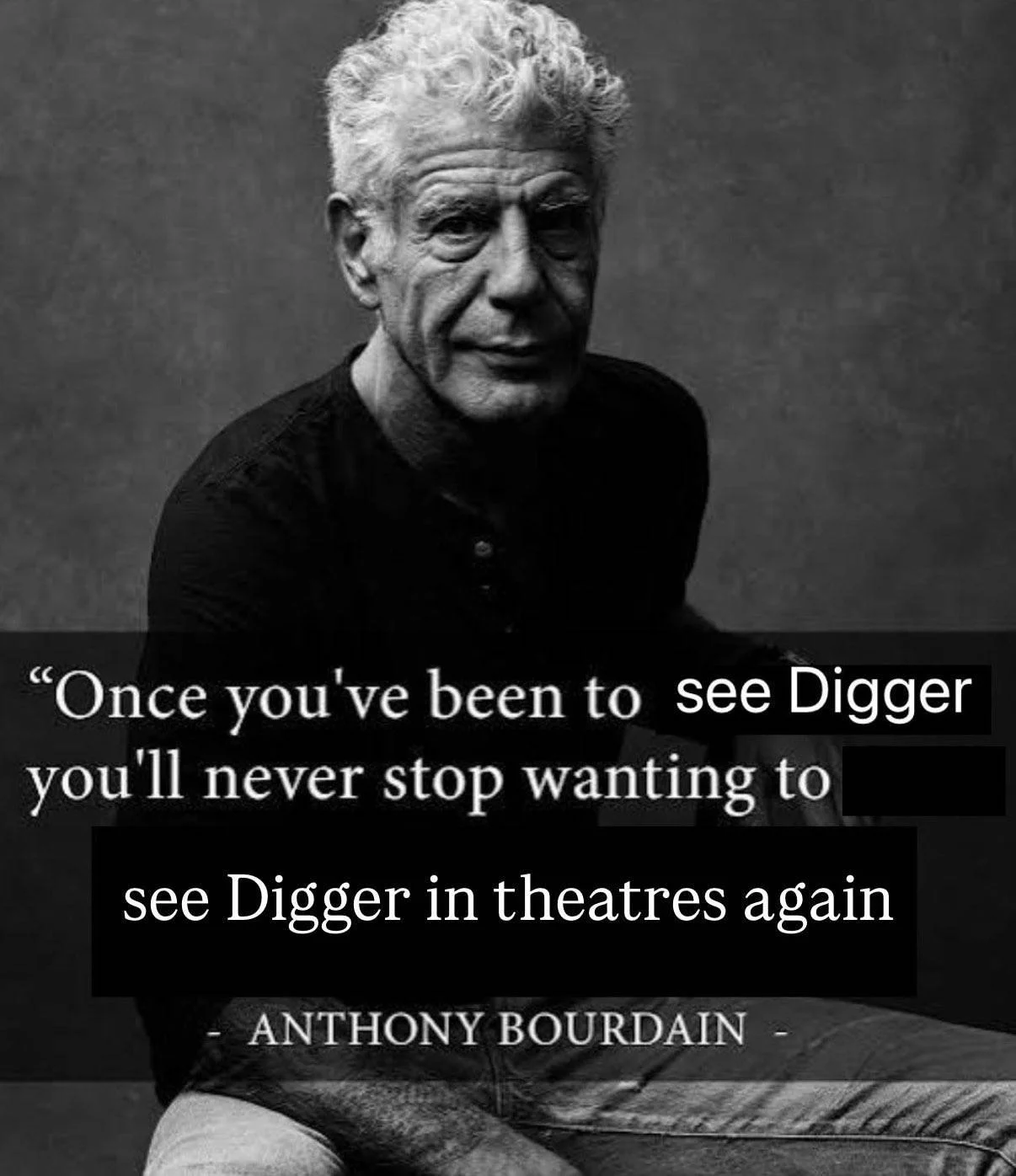
Asa Anderson with the meme