Writing About Furries
The most blatant exposure I’ve had to a furry that I know of was to an ex-girlfriend’s roommate. He had a job with Google working on artificial intelligence, pretty much only ate pop-tarts, identified as a red panda, and was kicked out from his local socialist chapter. Who knows what happened with the chapter - all I know is that only eating pop-tarts can never be a recipe for success. He was clearly brilliant, and gross. He was my height but easily 20 pounds lighter; I’m a walking skeleton already.
Mocking furries has always been a simple act because what I knew grossed me out and what I didn't understand was culturally stigmatized anyway. Hating on furries is easy. I’m also fascinated by what I don’t know and even more by what I don’t understand. Where curiosity killed the cat, my curiosity to understand why people want to be anthropomorphized cats has been lurking in the back of my head for years.
For example, there are a very small number of furries who identify as Nazis, or perhaps they are Nazis who identify as furries. What the fuck is up with that guys. In any case, their political beliefs are at total odds with the vast majority in the furry fandom, but the existence of Nazi furries reinforces how some people are drawn to the fandom because it is profoundly resonant regardless of other beliefs. I’m drawn to two main questions: How did the furry fandom come to be, and what about the fandom resonates with people?
In learning more about furries and showing what I’ve learned through this essay, I feel it’s important to consider truths of the fandom which are misinterpreted or hidden through conventional means of information gathering and research. There’s truth and laziness in that, all of which sets that this essay is only an introduction to topics and is just my assorted opinions about things grounded in reality, however difficult reality is to come by.
The furry fandom is incredibly dynamic, absolutely bizarre, and psychologically fascinating. The fandom’s constantly expanding and diversifying communities fit within a nuanced subculture and in some cases mainstream culture, all of which comes from humble beginnings around 50 years ago. The furry fandom’s idealistic openness appeals to conventionally marginalized communities while still being dominated by a white male population that perpetuates the same power structures of broader society: patriarchy, white supremacy, and capitalism. In particular, the fandom struggles with how social stigma, inter-fandom disagreements, and personal insecurities affect discussions of sex and its importance to the fandom as a whole. Nevertheless, ideas prompted by those in the furry fandom about self-identity and community are provocative and constructive.
Origins and “Omaha the Cat Dancer”
In the beginning, there was something. Billions of years have passed, new elements were formed, coelacanths evolved into existence, the Haitian Revolution occurred, et cetera. In the mid-to-late 1970s, right around the time when Pol Pot was annihilating human life in Cambodia, some Americans were bumping into each other at science fiction and anime conventions who just so happened to be depicting anthropomorphized animals.
In the craft merchant table rooms at these conventions, comics by people like Ken Fletcher, Reed Waller, and paintings by Steve Gallaci appealed to a few attendees who resonated with these images, not just on the basis of their aesthetics but in how they depicted a certain self-perception and worldview. Once those likeminded people started coordinating as a group they began renting small spaces to enjoy the art and perform their own convention-like activities. These earliest meetings and small conventions of people seemed joyful and exuberant, where people without hope to find others like themselves were suddenly around like-minded friends and partners. In the words of some, the core of what brought these people together was “an appreciation for animals doing things that animals don’t typically do.”
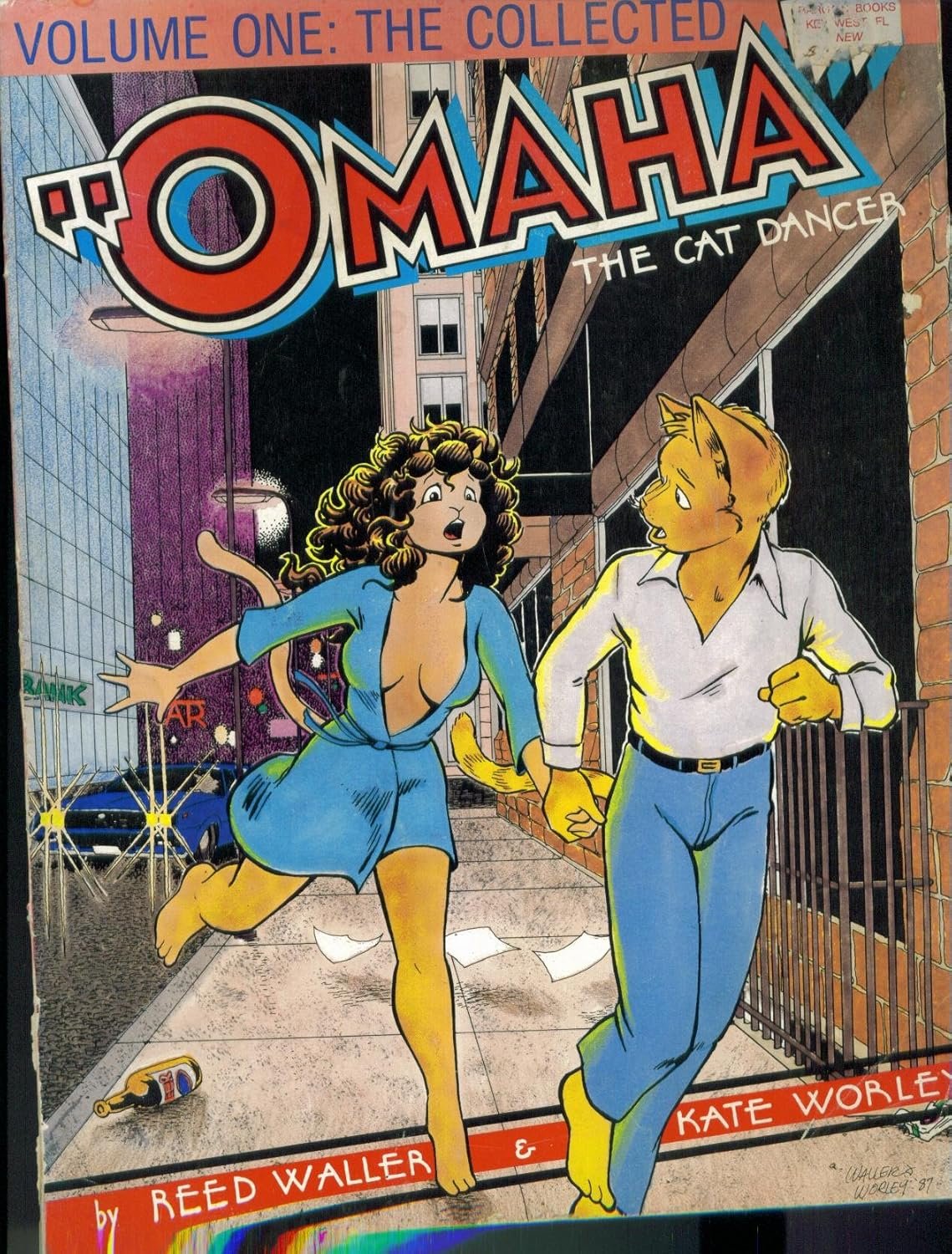
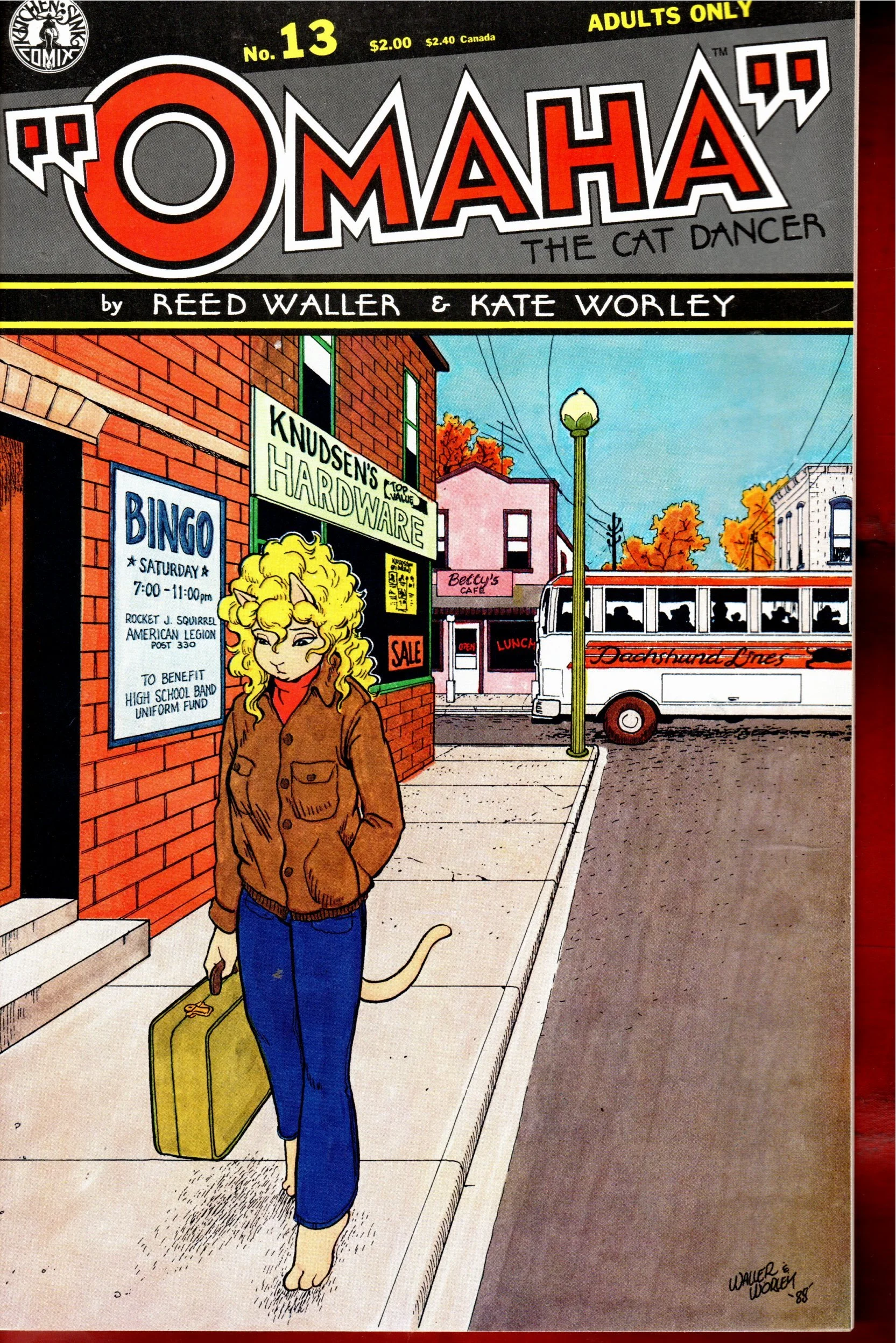
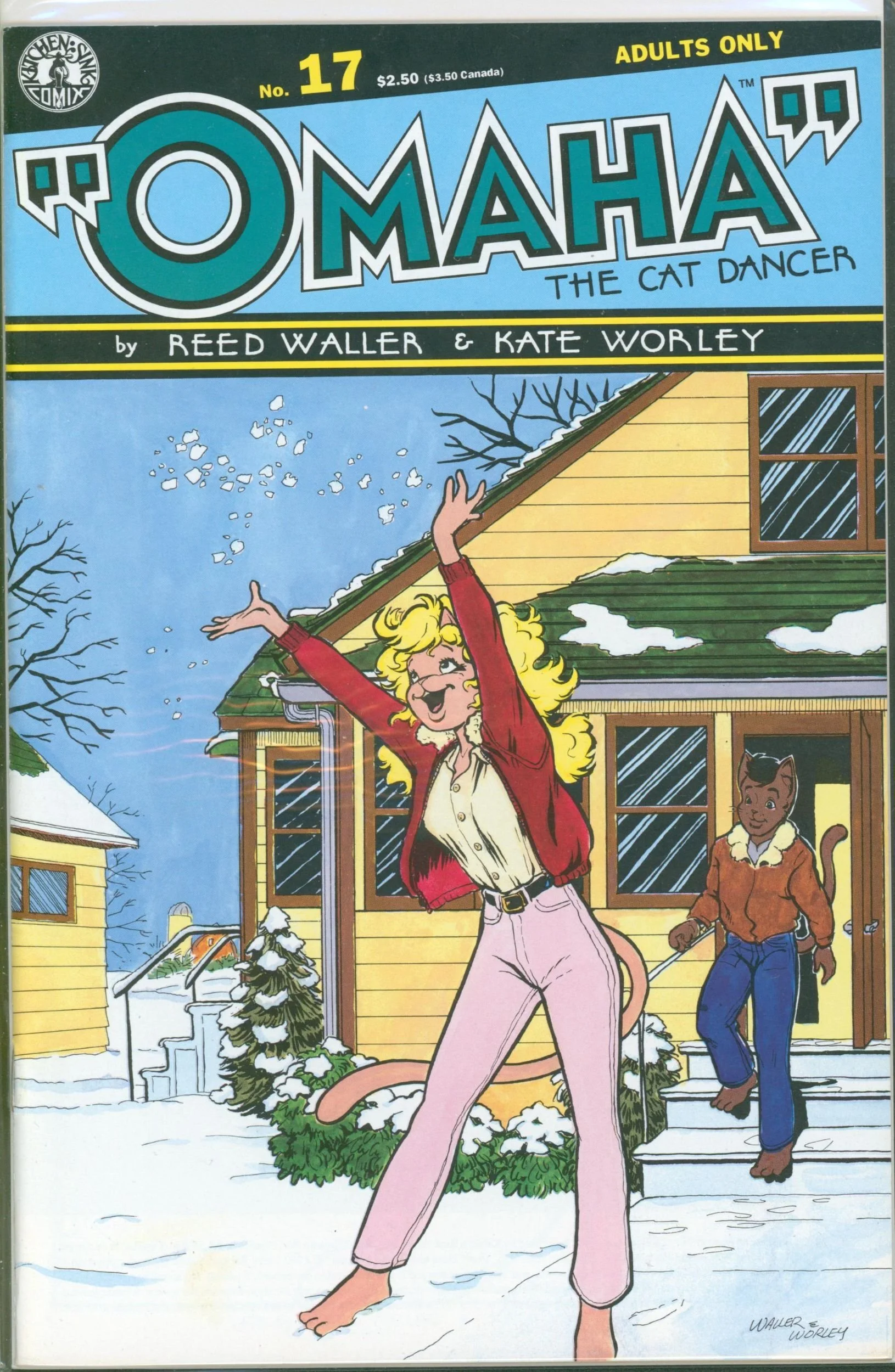
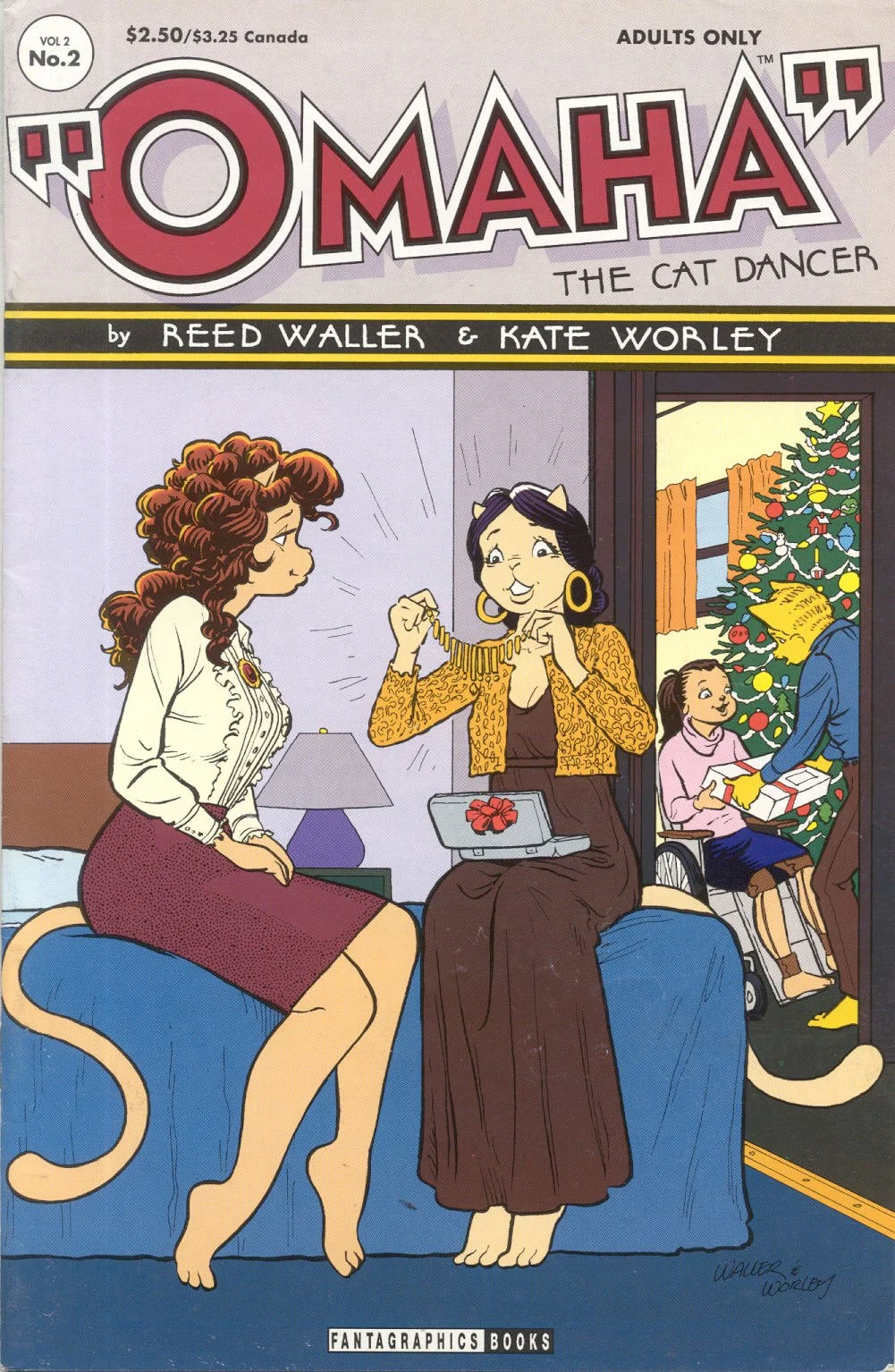
“Vootie” is credited as a launching point of furry content, although I’d posit that “Omaha the Cat Dancer” is a more definitively furry publication. Both drawn and created by Reed Waller, the latter being written by Kate Worley, “Vootie” was launched in 1976 and “Omaha” in 1979 respectively. Birthed within the contextual gumbo of Underground Comix works by people such as Robert Crumb, who themselves were inspired by “funny animals” such as Looney Tunes and Disney content, “Vootie” diverged from its contemporaries by being creating a world entirely inhabited by anthropomorphized animals: “No Humans Allowed”. The comic, which ran until 1983, existed as a published locus of furry thought, where fans of “funny animals” could write in thoughts and observations.
When prompted by a reader’s critique to incorporate more sex into “Vootie” a la other Underground Comix, “Omaha the Cat Dancer” debuted in 1979 starring a stripper who struggles under a society that criminalizes and stigmatizes her work. Where other comics like Crumb’s were wildly sexual as shock value, “Omaha” incorporated sex naturalistically. Similar to the punk movement ripping through America at the time, “Omaha” was interested in speaking to the established reality of its day versus imagining a fantastical and psychedelic world, which practically all previous “funny animal” content was focused on. Issues faced by Omaha and the characters within that world were analogous to late 1970s America (cough cough Ronald Reagan). Sure it’s furry content, and as proto-furry content without the baggage of a fandom the anthropomorphism is more clearly a rhetorical device or analogy to highlight certain themes and observations of the real world.
Sex is central to “Omaha”. Having naturalistic sex and sex work addressed compassionately in any kind of media was groundbreaking for the time, and a sexuality highly suggested in other new cultural forces such as Star Wars and Star Trek contextualizes “Omaha” within a broader sexual liberation of the time. Inevitably, “Omaha” was uniquely groundbreaking for readers who resonated as others did at conventions:
“We’d all quietly discovered that part of what brought us to furry characters, anthropomorphic characters, was that we thought they could be sexy…. We just felt like we were jumping on a bandwagon [of other content at conventions].”
As the furry fandom grew in size and ideation, the idea of fursonas was born. Ken Cougar, who had begun drawing “funny animal” content as early as 1975, is often credited as provoking the idea that anthropomorphic animals could represent one’s identity or aspects of it instead of just being characters. At once, the furry fandom shifted existentially into a world where anybody could actively and personally participate. A fursona, like any avatar, can accentuate what somebody’s happy and proud about and also manifest a latent desire. Furthermore, this shift allowed for the furry fandom to become a commodified, self-sustaining economy for artists who began receiving commissions for artwork and fursonas. Heavily inspired by Disney animations, “Bambiod” is perhaps the original fursuit, although fursuits today usually cost a little bit more than that and have many more characteristics.
Throughout its existence the furry fandom has been populated by a disproportionally large percentage of queer men. And like with queer people in the 1980s, so too did the furry fandom suffer tragic and extreme losses due to the AIDS crisis of the 1980s and 1990s. However, the 1990s were also when the fandom began to emerge as a societal force, almost entirely due to the internet expediting contact. The first ever furry-exclusive conference - ConFurEnce 1990 - exceeded expectations of attendance and enthusiasm, prompting Disney to start taking notice and quietly distancing themselves from the fandom (we’ll get to that later). And while conventions such as ConFurences were connecting people vis-a-vis, the internet was simultaneously a lightning rod and a magnet for the fandom. While comics like Waller’s “Vootie” connected people through print magazines and physical mail, the internet diversified that process to talk about all things furry - what it meant to be one, what new things were out there, et cetera. As the internet continues to evolve through the present day, those who joined the fandom in the 90s and 00s through the internet, referred to as “digital natives”, “may carry with them an experience of online fandom that is no longer accessible” due to the proliferation of artificial intelligence and the fandom’s continual development.
Like all growing movements, subgroups divulged from others regarding different interpretations over what the movement was all about. It’s impossible to chart the countless subgroups and beliefs within the fandom, but maybe you could attempt to organize it through subspecies, or by intention, or by ideology. Infamously, “Burned Furs”, likely coined in the late 1990s, emerged as a subgroup of furries who held heteronormative, white supremacist views under the auspices of the fandom. Although a minority, they today exist either surreptitiously or as outright nazi furries, alt-right furries, and anti-LGBT furries, most recently energized from the rise of Donald Trump and far-right movements internationally. It’s also quite likely that the Covid-19 pandemic, an extended period of social isolation and digital exposure, grew the furry fandom considerably in many ways also impossible to wholly quantify.
The furry fandom is a vast subculture. It is not a genre or a specific activity or a theme, but a very loose group of people who differentiate from the mainstream culture, while ultimately being based in it, with definable characteristics. Punk subculture is pretty ubiquitously understood in America: leather jackets, metal spikes, dirty Converse sneakers, piercings, tattoos, anti-establishment sentiments, et cetera. Of the countless subcultures overall, many of which are born from and continue to exist due to the internet, furry fandom stands out due to its obviously different visual appearance and plethora of ways to participate in it.
Demographics
The furry fandom began when people, concerned with how society would view their perspectives, found community and safety with others. That fear of being ostracized both explains much of the fandom’s history and makes it hard to gather clear data about it. You see this phenomenon elsewhere, like with queerness throughout American history or with Republicans who don’t want to admit they’re terrible people. Data never tells the full story, especially when people don’t feel comfortable telling you their truth. Any data gathered to this point is only somewhat reliable.
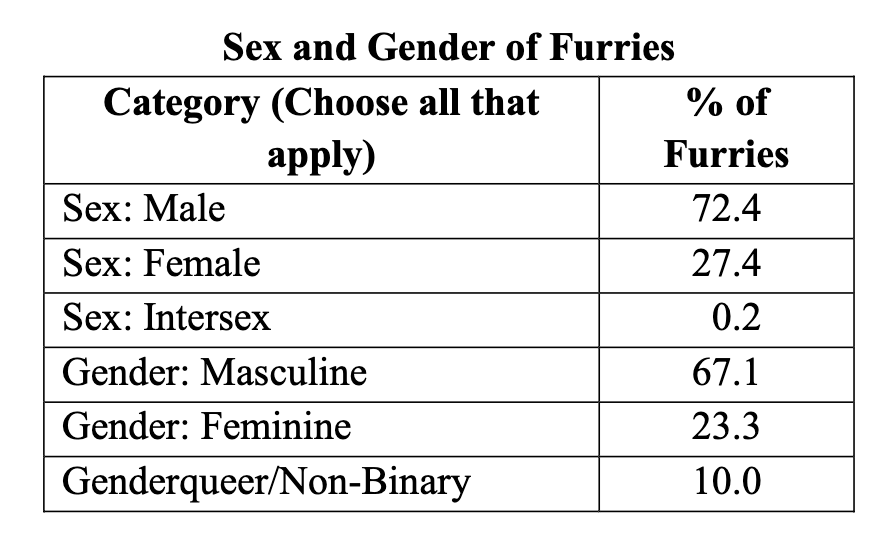
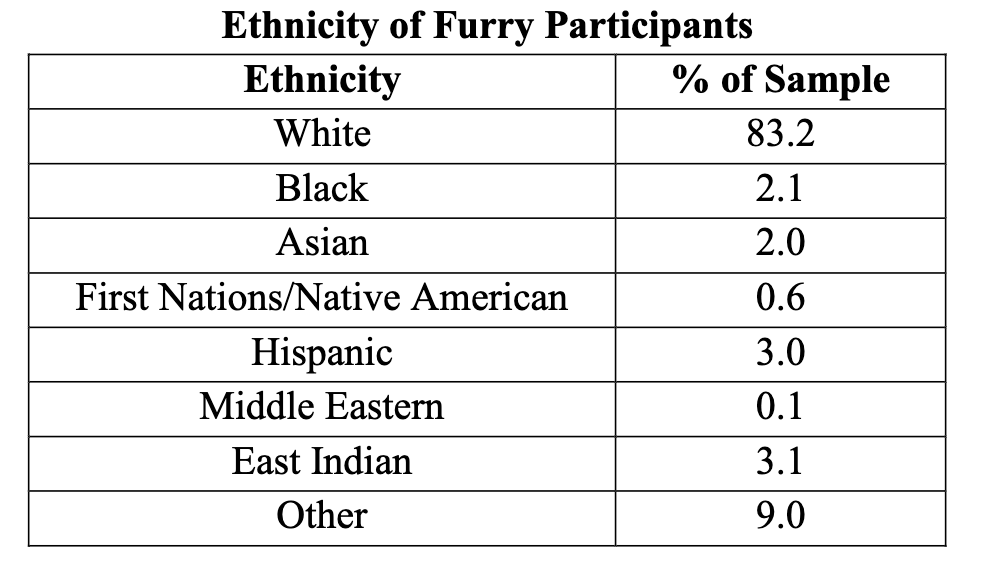
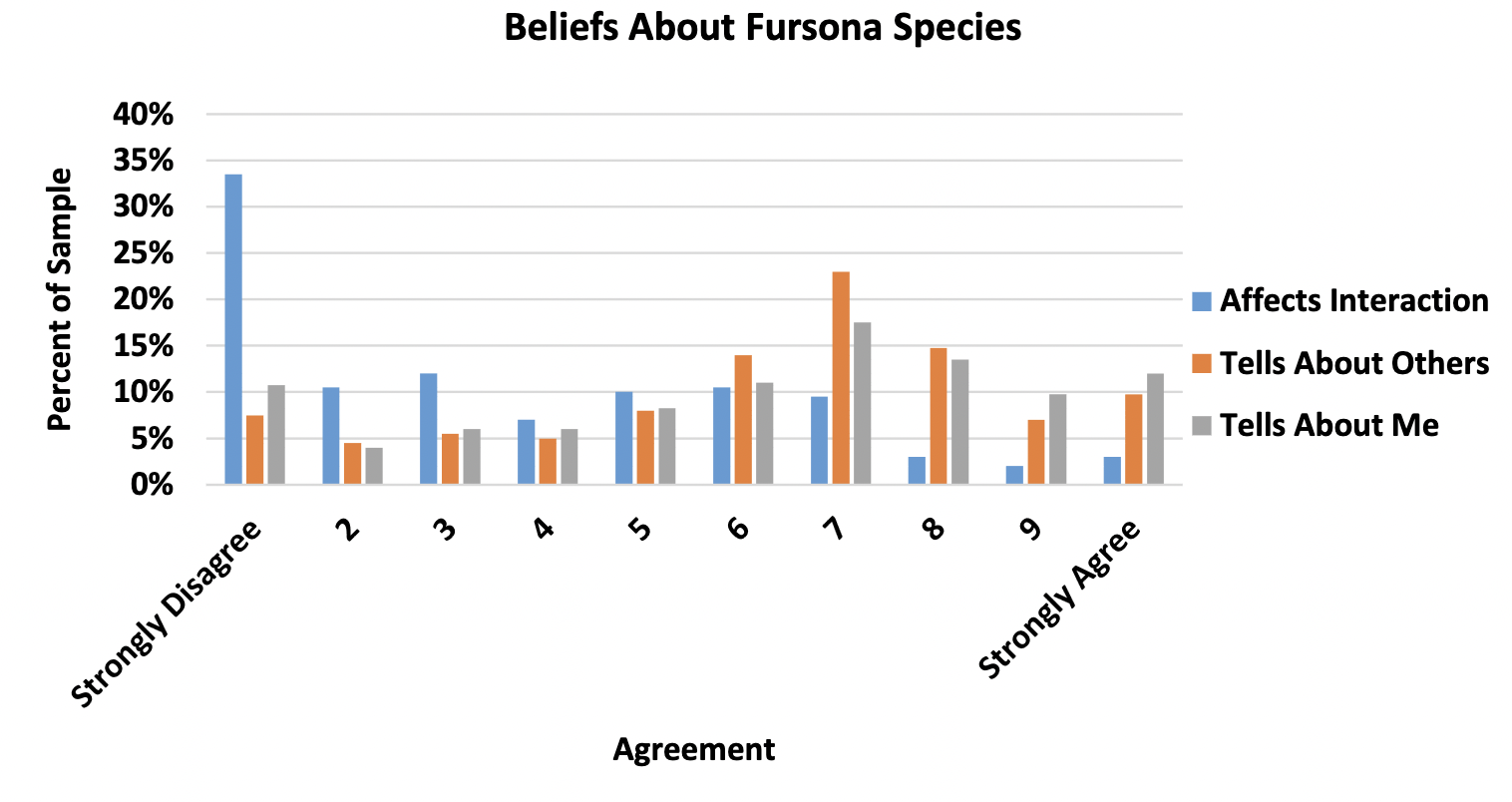
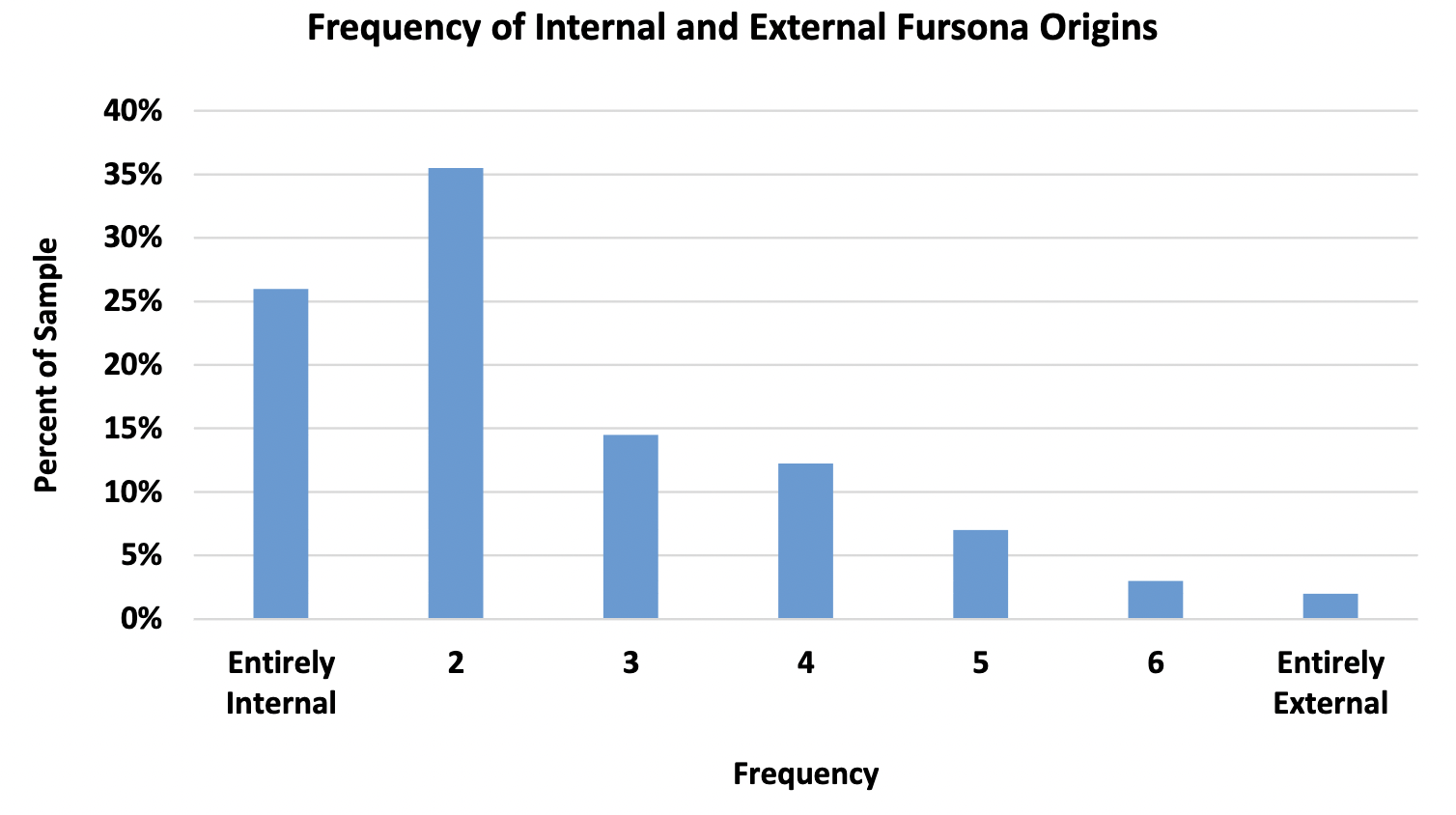
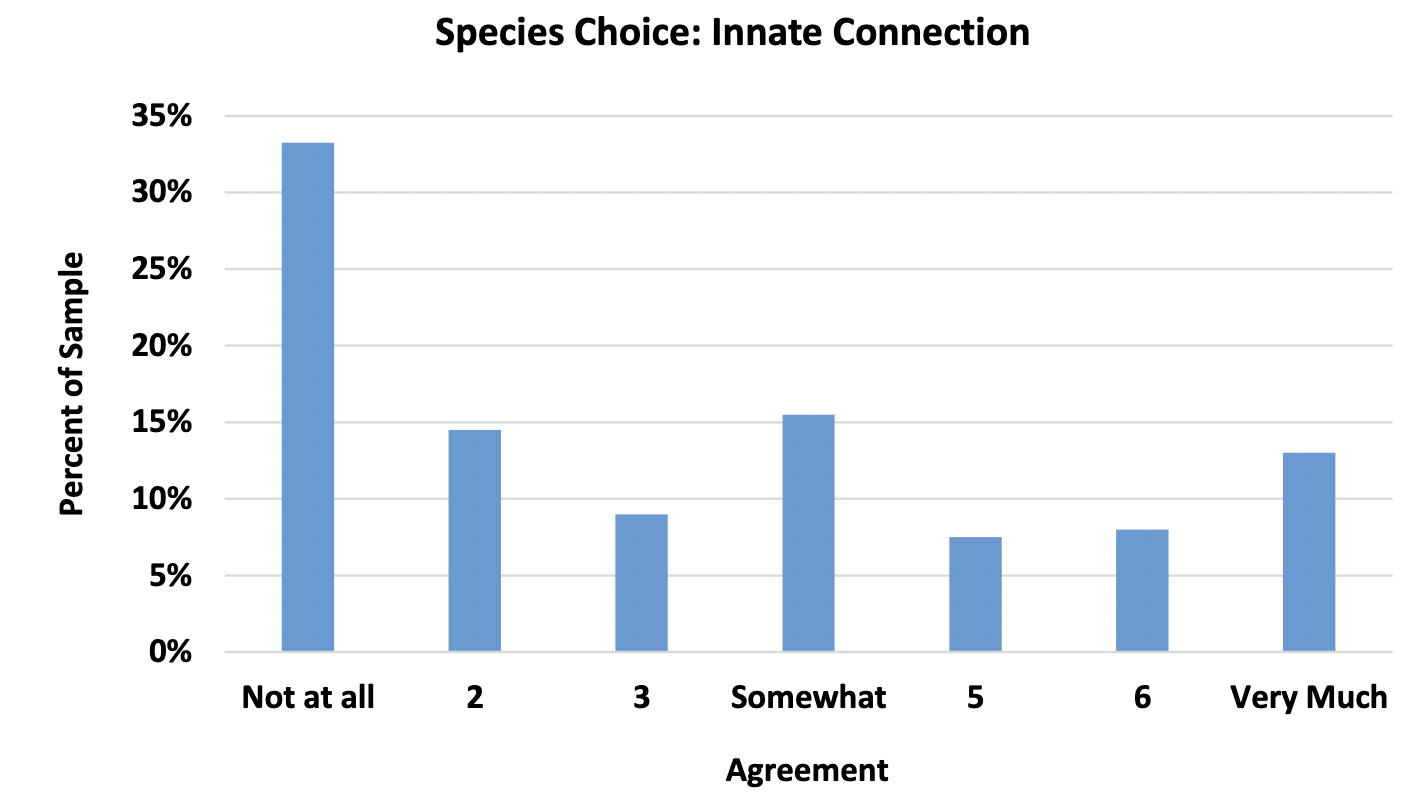
The furry fandom was created exclusively by white men. Although today’s furry fandom is a complex, largely decentralized force, it still reflects the views and experiences of cis white men in America. However, as the fandom has grown as a broader community of safety and support for all, so too have the demographics broadened. There’s a chicken-or-the-egg question here of whether furries are intrinsically drawn to the fandom or influenced by exposure, which is addressed in a 2016 study, “FurScience! A Summary of Five Years of Research from the International Anthropomorphic Research Project.”:
“In one study, we asked whether furries’ interests were driven primarily by a feeling inside of them (often expressed by statements such as “I just always was a furry” or “I was a furry, I just didn’t know it”), or whether it was something they discovered based on external influence (often expressed by statements such as “A friend introduced me to it and I was hooked” or “I discovered furry on the internet and wanted to be a part of it;” S11). Results found 45% of furries said it was both—a combination of something within them and a catalyzing exposure to the furry community. About 33% said it was solely an outside influence, while 22% said their interests came solely from within them (3% said it was neither).”
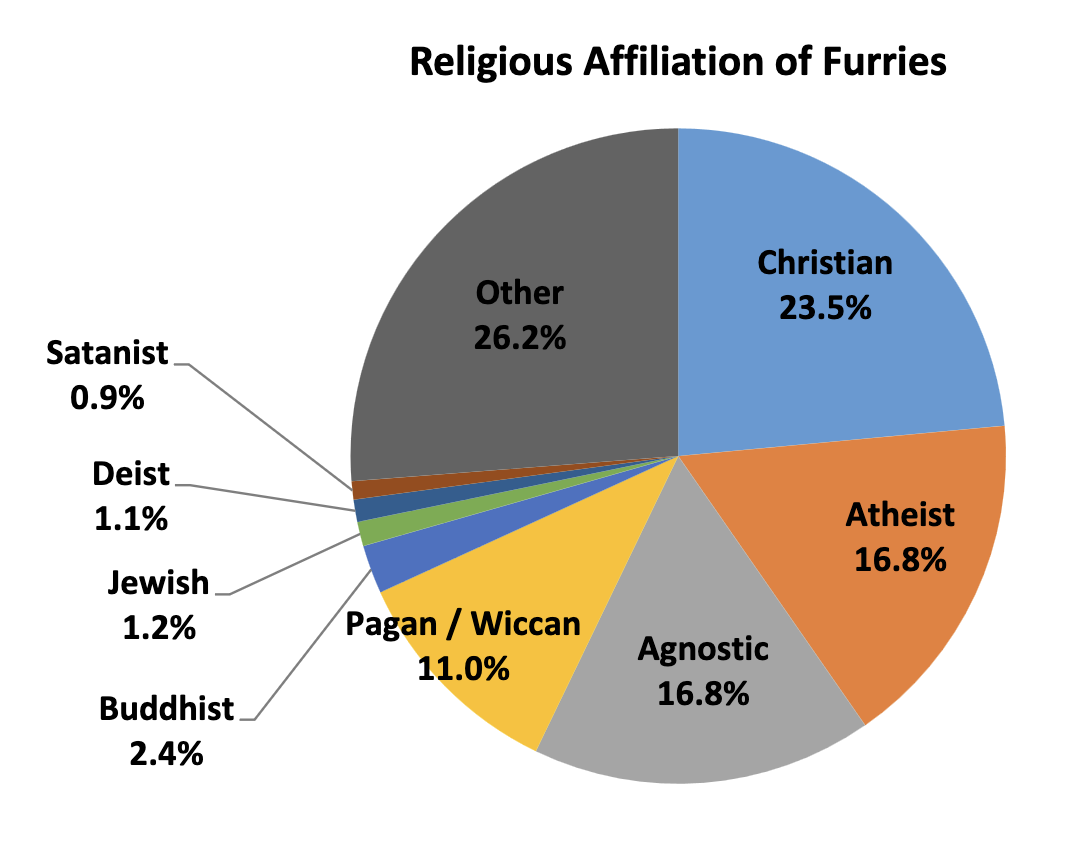
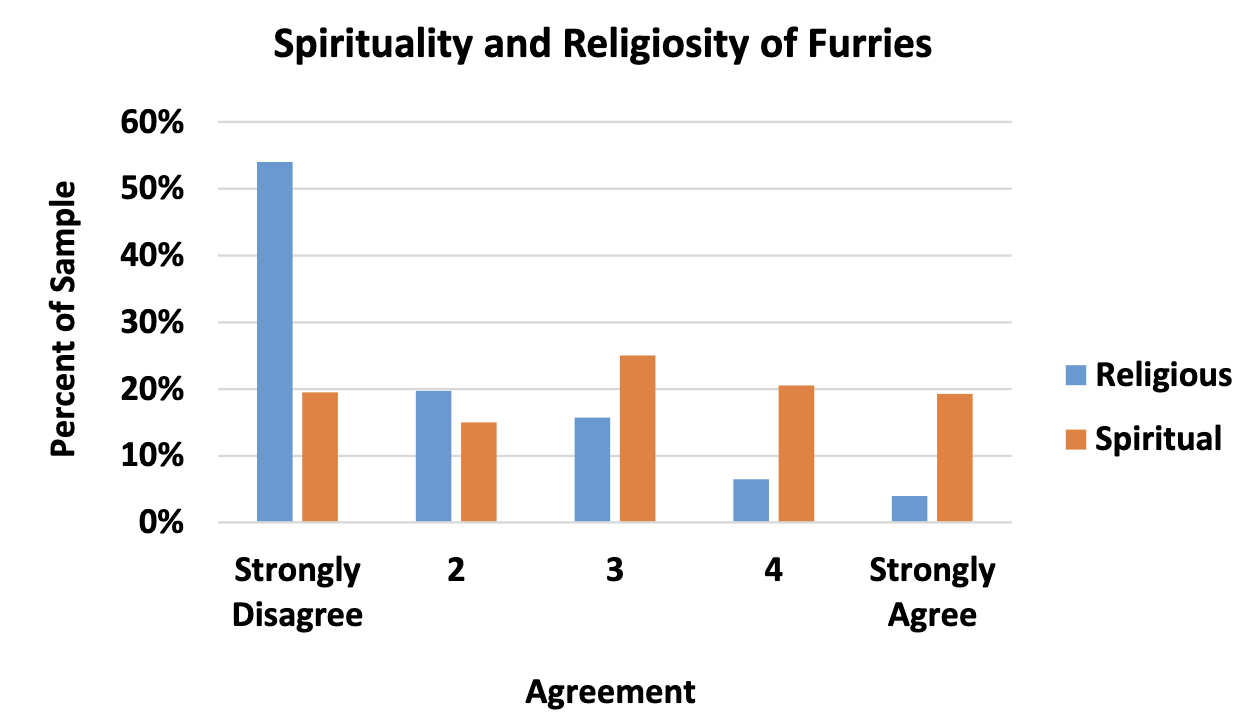
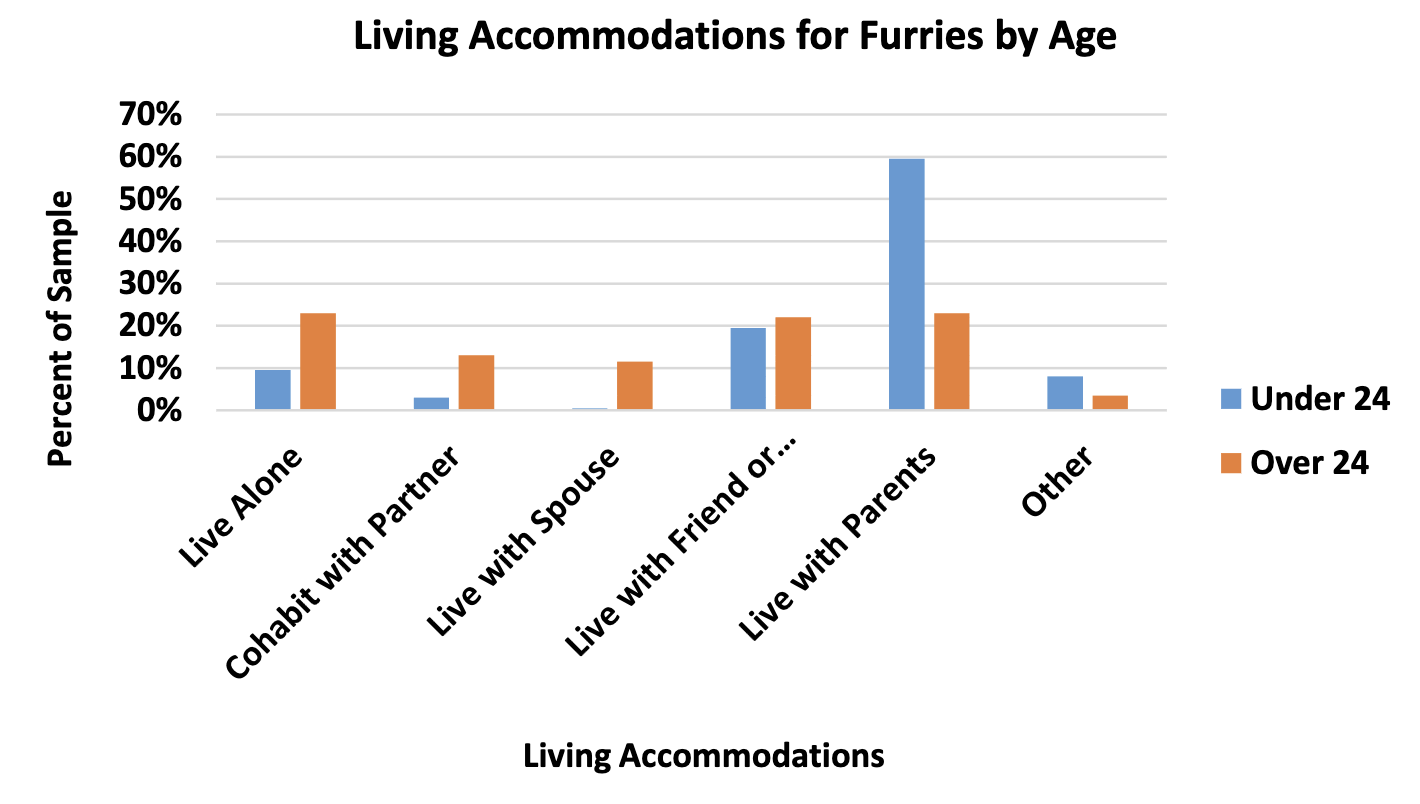
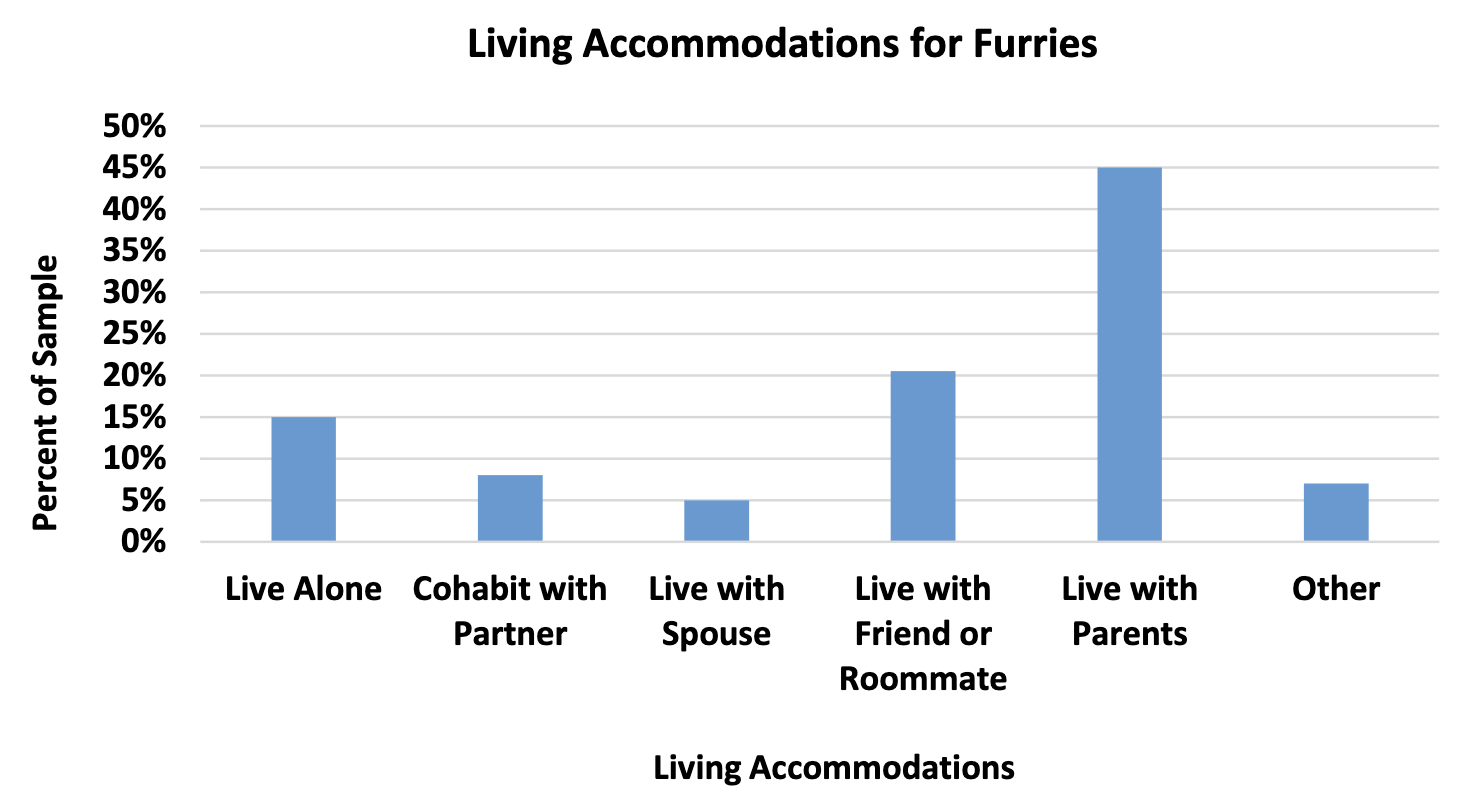
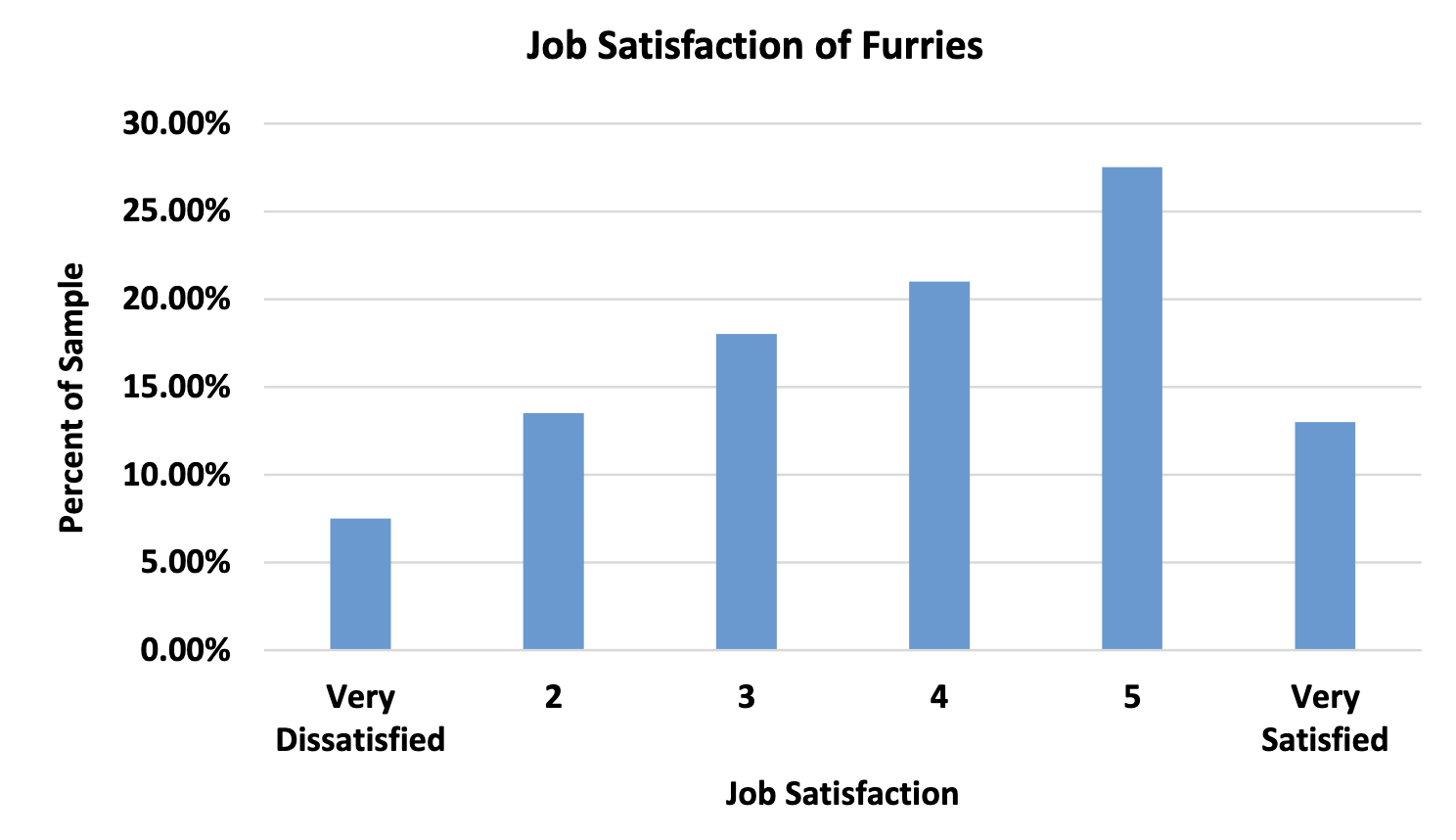
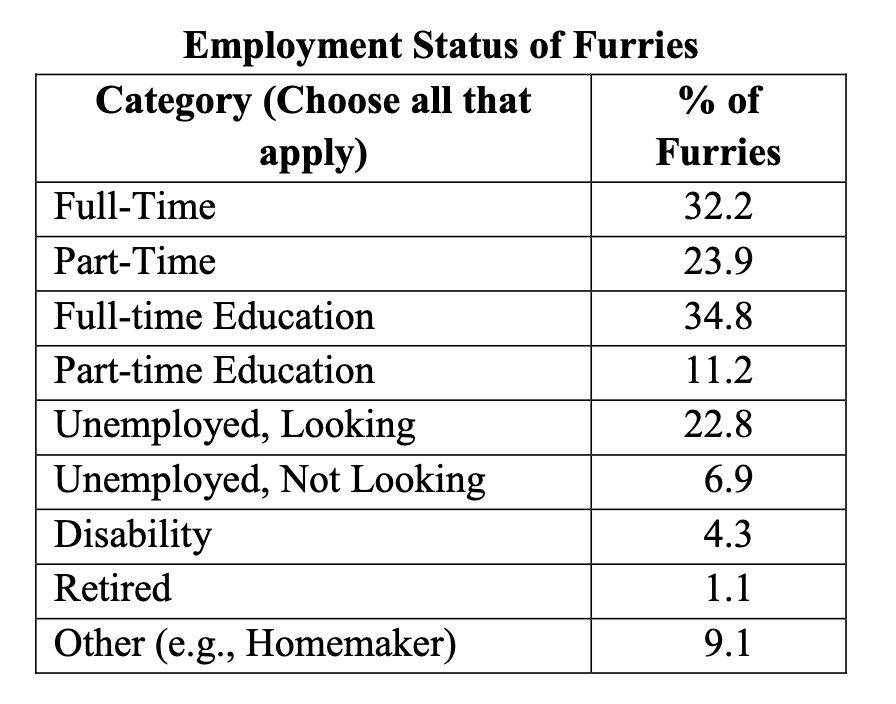
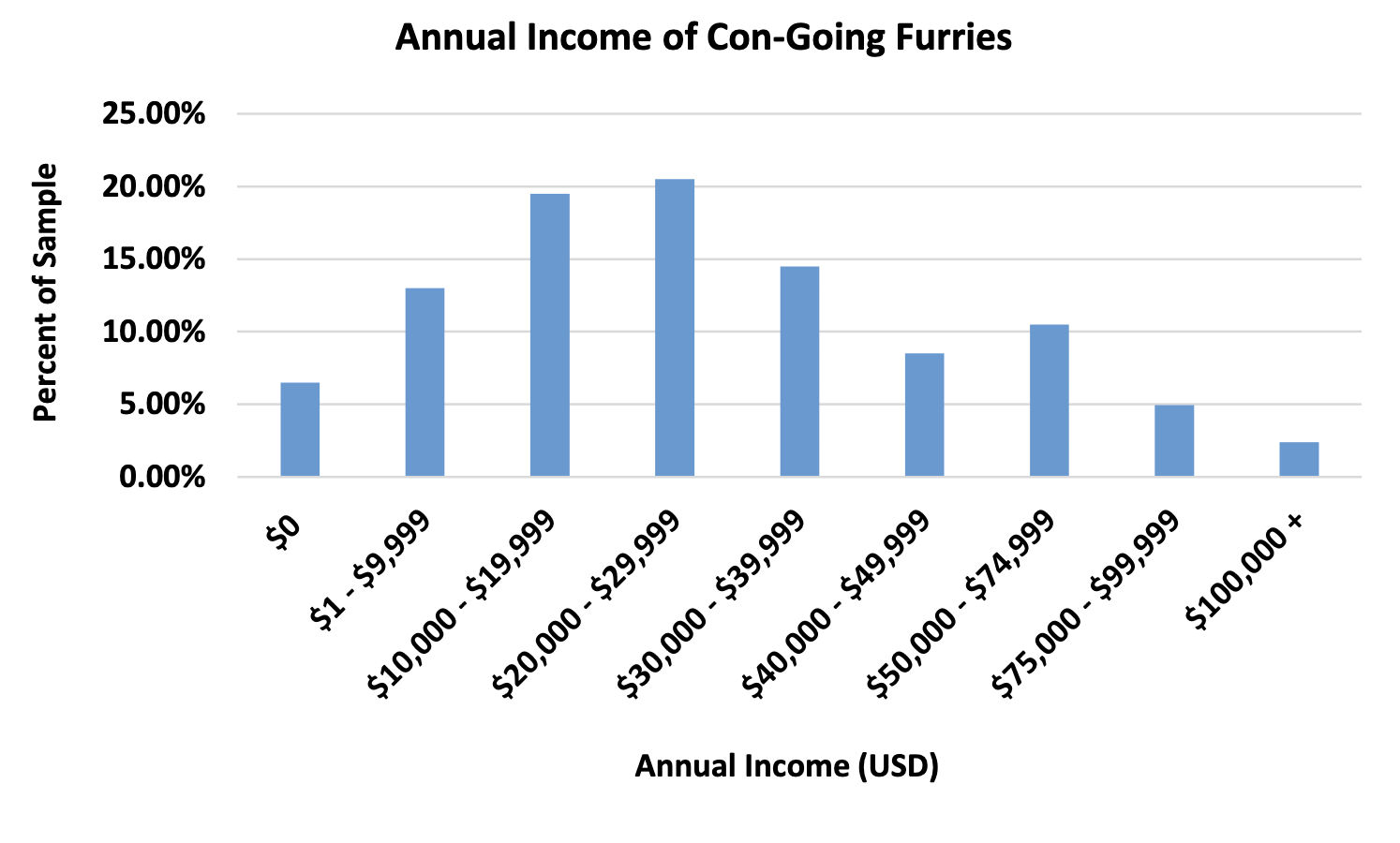
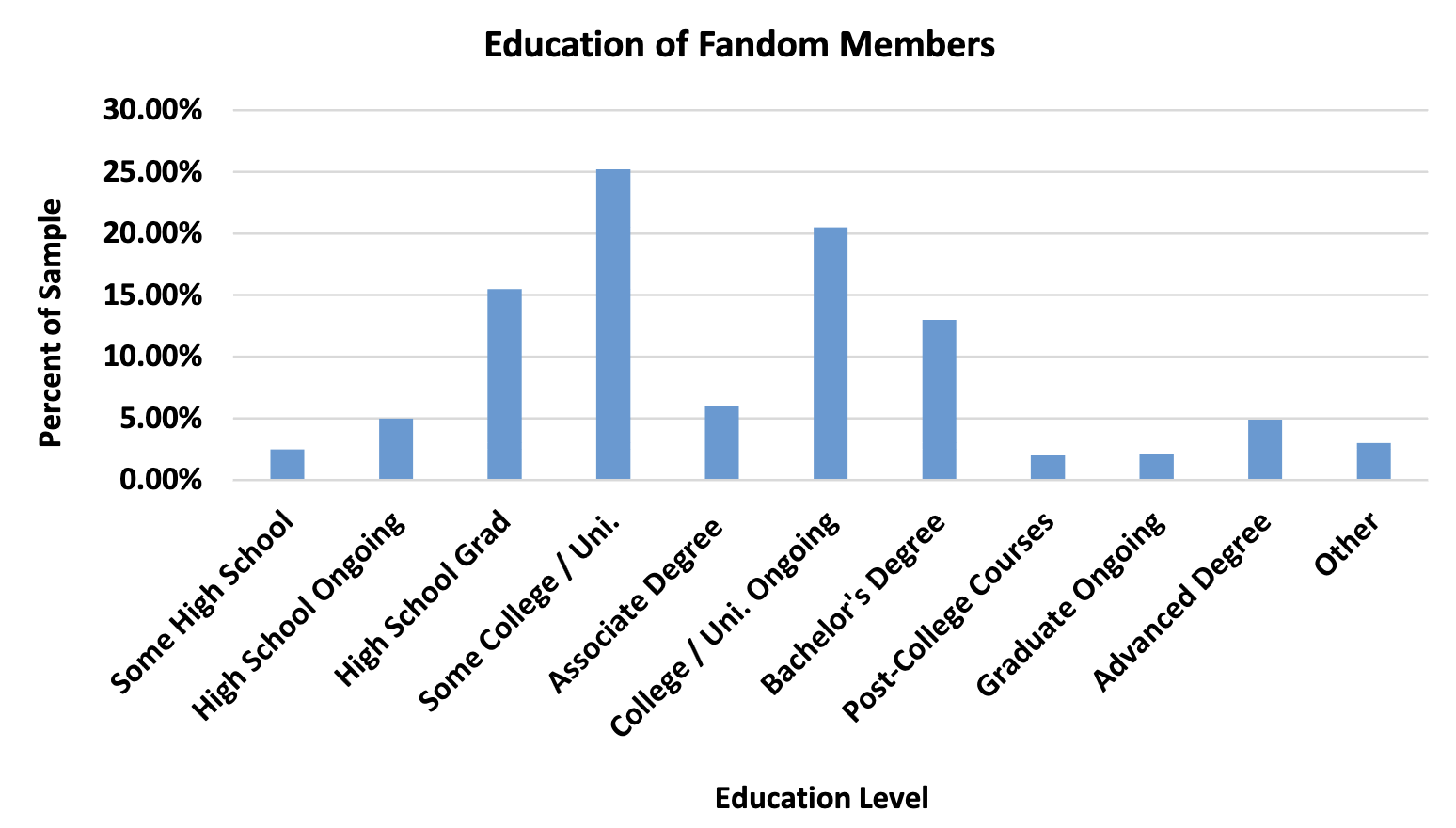
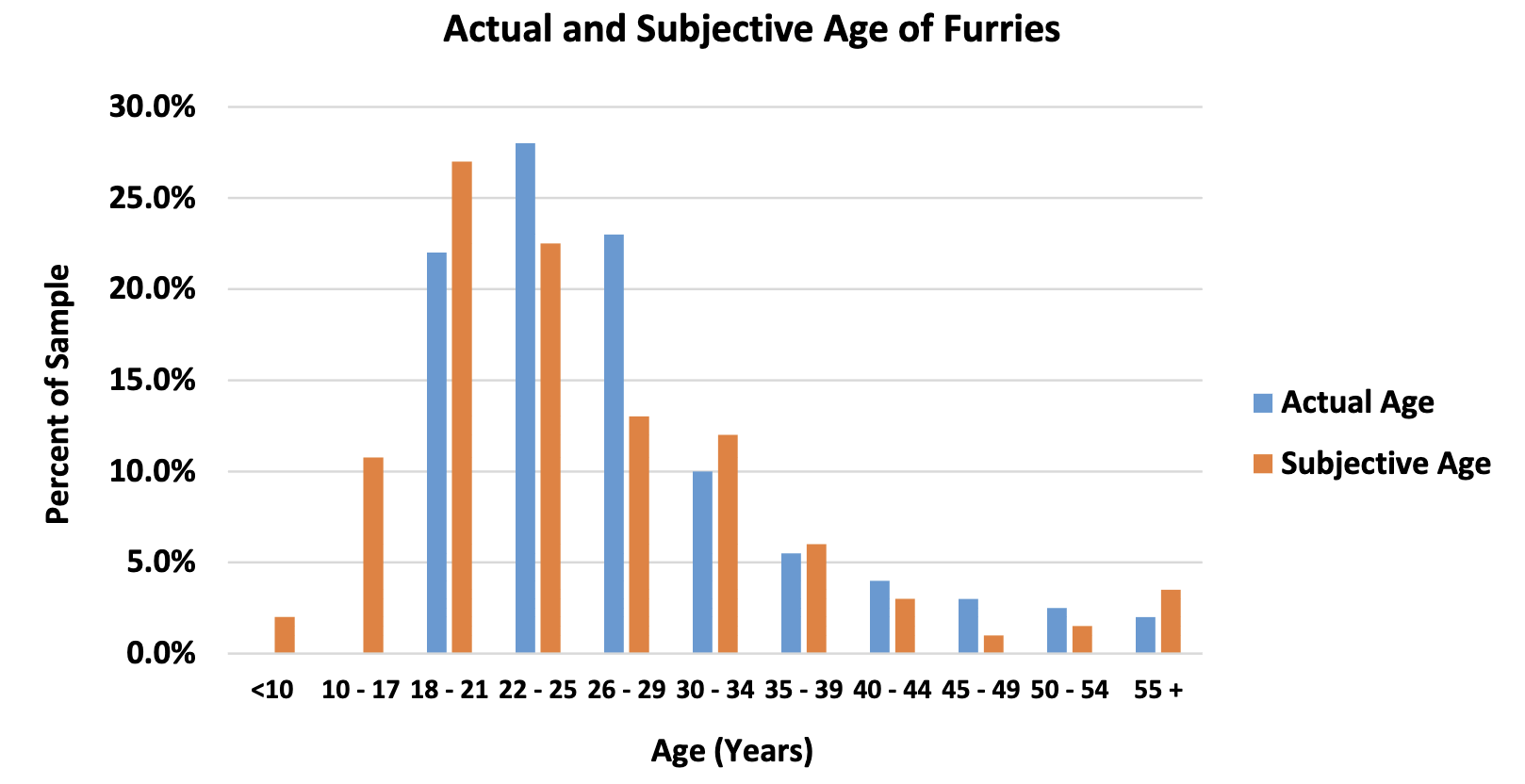
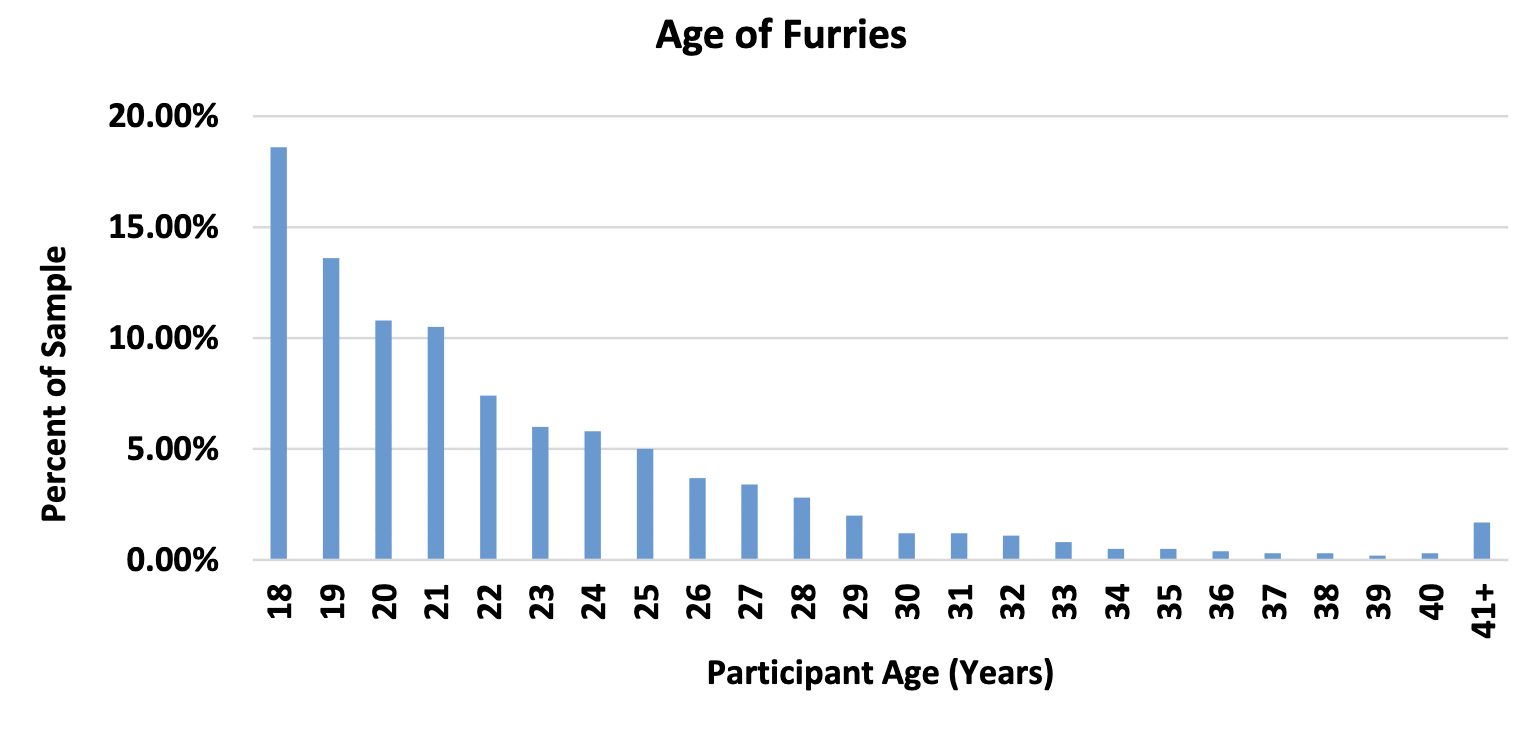
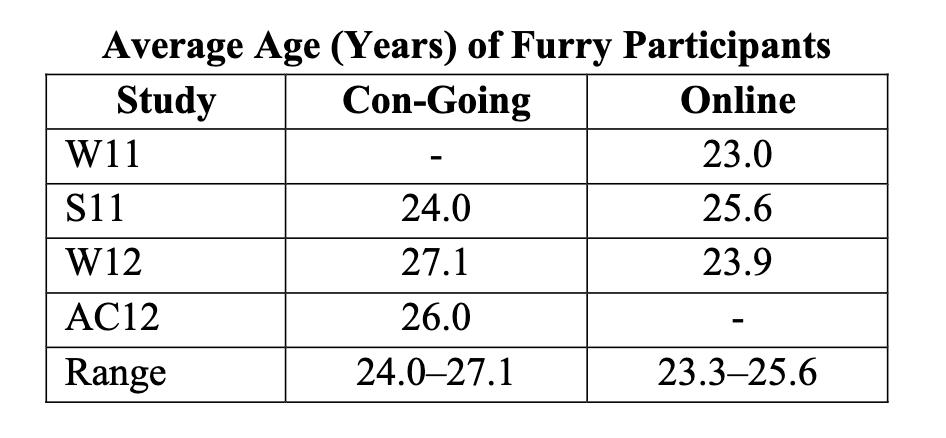
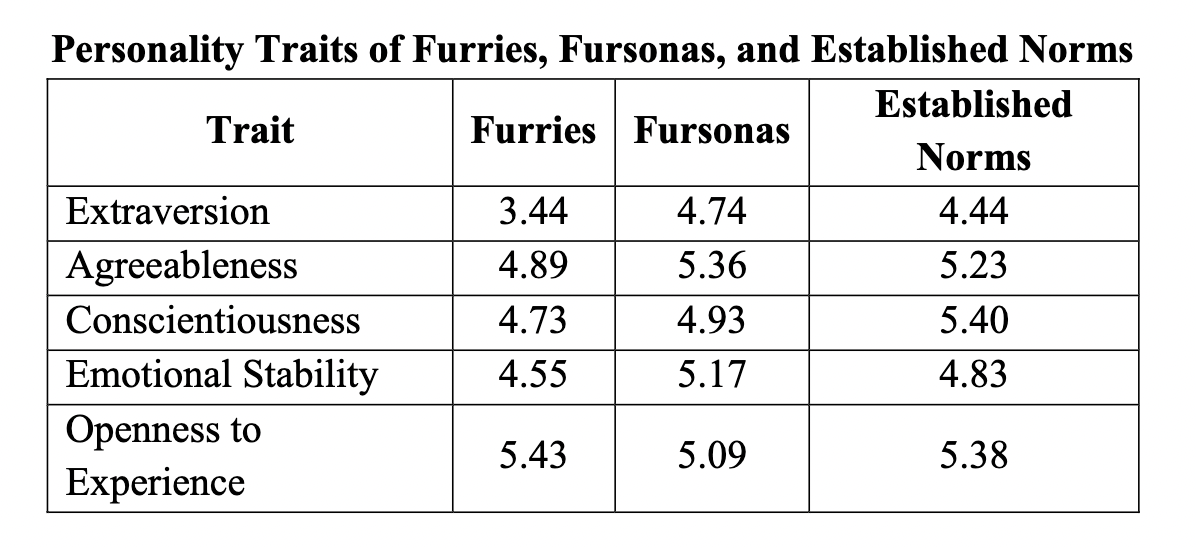
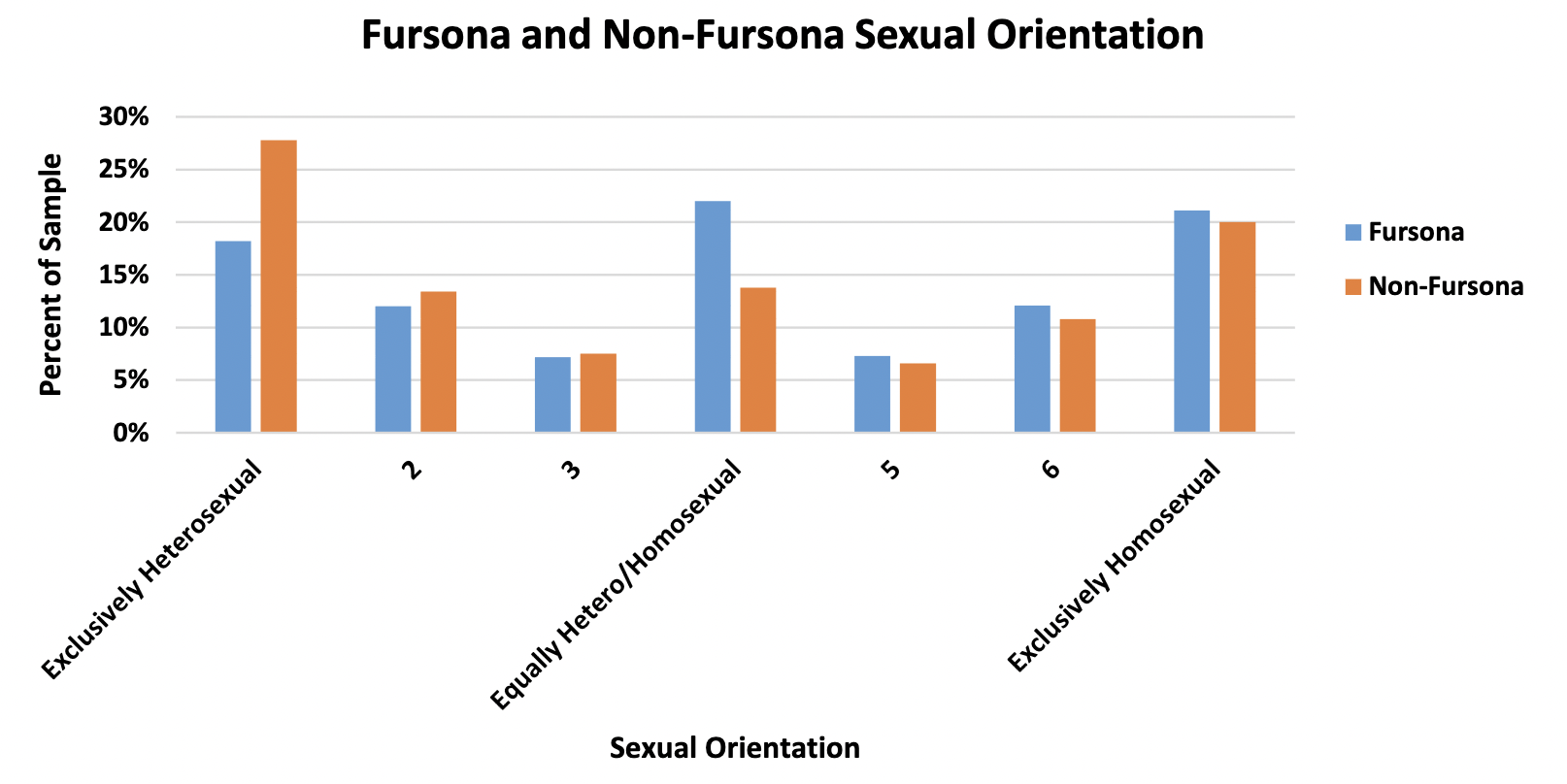
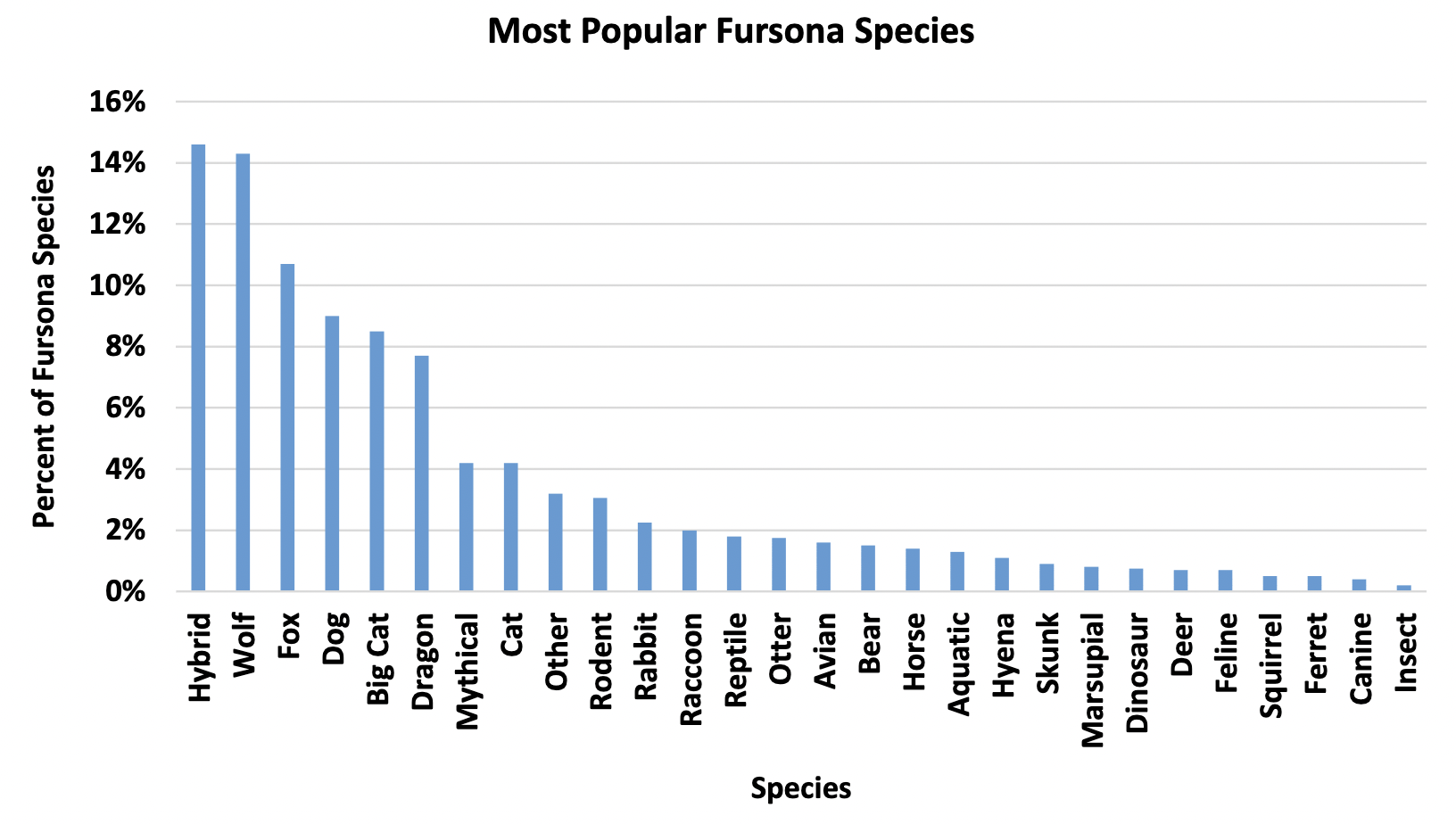
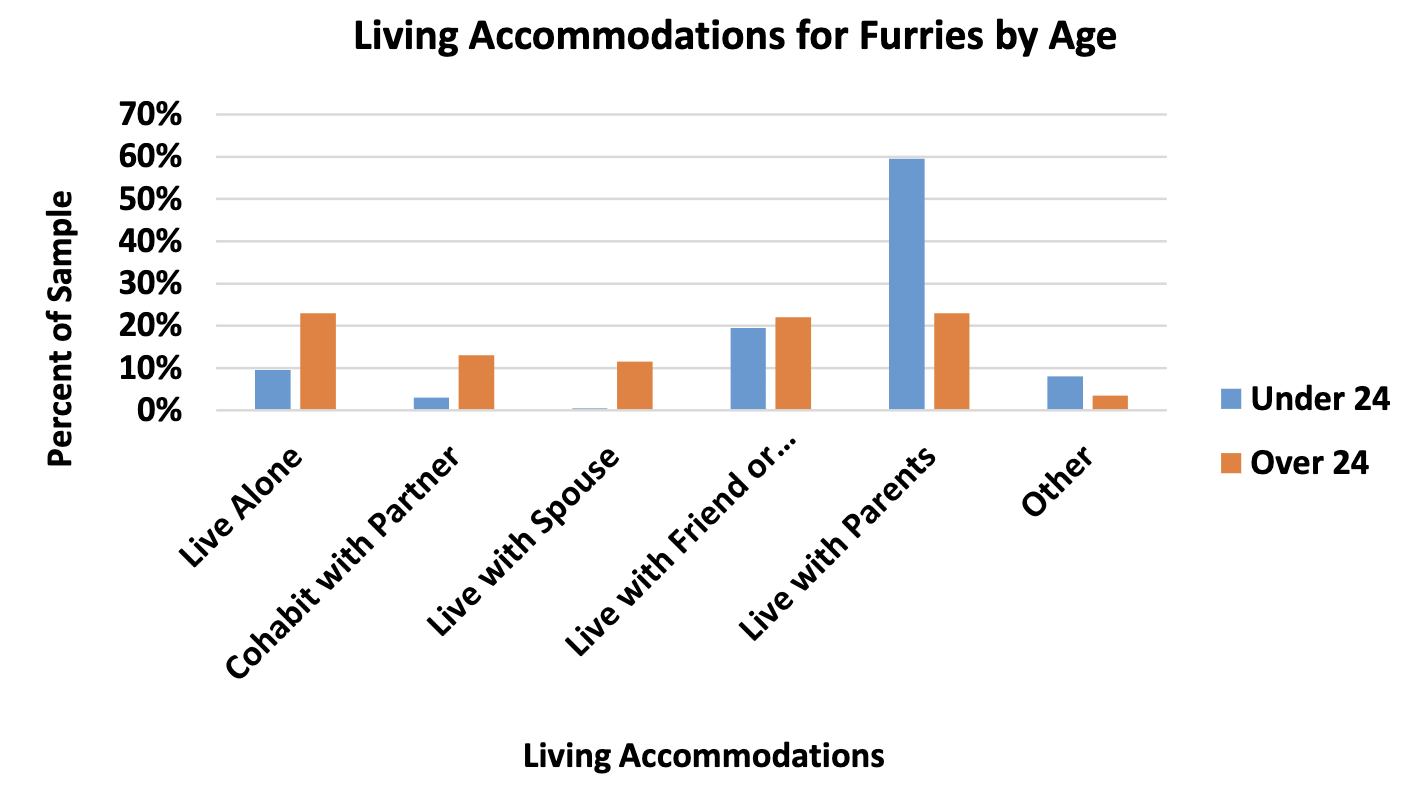
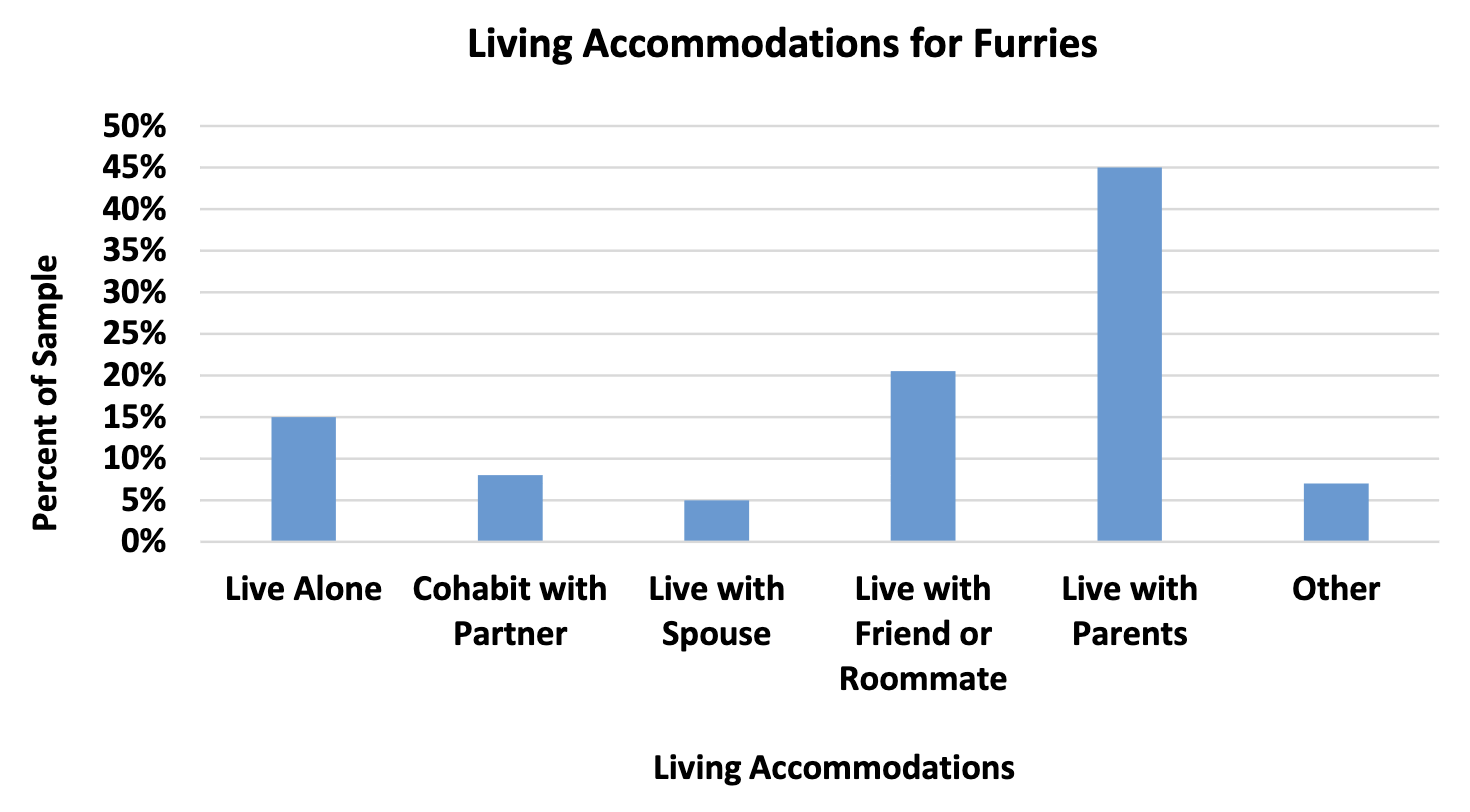
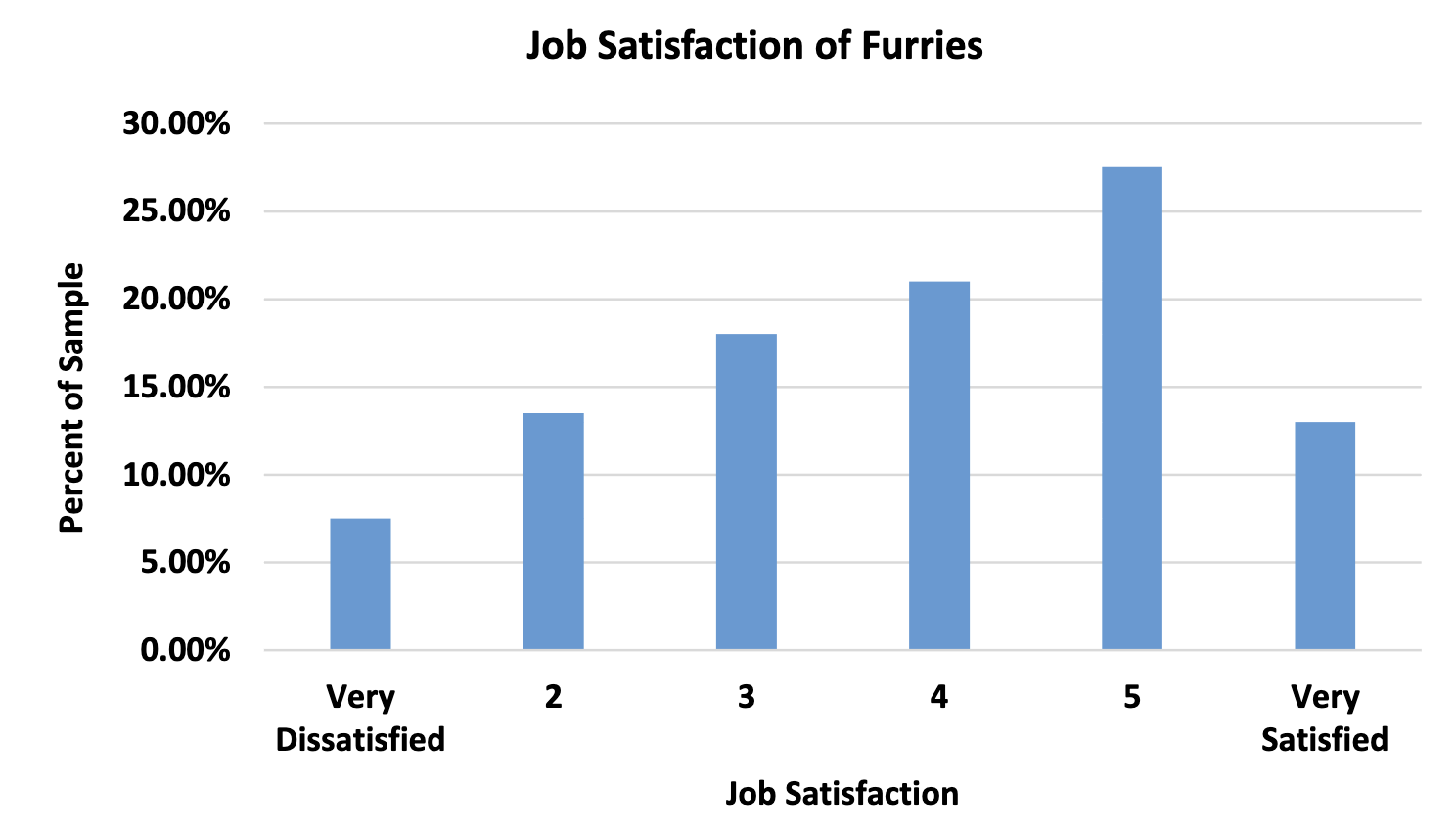
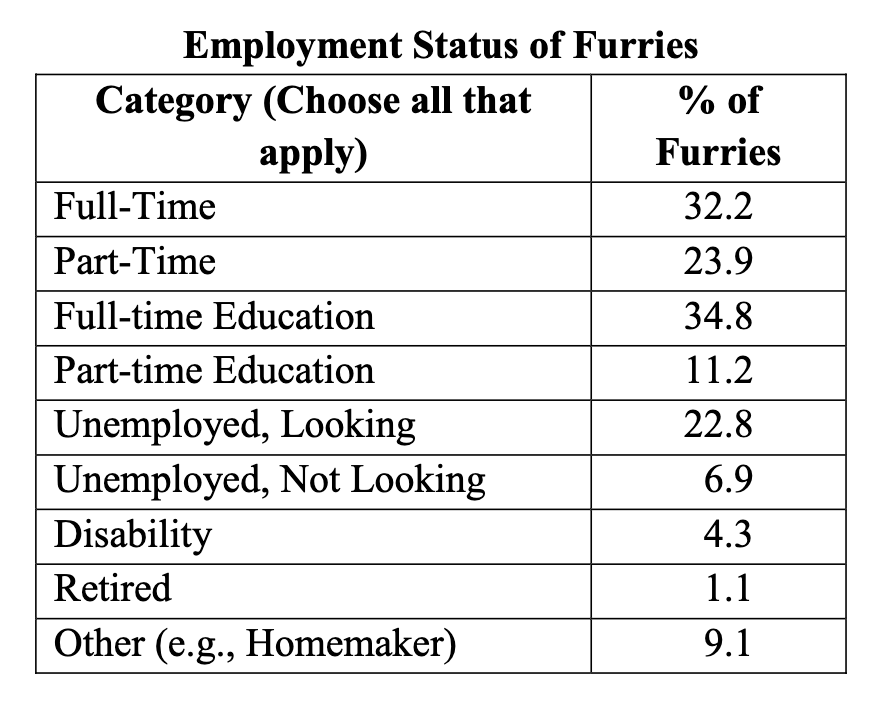
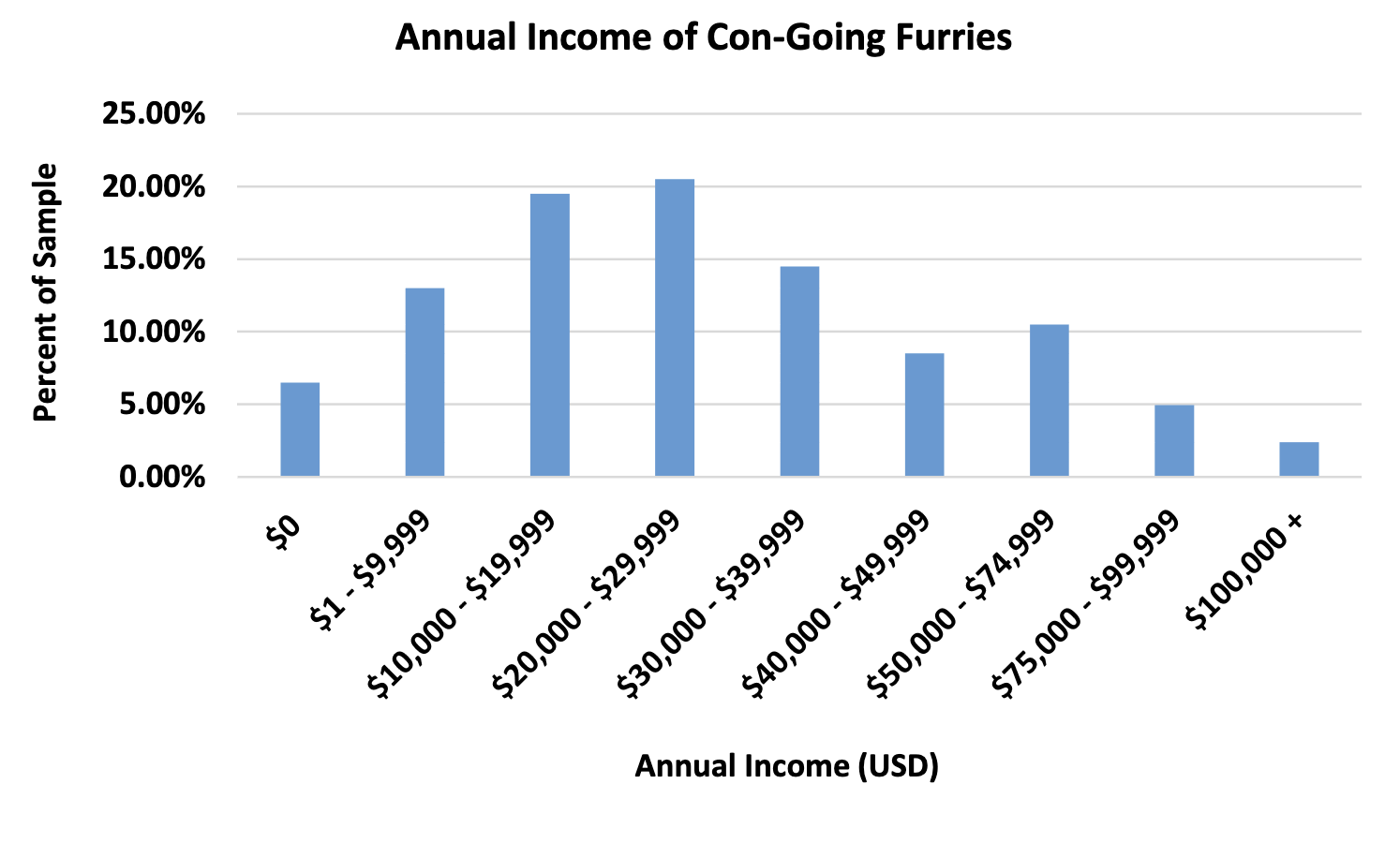
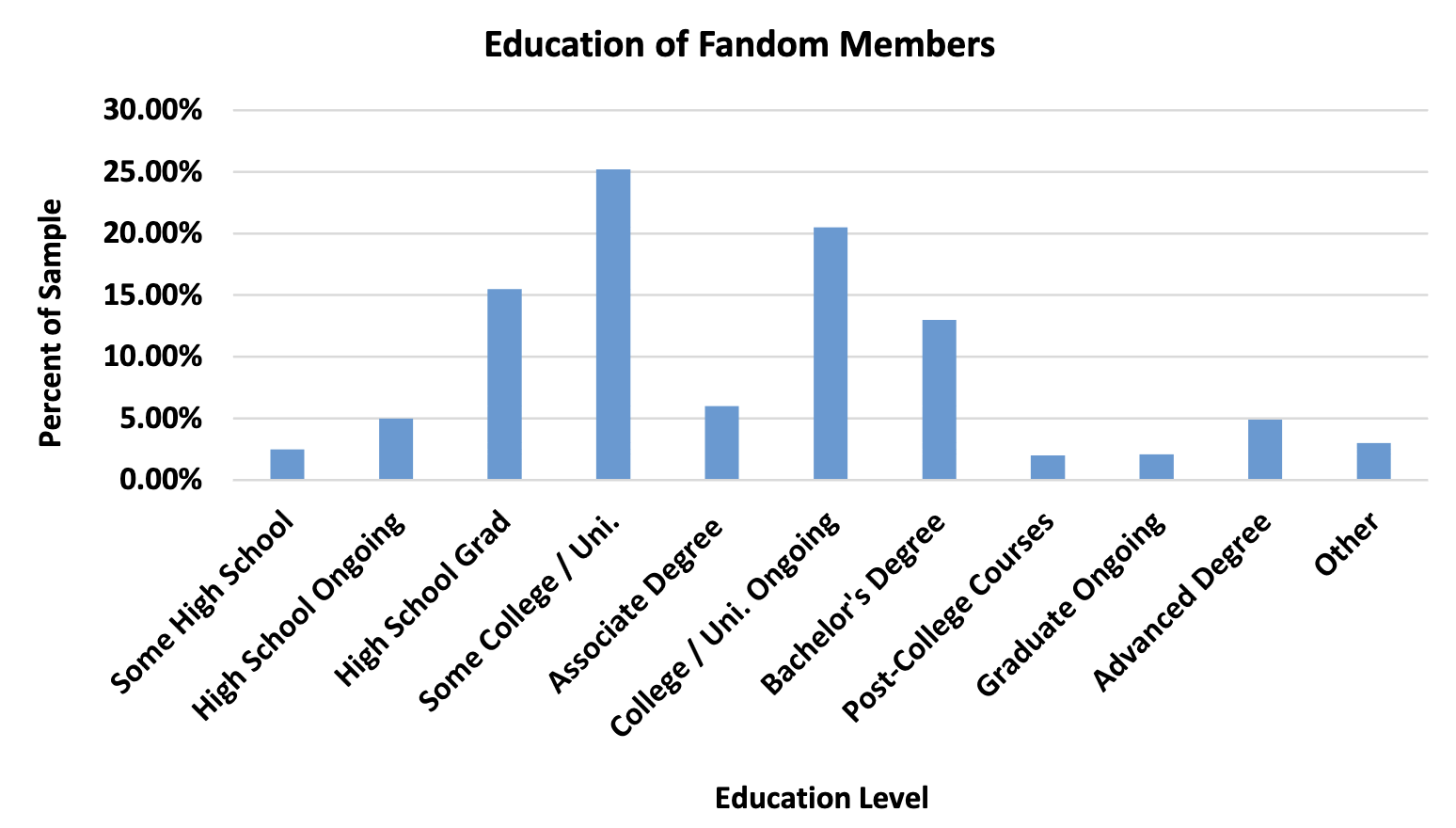
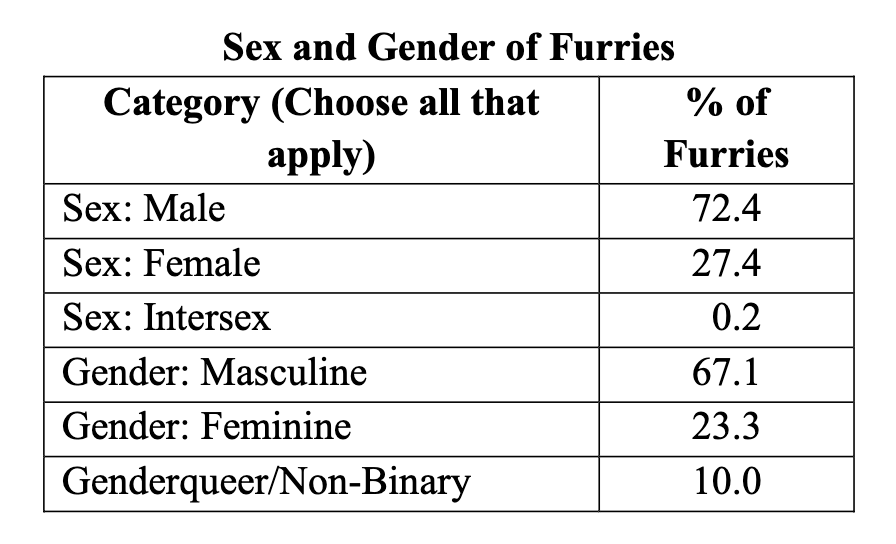
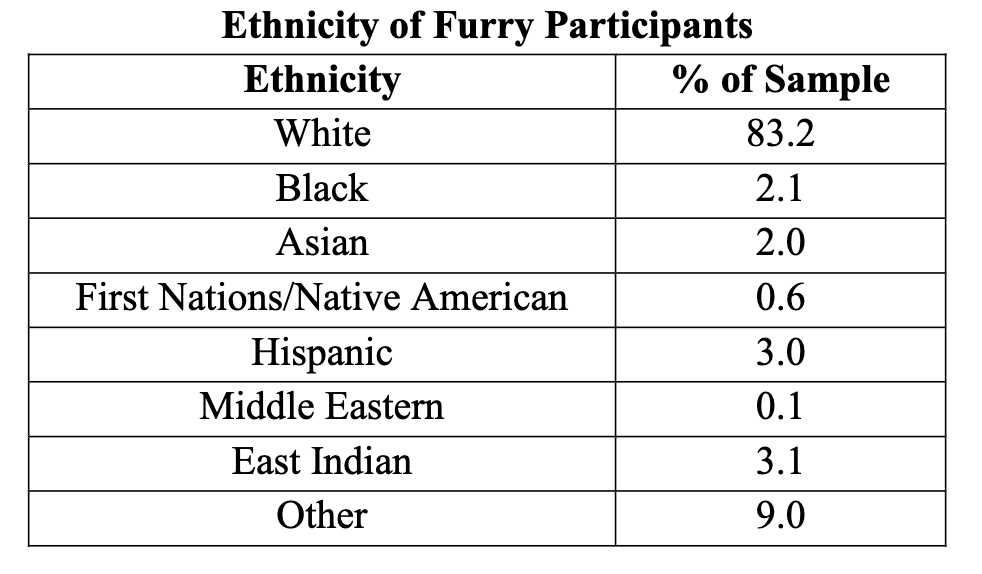
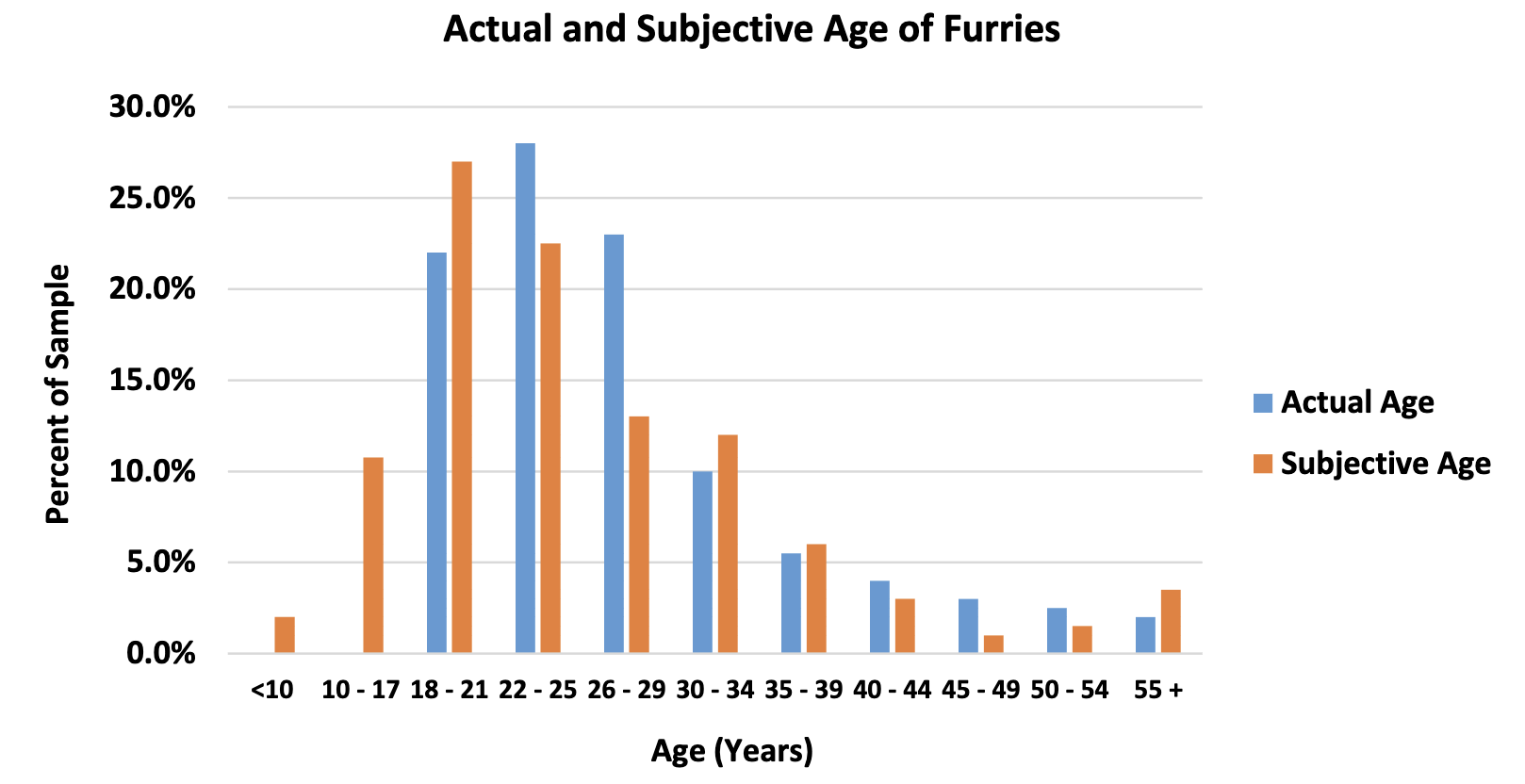
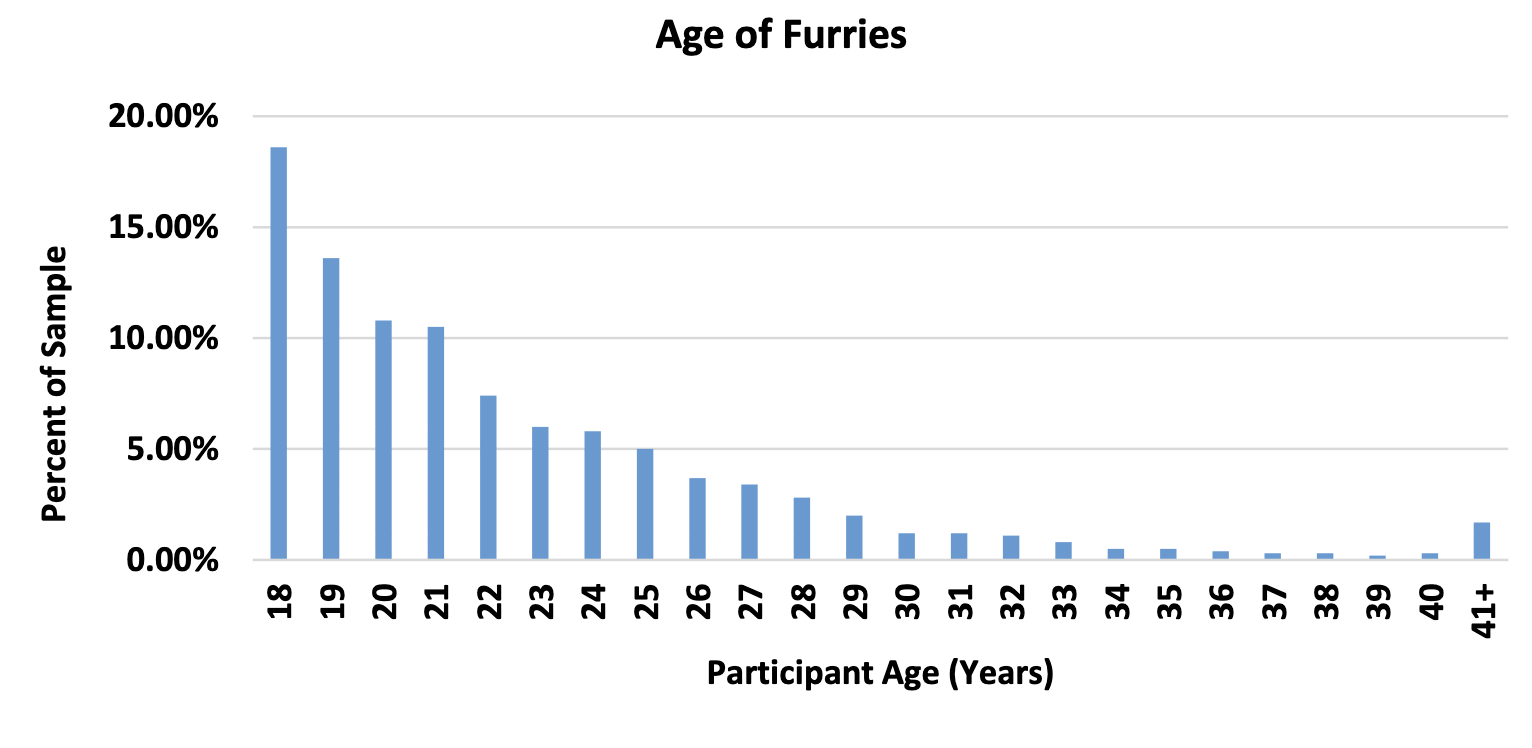
The study provides plenty of demographic data, but very briefly furries are mostly in their late teens and twenties. They are disproportionately queer and autistic, and they are disproportionately more likely to be in computer science and IT jobs. They’re not necessarily wealthy on average, and moreso save their earnings to invest within the fandom. They are majority cis white men. While some furries have been involved with the fandom for decades, this data suggests that furries mostly join in their late teens and leave in their early 30s.
Identity
As an outsider looking in, it is overwhelming and unjust to consolidate the furry fandom to simple definitions and statements. For instance, there are Chinese furries. What does it mean to live under the Chinese government and to also be a furry? How do their feelings and thoughts about the fandom deviate or resonate with Swiss furries, or Egyptian furries? What about their age, sexuality, and financial realities?
The options to participate in any part of the fandom are vast and it’s incredibly accessible for anybody to get involved, all of which supports the organic growth that has expanded the fandom around the world. That economic aspect of purchasing artwork profound to one’s identity is a large motivator for participation, but the act of ascribing oneself into the visage of a furry is free. There’s plenty of great work discussing how identity can be analyzed through the prism of our digital selves and fursonas, but I continually find myself most drawn to the experiences of trans people within the furry fandom. There are many stories of trans people using a fursona as an intellectual transition to a gender they are curious about, then physically transitioning when living as that fursona feels more like themselves - consequently, if it doesn’t feel like themselves, their question is still answered.
Other questions regarding what exactly it means to be oneself are pretty impossible to answer, and are probably best at a cocktail party discussion while invoking nature and nurture or free will or epistemology or ontology. Regardless, the contemporaneous nature of the furry fandom and its remarkable growth combined with the internet and digital world makes me think about the elasticity and pliability of our cognition. What is it about humans that makes some of us resonate so deeply with furries?
Humans have been assuming animal forms for millennia. Ancient Egyptian gods are often human bodies with animal heads, or anthropomorphized animals entirely. Practically every culture features animal costumes or adornment, and religions frequently involve animals interacting with humans in all kinds of ways. Furry fandom diverges from all of that historical precedent though because of the unique qualities of furry images and the subculture itself. I still fail to be able to articulate what furries feel, but the best word I have come to is what furries generally describe as being “cuteness”. As unsatisfying as it is, “you know it when you see it” is a convenient and apt description of what makes something furry or not. I’ve yet to hear a better description than that.
Furries largely describe their attraction to the fandom as an artistic hobby, a community of like-minded people, or a deeper resonation that anthropomorphized animals genuinely represent their self-identity. Those incentives easily fit into a historical line of groups and communities. And ultimately I think that’s the fuel to the fire: The fandom makes people feel comfortable and confident to express and be a part of something more than the bodies and environments they are born into. Sure the furry fandom is predicated on a hyperbolized version of Disney characters, but all groups anytime anywhere are predicated on something and ultimately glued together because humans like being in groups. That being true of most all furries, those first furries in the 70s and 80s were furries without that community at all. There’s something there, I just don’t know or care to probe deeper for now.
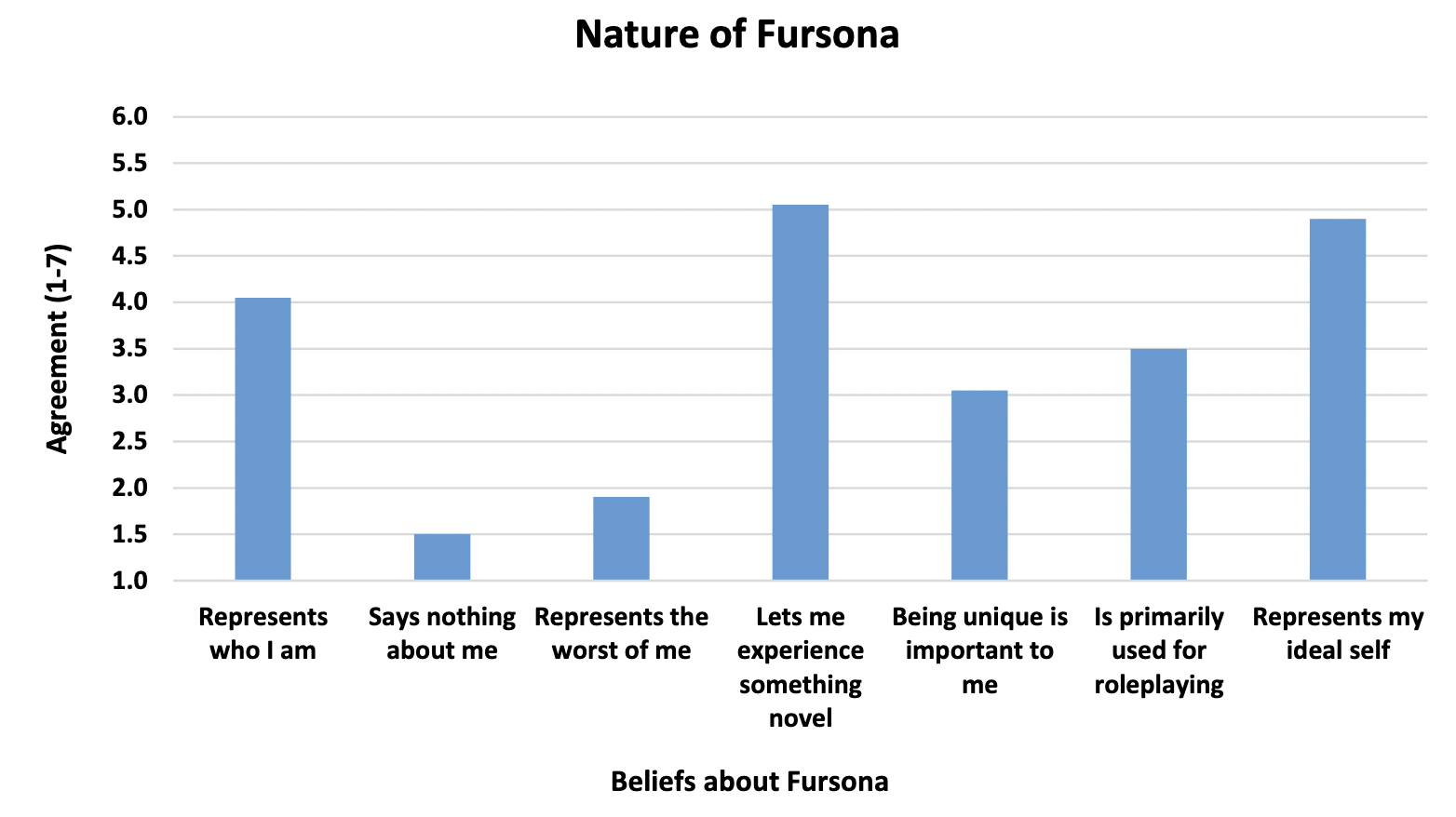
However, I’d argue that almost every single furry alive today had exposure to furry content before forming novel thoughts akin to those proto-furries. Furry content is now subliminally ubiquitous online, and I believe that ubiquity and the exposure of the fandom it generates is a large reason for why people are furries today. I don’t believe the “cuteness” or “softness” of the furries is as large a factor as the acceptance that furries feel from others; The subject matter doesn’t matter as much as the feeling of community. There are impressionable people everywhere learning about themselves through trial and error, and often “Children who developed their aesthetic sensibilities in the furry fandom [who] are now adults with the experience to address disconnection from their bodies and imagine alternate, nonhuman expressions afforded by the internet in the past and present.”
Adornment and Fursuits
Self-identification is certainly on a spectrum, but it’s too vast to exist on a simple x-axis. From a place of naivety, I conceptualize it as a three-dimensional abstract space akin to our current understanding of the universe’s physical realm. Any considerations of self-identity may or may not be based on precedent but it all exists within the same universe, where anybody’s own space within the wide space of possibility is as interconnected as it is spread out.
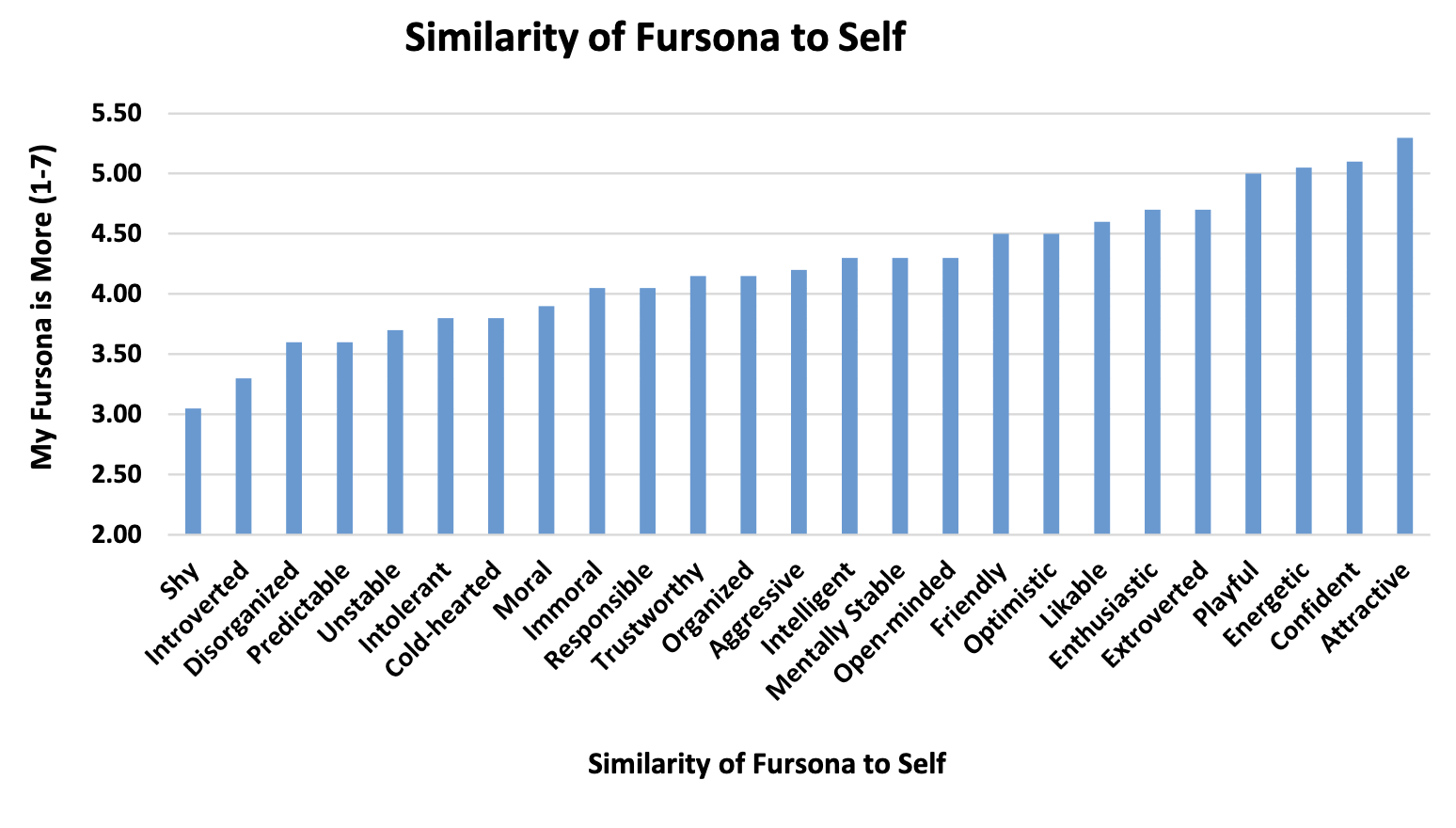
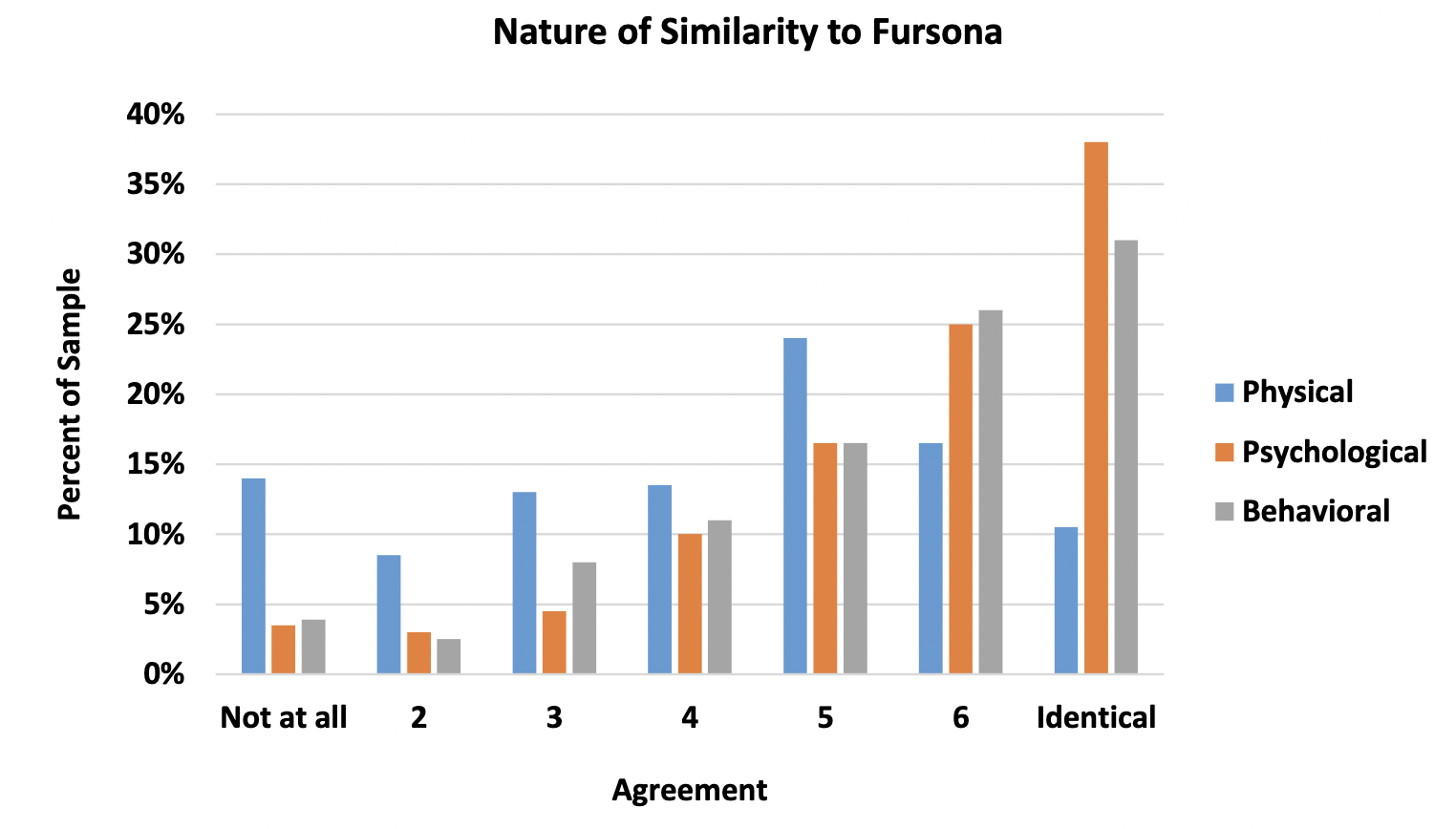
Physical adornment is also a spectrum, more easily plotted onto a typical x-axis regarding the sheer amount of adornment. Many furries feel content to mentally confirm their identity without physical alteration of any kind, and the opposite end of that spectrum are people who only feel like themselves when they’re fully adorned. Many furries are on that lower end of adornment with a desire to be on the other end, only really being limited by their means to get to that other side. It’s also hard to say whether that desire to have a fursuit is stemming from the fursuit being (re)presentational of a genuine self-identity, being a fun thing to wear, or something else. And, like with any other aspect of the furry fandom, maybe it’s a sex thing.
Sex and Sexuality
The uncomfortable ball and chain on the furry ankle of the fandom is sex. I again feel the urge to canonize the furry fandom within history more broadly, mostly as a check to my personal judgements.
Sex has always been awkward and weird, and it has always been kinky and absurd and charged. Look at what the Greeks and Romans were doing on their pottery, and imagine what those people smelled like back then. Read about people from the Middle Ages describing all the strange beliefs they attribute to the act that provides them with so many feelings and no explanation for why they feel that way. Look at photographs from the late 1800s and early 1900s where people were absolutely wild, and consider that all of the above is just what people felt comfortable to depict. When we tell ourselves and others to dance like nobody’s watching, it means to live without the artificial pressures of society determining how we express ourselves. Sex, most often done without others watching, thrives in that space of experimentation, communication, and discovery. The furry fandom, formed to exist outside of conventional judgement, naturally invites experimentation as people have been doing for millennia.
Sex may be generally understood as the interaction of different people’s genitals, but there’s no singular description of that. Consider gay people during the AIDS epidemic (which still goes on) who didn’t engage in anything penetrative as a means of pleasure on the basis of survival. Furthermore, “sex” is tautological as the word means different things to different people, an incredibly important point on the topic of sex and the furry fandom.
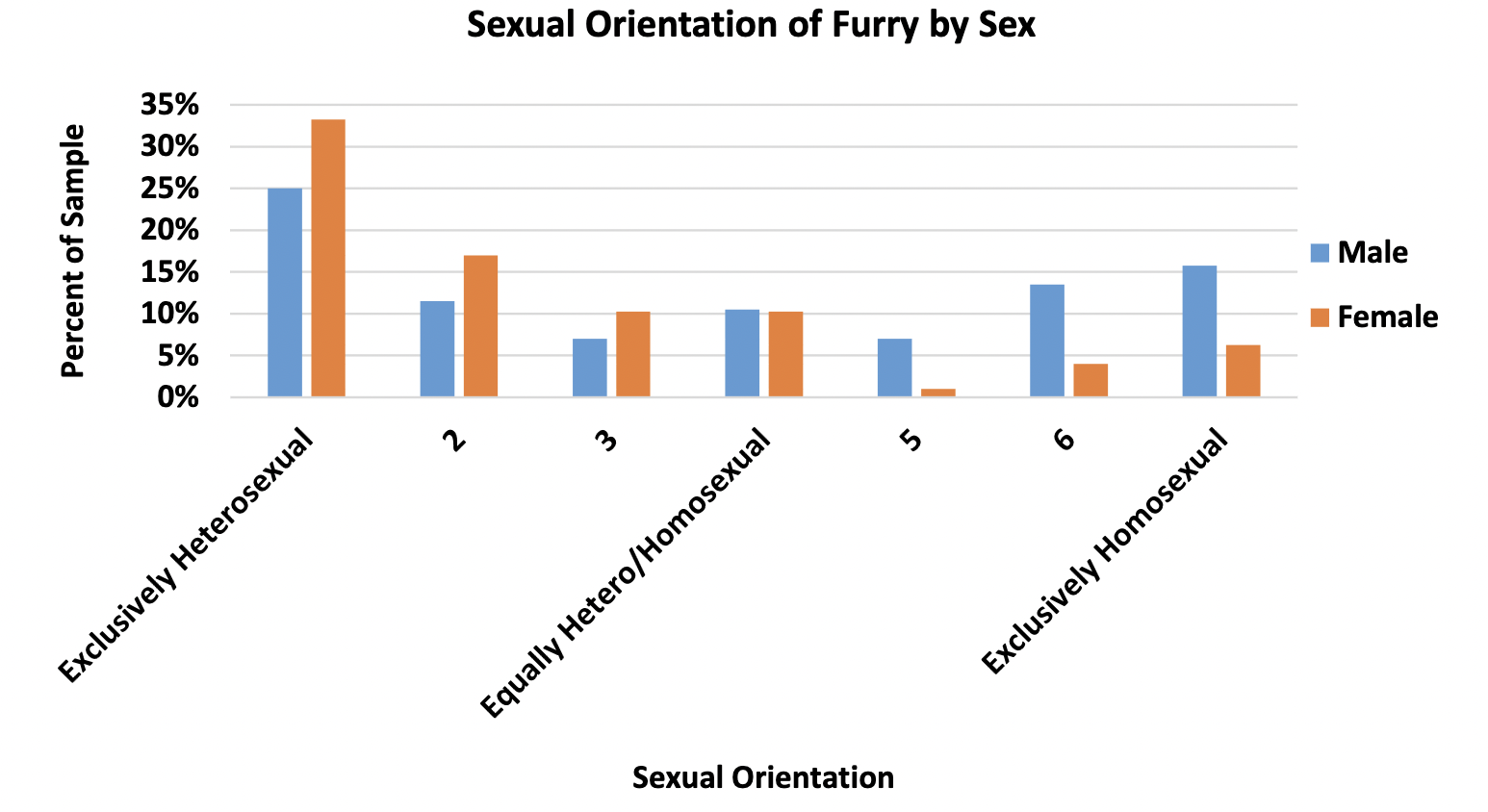
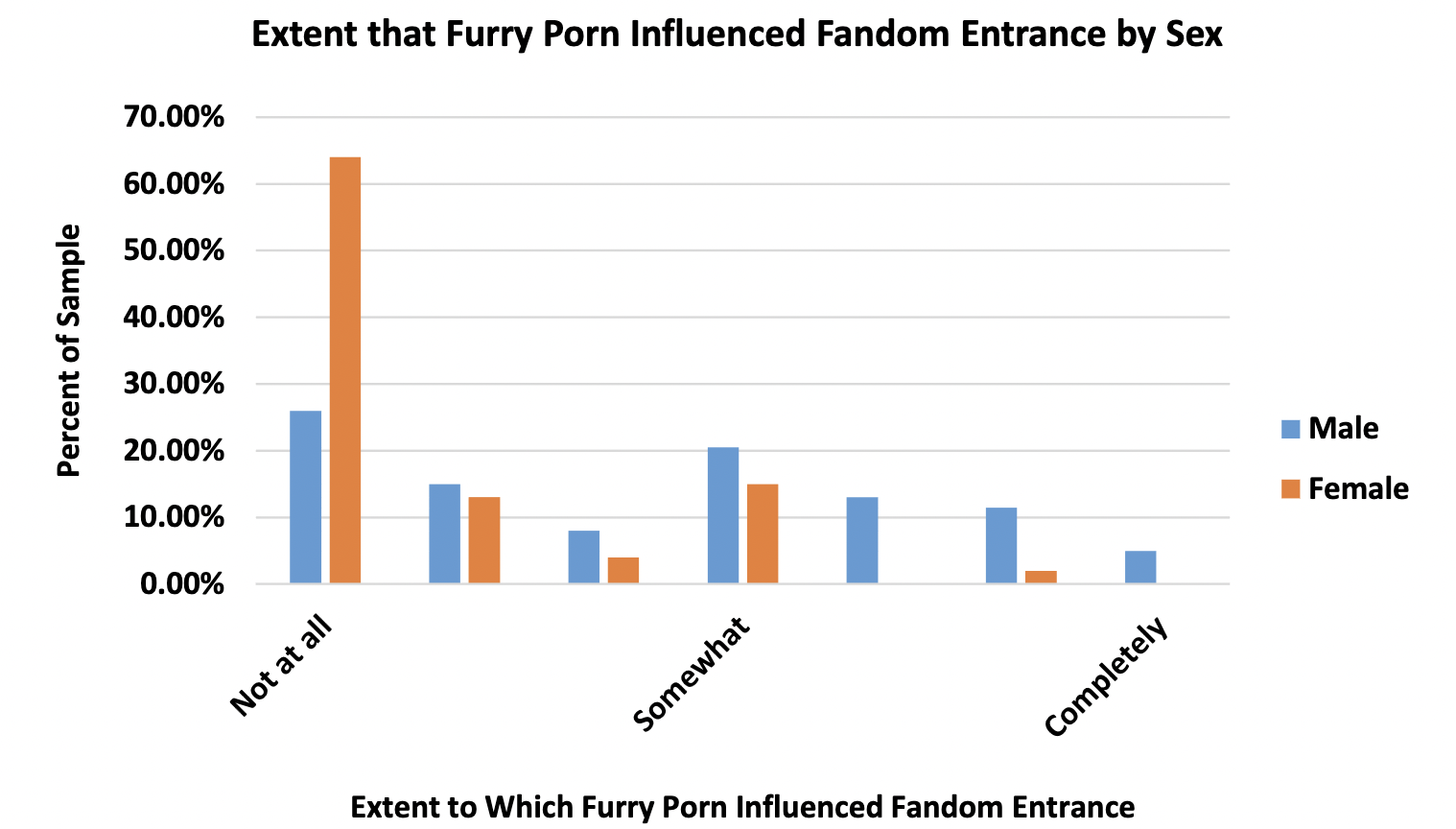
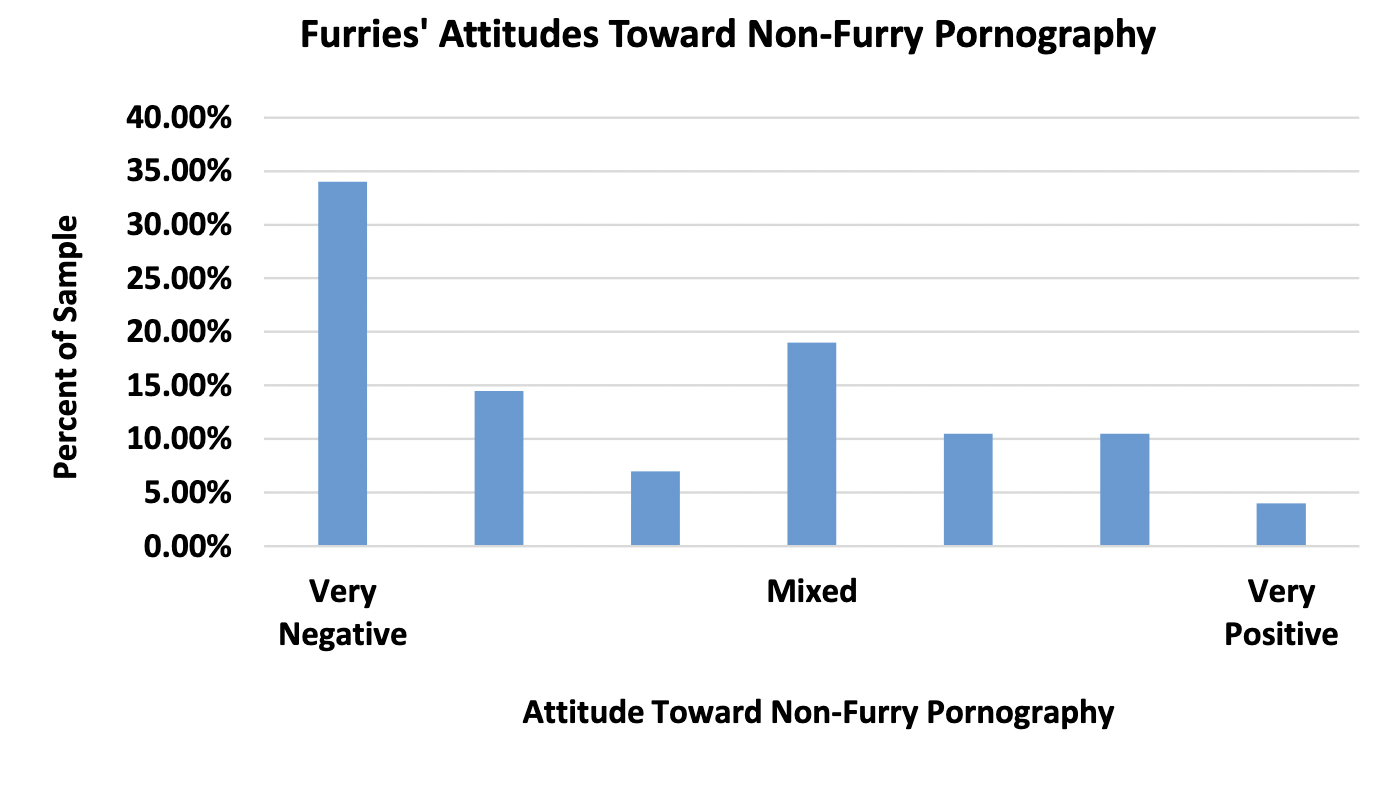
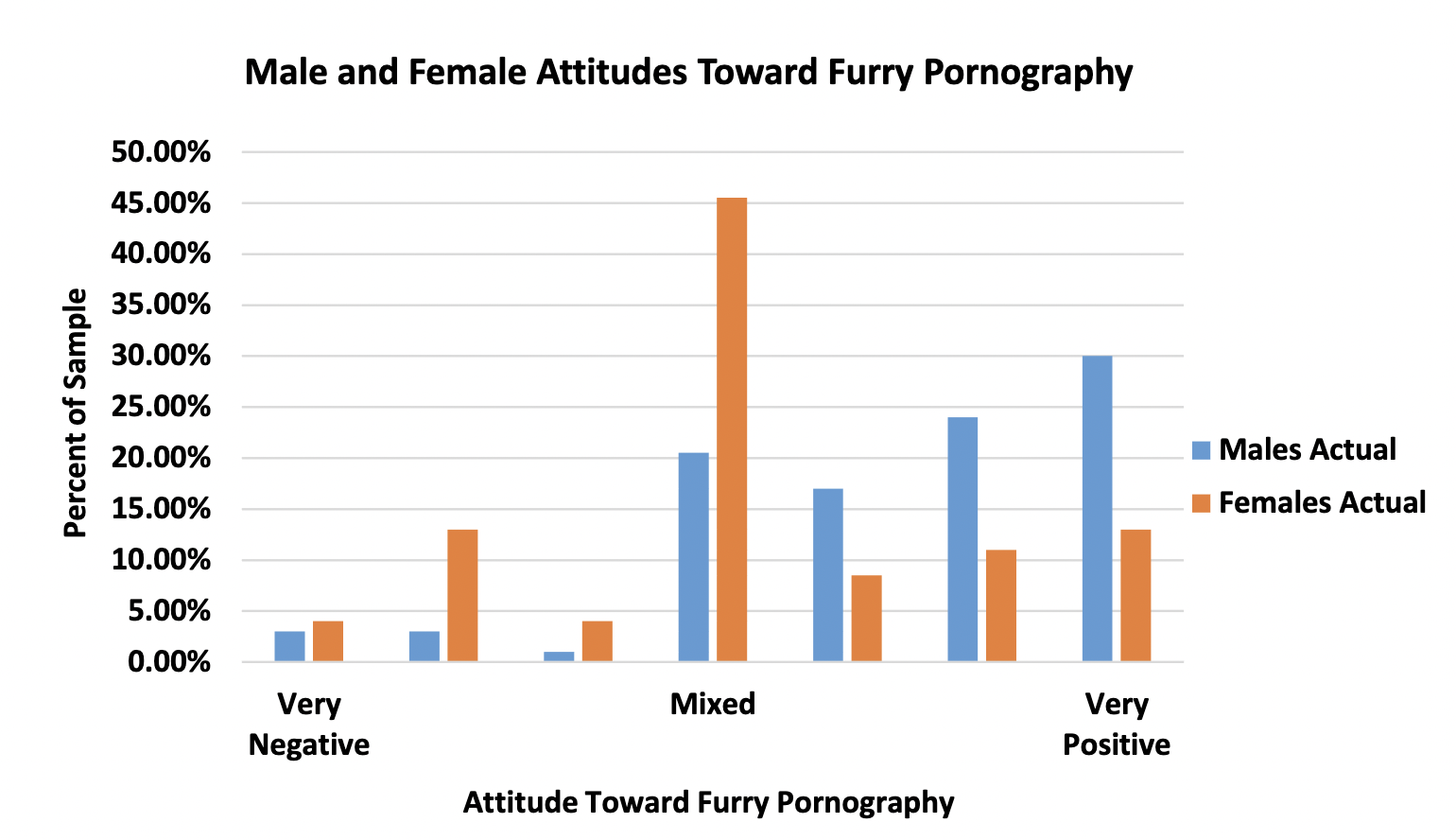
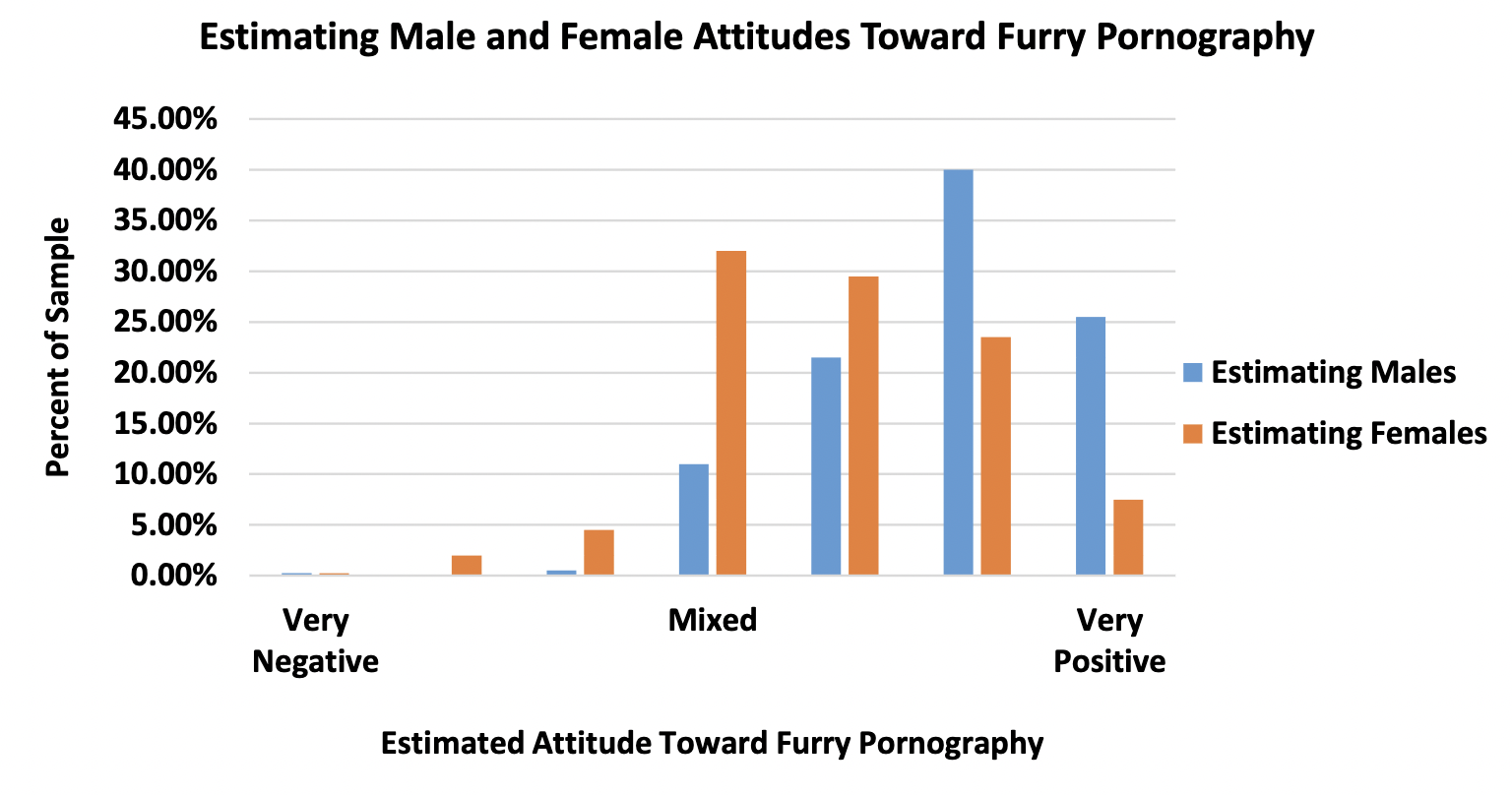
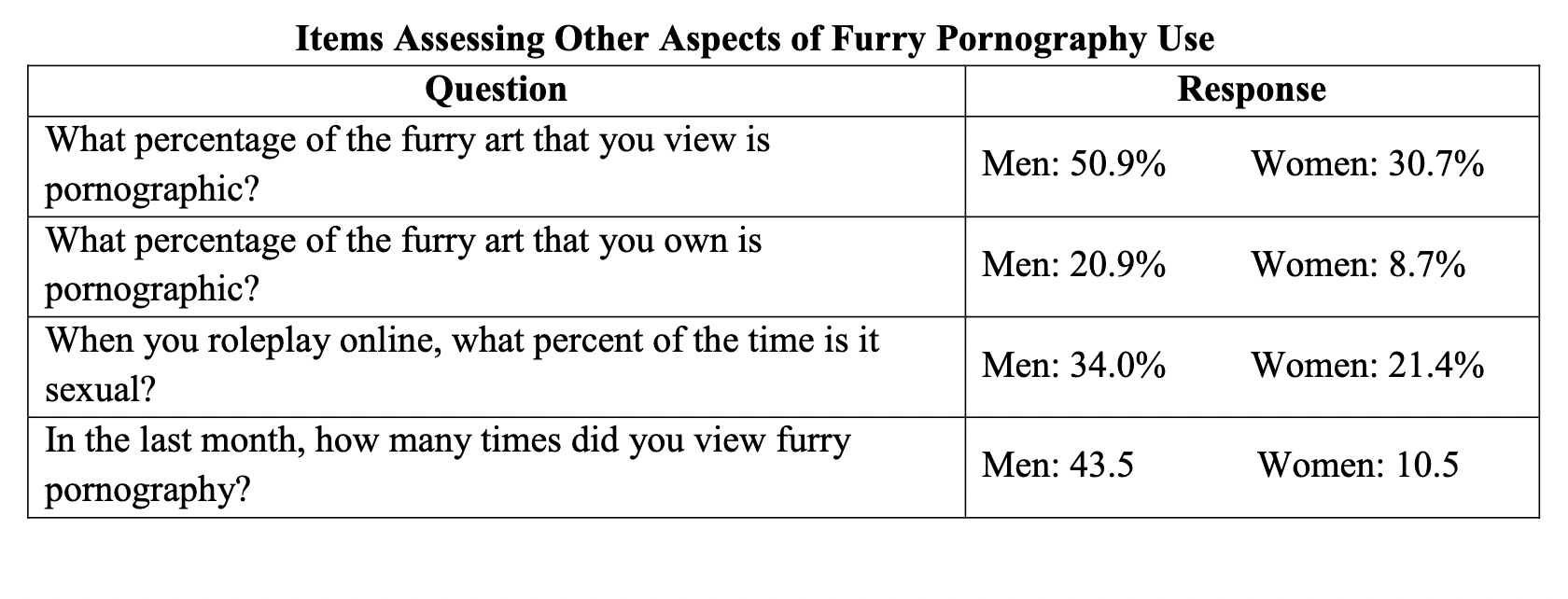
I believe that the furry fandom is far more sexualized than many of its members admit or even realize. In that 2016 study, the topic of sex provoked strong reactions, perhaps largely from the perceived and/or felt condemnation from mainstream society. The study concluded that 50.9% of furry content viewed by men was pornographic to 30.7% of content viewed by women. Men on average searched for furry pornography 43.5 times per month versus women seeking it 10.5 times on average per month. Men had a significantly more positive attitude on furry pornography, but all furries regardless of sex have a negative attitude about non-furry pornography. Male furries are significantly more likely to have been drawn to the fandom due to pornography, although all furries report that it wasn’t the primary reason for their initial interest in the fandom.
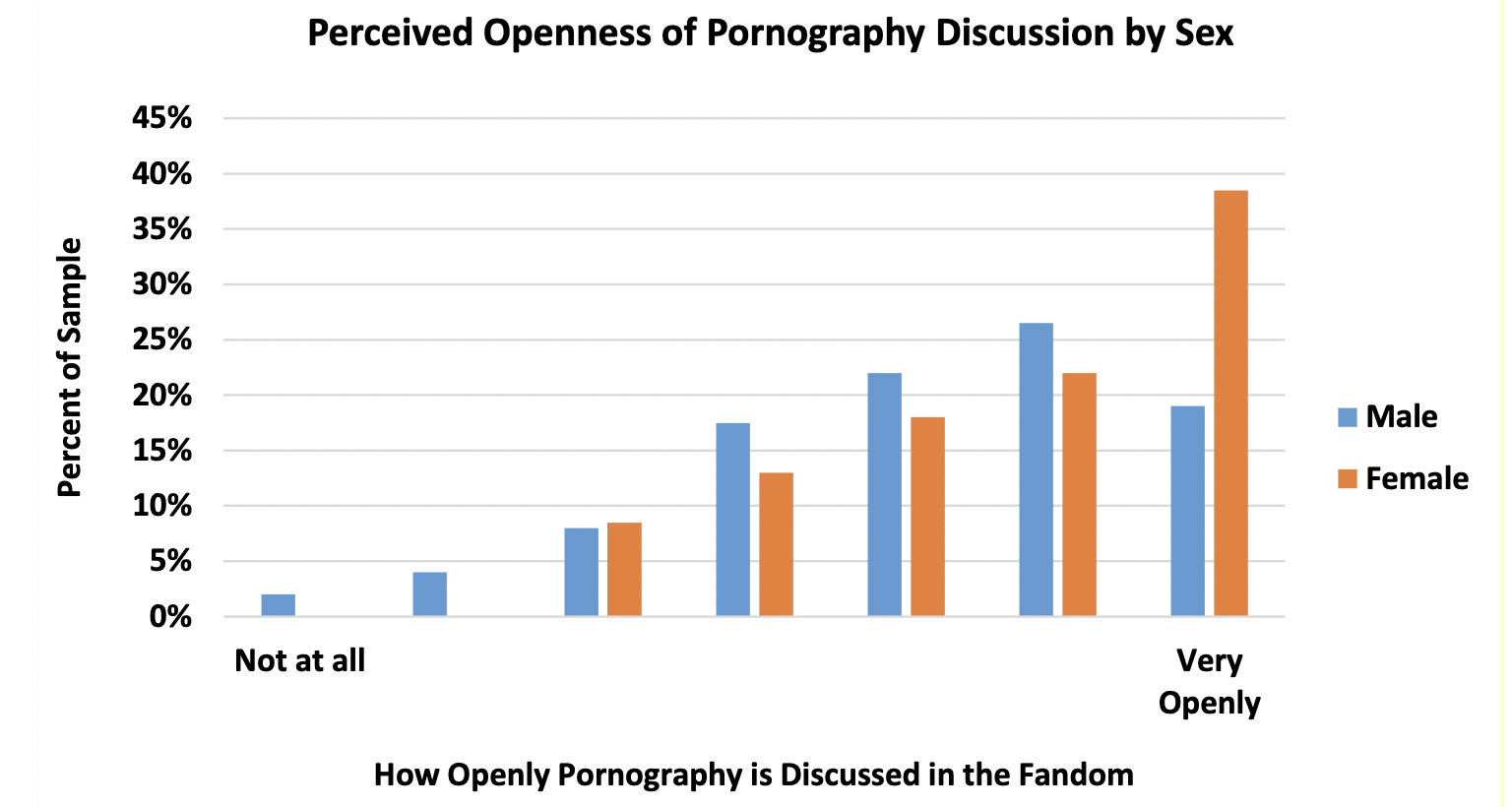
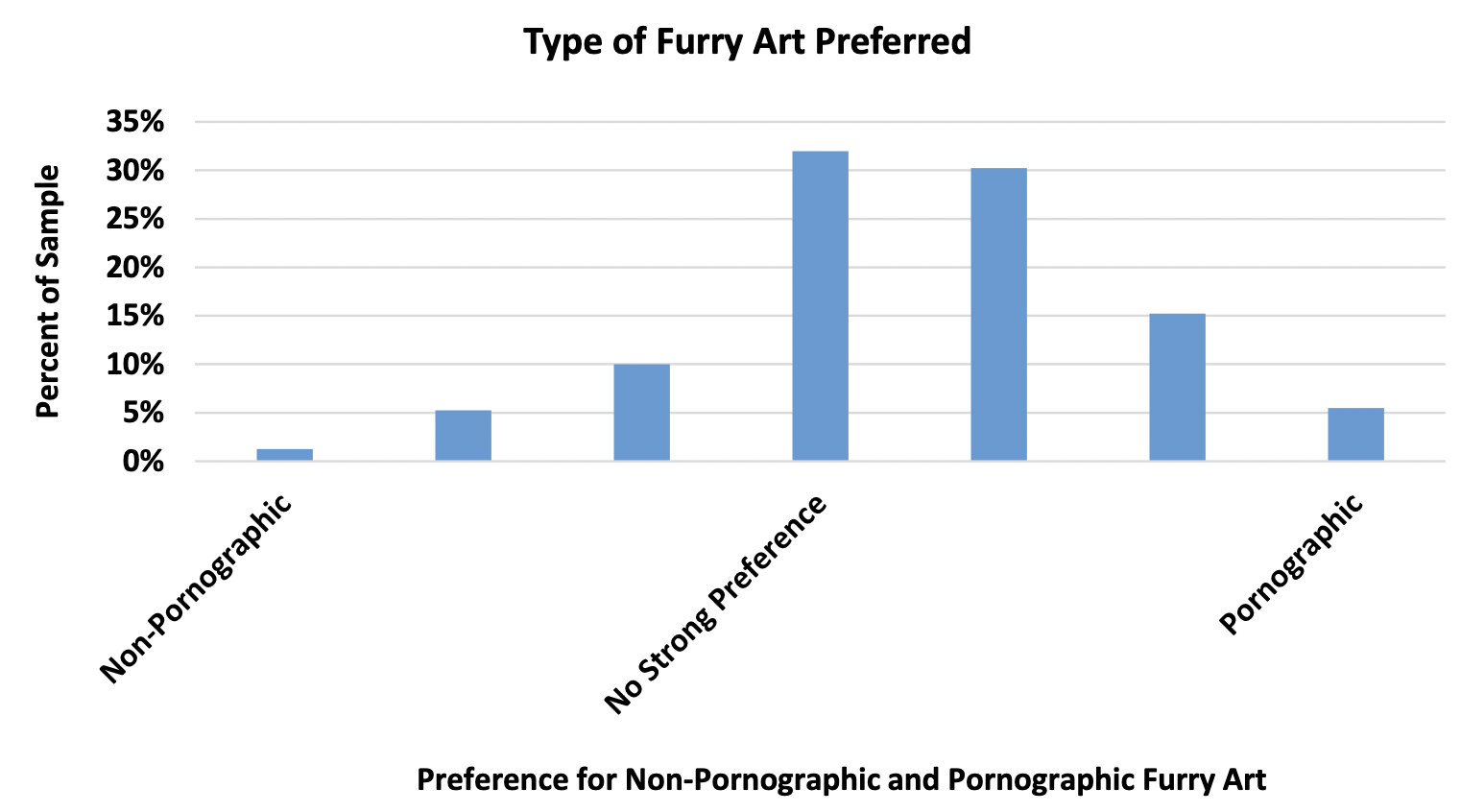
As continuously noted in this essay, the furry fandom is dominated by white males. Data from this study indicates that white male furries are particularly uncomfortable about discussing furry sexual content. Female furries are significantly more likely than males to say that furry pornography is discussed openly, grounded in the report with notes about how things like Stereotype Threat and Pluralistic Ignorance may be swaying the data. On average, furries reported having no preference in the content being pornographic or non-pornographic:
“In short, the primary difference between furries and non-furries in the study seems to be that non-furries were not seeing erotic and explicit furry content as being pornographic to the same extent that furries were. Follow-up analyses suggest that this effect was driven predominantly by arousal. Put simply: if participants found the material arousing, they considered it pornographic. Since non-furries did not find the non-furry artwork as arousing as furries did, they did not consider it to be as pornographic as furries did. Unexpectedly, furries also rated fursuit pictures (non-erotic) as more pornographic than non-furries did, (101)”
What it means to have “furry sex” and “sex as a furry” are very different. Characters in “Omaha the Cat Dancer” have sex because they are sexual beings and not due to any extenuating desires. Furries may conversely be drawn and attracted to the fandom because it is sex with anthropomorphized animals. I am not equipped as a writer to probe deeper into this because I just don’t feel it. However, as a human I want to highlight the fact that consensual sex is consensual sex, and there is no ontological difference between people having sex and people having sex who happen to identify as furries. Although the thought of any fluids coming into contact with any fursuit or adjacent adornment makes me queasy.
“While stereotypes often exclusively portray furries as people with a fetish, the data (figure above) suggest more variability of responses; while about 23% of the fandom states that sexual attraction has nothing or very little to do with their furry interests, about 37% of respondents stated that sexual attraction to furry content is a motivator of their participation (S11)... However, two caveats should be noted: first, the importance of sex is below the midpoint of the scale (less than 4 out of 7), suggesting that “more important” is not the same as being “very important.” Second, and perhaps more importantly, sex, as a motivator, was far lower for furries than either belongingness or entertainment, suggesting that while sex is certainly a motivator for some furries, it is not the primary motivating factor for most furries. This is also why it is factually incorrect to define the furry fandom as a “fetish”—were this the case, one would expect sex to be a primary motivator of furry interests with little variability in the data (like the response distribution for entertainment).”
That being said, although modern societal laws and norms often come from artificial places, having a generally understood standard of ethics and morality is what any population of people tend to organize themselves with. A common thread connecting practically all of human history together through the modern day is an agreement that anybody who has sex with animals is vile, heinous, and fucking abhorrent. And there are absolutely strong threads of kinks and fantasies that either walk that line incredibly closely or outright cross it. For instance, the “otherkin” section of the fandom who question their own humanity and believe themselves more furry than human are walking on a line so thin it can barely be seen. And even then, modern fursuits don’t actually look like the animals they purport to be, which both clarifies and complicates a lot of this. Clearly I’ve still got a lot of stigma for the furry fandom, as much as my empathy tries to help.

Stigma and Society
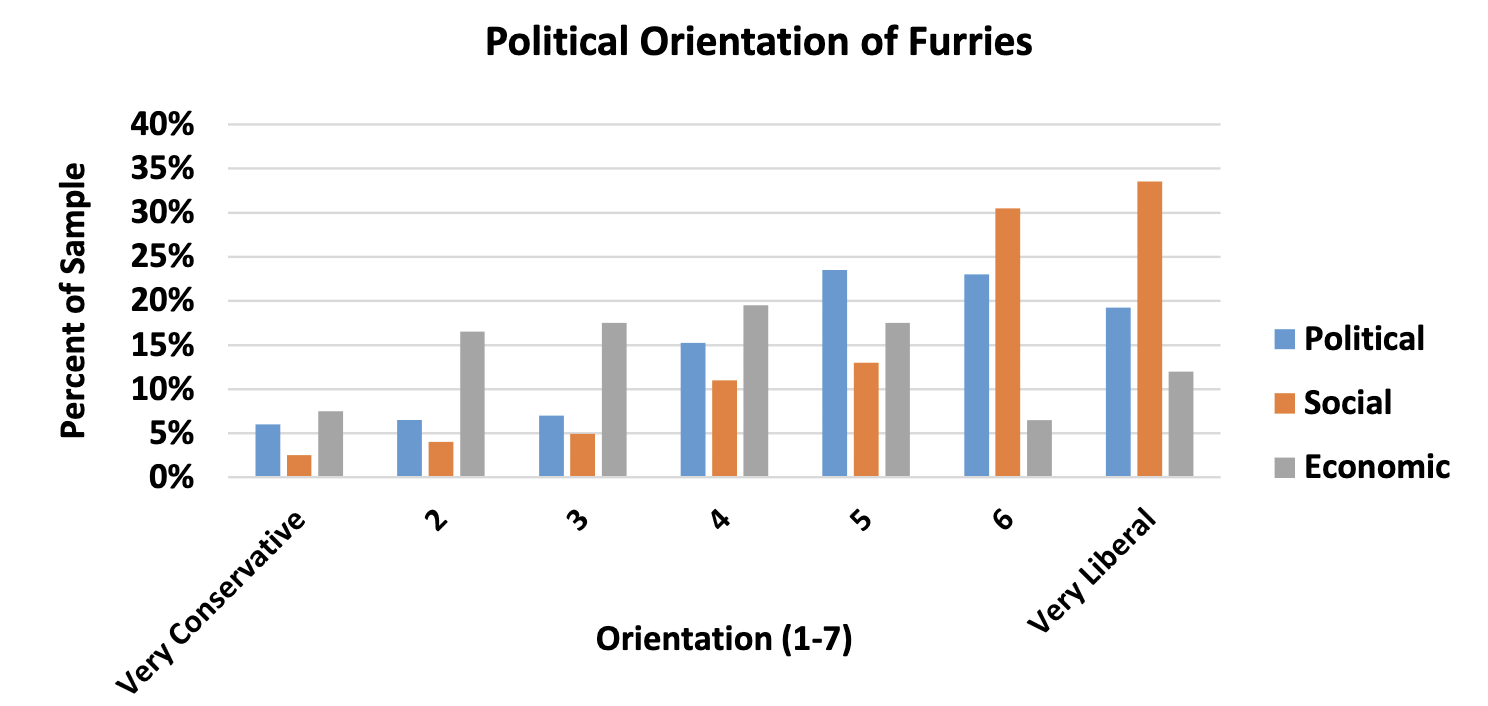
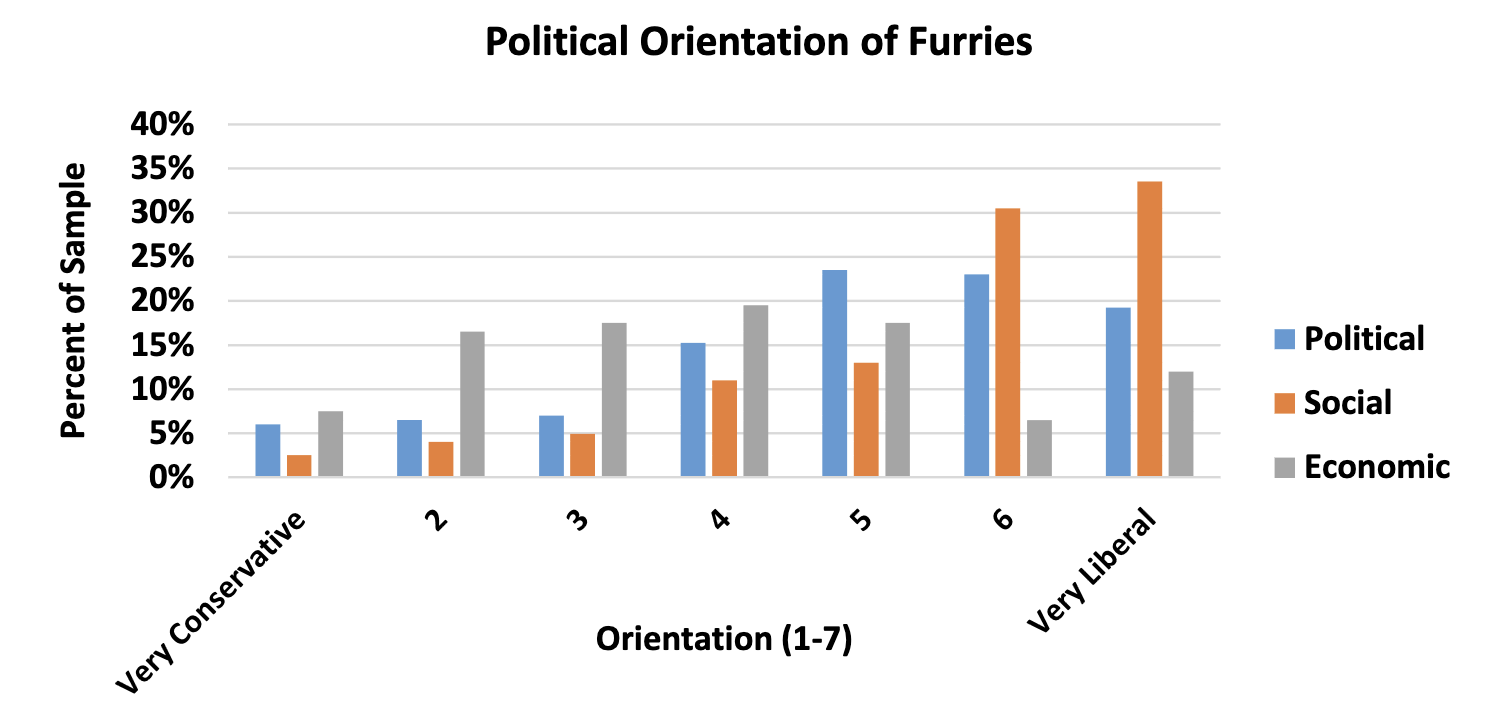
Subcultures generally arise from a population seeking comfort outside of mainstream, hegemonic expectations. As stated by many furries throughout the fandom’s history, fear of being ostracized and ridiculed defines much of how the fandom has developed. These stigmas also indirectly target queer, autistic people who are largely white men in their 20s, with all the encumbrances of white men in their 20s of course. Furry fandom also seems universally stigmatized across all political parties affiliations, although it’s more frequently targeted as a scapegoat to delegitimize liberals and whatever the hell wokeness is. I also don’t think it’s important for liberals to embrace the furry fandom, both as the fandom is much broader than a political party and my progressivism is no match for a politician that comes out to the podium wearing a fursuit.
Furries also stigmatize others in the fandom, largely through the conventional human cliches we all know annoying people perpetuate all the time. Albeit a small section of the fandom, incels, neo-Nazis, and other varieties of right-wing dipshits find refuge in the subculture where people find refuge from those hateful groups. It must be an incredibly unstable existence to know yourself to be an anthropomorphized animal and also support the holocaust, surrounded by furries who despise your beliefs. There will always be people born with desires that contradict an agreed-on ethic (paedophiles, zoophilists, and sadists of other kinds), and the furry fandom attracts many people who jeopardize a clout of the fandom at large.
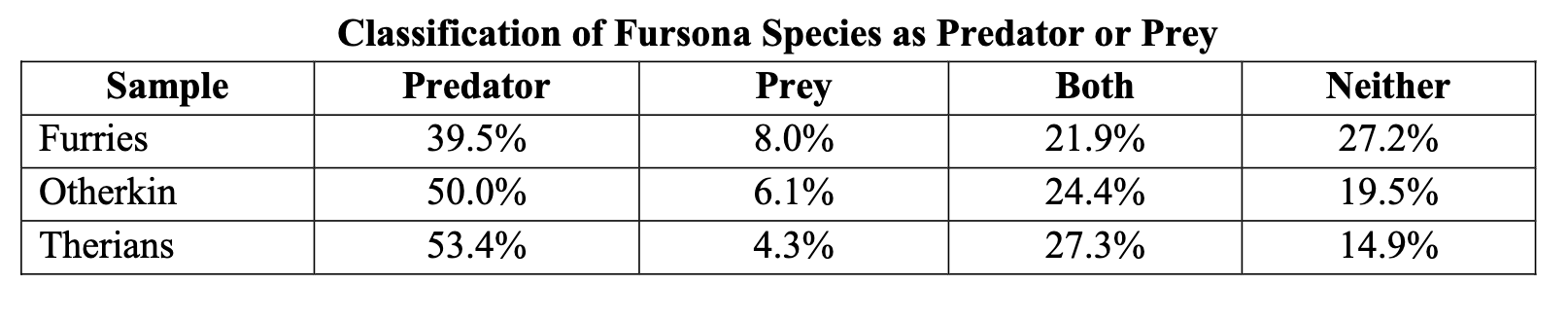
Groups of any kind always contain in-groups opposed to the values of the larger group, and clearly it’s hard for me to not think about the worst of the furry fandom. Once you start getting into statistics regarding “actual age versus subjective age” of fursonas, the large percentage of furries citing that the catalyst for them becoming a furry as “pet”, the vast majority of fursonas being predatory species instead of prey species, vore as a concept, the number of furries who state that they share characteristics with their fursona’s species, and a lack of vegetarians, vegans, or animal-rights issues in furry networks, it gets weird fast. I have empathy for young people, particular young queer people, finding an escape and community. I also wonder how literal many who grow out of the furry fandom, a consistent phenomenon, would describe leaving the fandom as an “escape”.
Regardless, furry fandom is more than trickling into the mainstream - it’s here to stay. Due to the outsized presence and economic drivers of the fandom, anthropomorphized animal characters created and portrayed today are more distinctly “furry” than they were “funny” for previous generations. I mean look at this and tell me it would’ve been created without the furry fandom. Disney, whose characters in large part being the first and primary source which proto-furries organized around, has historically been quiet yet distinctly avoidant of associating themselves with the furry fandom. Economically, Disney champions the consolidation of capital and intellectual property unlike any other and finds a natural enemy in the comparatively mutualistic and non-hierarchical furry fandom economy. Culturally, Disney work culture seems to operate under the same “bias against furries because of the belief that it’s a sex-focused culture.” Ironically, to be a Disney animator strongly suggests at least a strong similarity in artistic intent and otherwise despite that work culture - I’m curious about how many animators find themselves walking a line of creating “Disney content” versus “Furry content”.
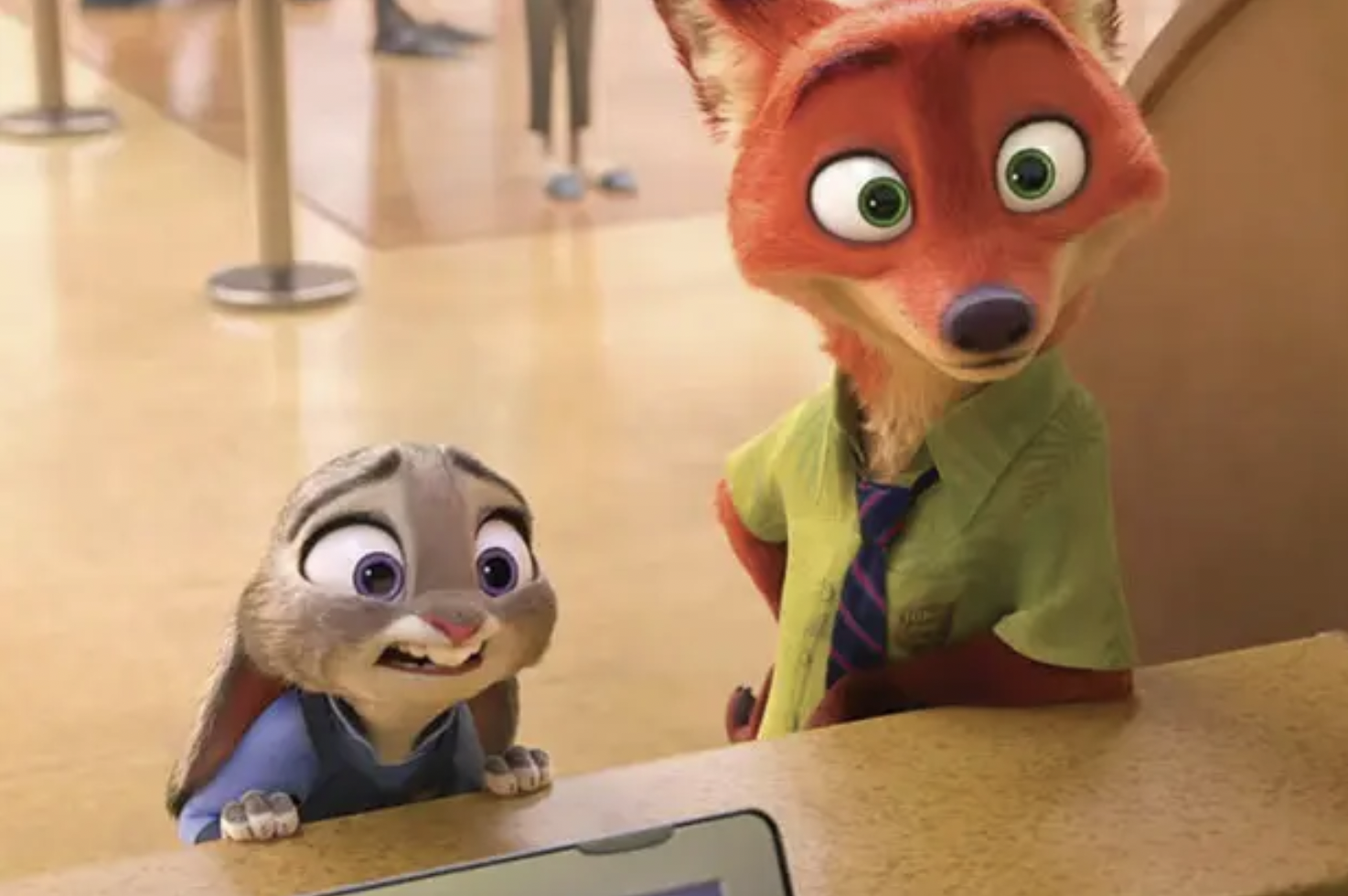
However, a corporation like Disney’s culture ultimately rests on economic decisions, even regarding their relationship with the furry fandom. “Zootopia”, besides being a massive hit, is so obviously furry content that it feels like a step away from “Disney content” entirely. Every other Disney property prior had anthropomorphized animals based in a human world. “Zootopia” takes the leap, like “Omaha” did decades before it, of being a human-like society totally void of humans. And despite some frustration within the furry fandom that “Zootopia” is hetero-normative, the movie both visualizes a world that some furries deeply resonate with and marks Disney’s investment in furry content institutionally.
Although Disney’s leap into furry-like worlds was recent, the precedent of corporate furry-like worlds has existed long before “Zootopia”. “Star Fox”, launched in 1992, continues to be a formative and representative IP for furries, particularly the character Krystal. Less directly, “Sonic” and “Pokemon” are popular within the fandom despite both worlds also having humans, whose characters are more popular as inspiration for fursonas and fan art/porn than otherwise.
Concluding this brief foray into how furry fandom intersects with and influences media conglomerates is “My Little Pony”. The total timeline of how Bronies formed into a unique subculture necessarily involves furry fandom, who Jenny Nicholson reports to have taken over and optimized Brony fandom into something more distinctively furry than it was prior. In her autopsy about the Broniy fandom overall, Nicholson makes a few incisive points about the furry fandom:
Subculture begets subculture
Similarities of sex and the unmasking of bronies as mostly being furries
Fondness of a female figure does not equal sexual content
Conclusion
As time goes on, the presence of the fandom will continue to justify its existence. Also, that proto-furries existed without a fandom suggests that for a rare few there is an intuitive resonance with the exaggeration of Disney animation. Loosely connected with an overarching message of welcomeness to all, the individuality and economic robustness of the furry fandom are indicators of its strength for years and more than likely decades to come.
The best part about the furry fandom is how open and accepting it is. The worst part about the furry fandom is how open and accepting it is. Like with any other group in the world, the best and worst parts about furry fandom are the people in it. Although my biases remain in thinking that furries are largely cringe people doing weird shit who smell bad, my empathy for humans everywhere earnestly trying to find their way in a confusing world is as strong as ever.
I put a lot of time into learning a lot more than I used to know about furries, and I have come out with far more clarity that I am not a furry and that I do not understand the appeal. It’s also helped me compartmentalize anybody’s investment into the fandom as one aspect of their total self. That’s the power of compartmentalization: To recognize that, not only can multiple things be true at the same time, but that they always are. Looking back on my ex-girlfriend’s roommate, I’m at peace knowing that he happened to be a furry. But that ultimately doesn’t really matter - it’s more important to note that he fucking sucked.
Hate appropriately.